
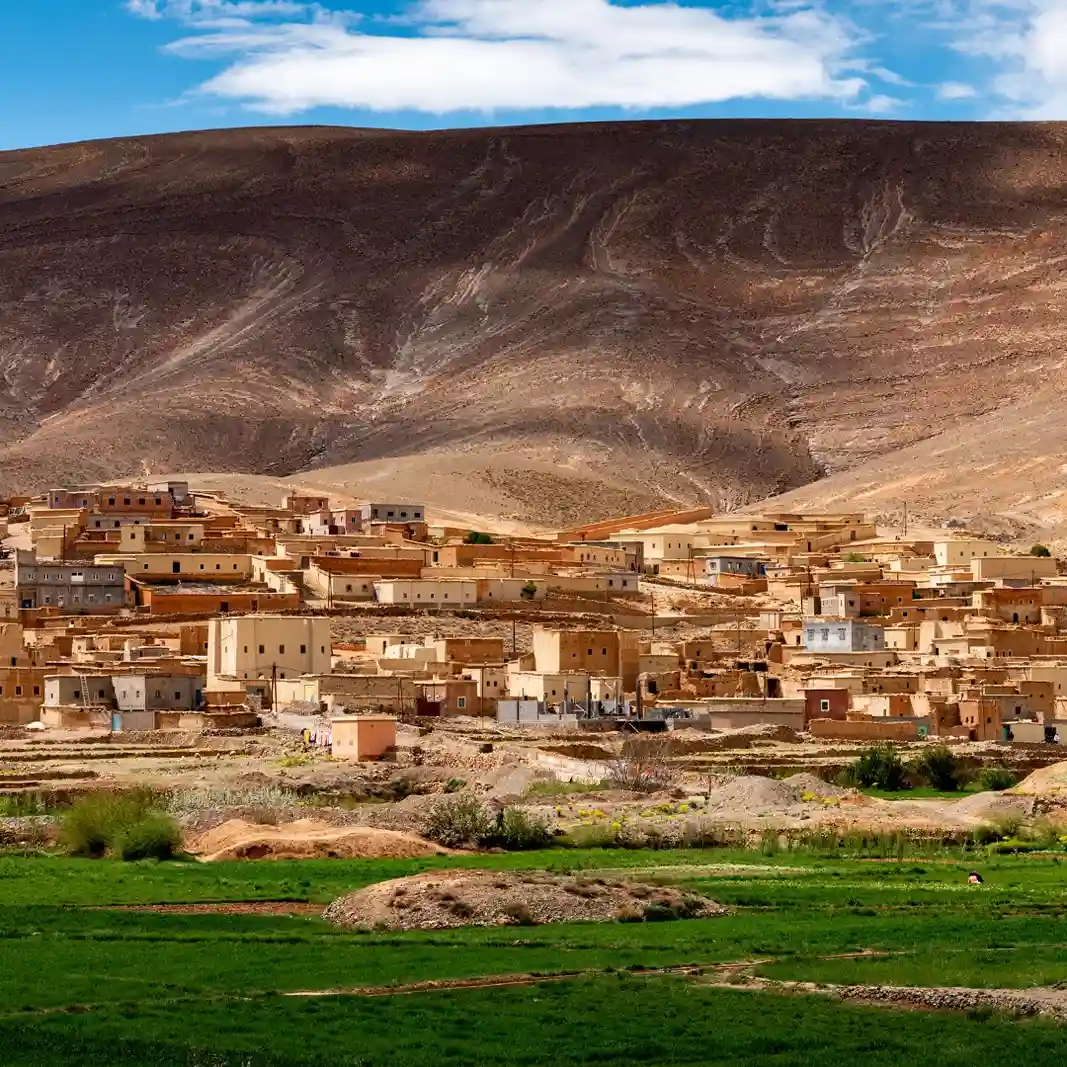
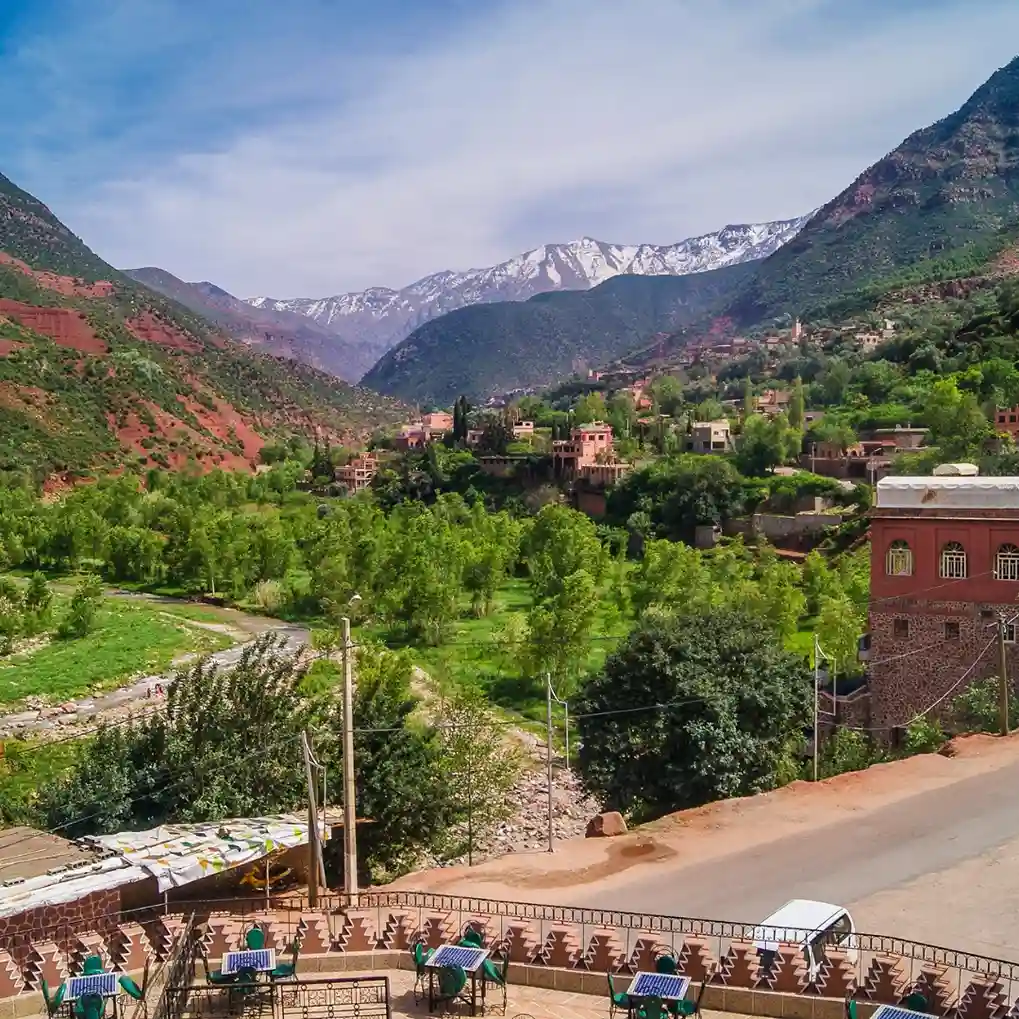
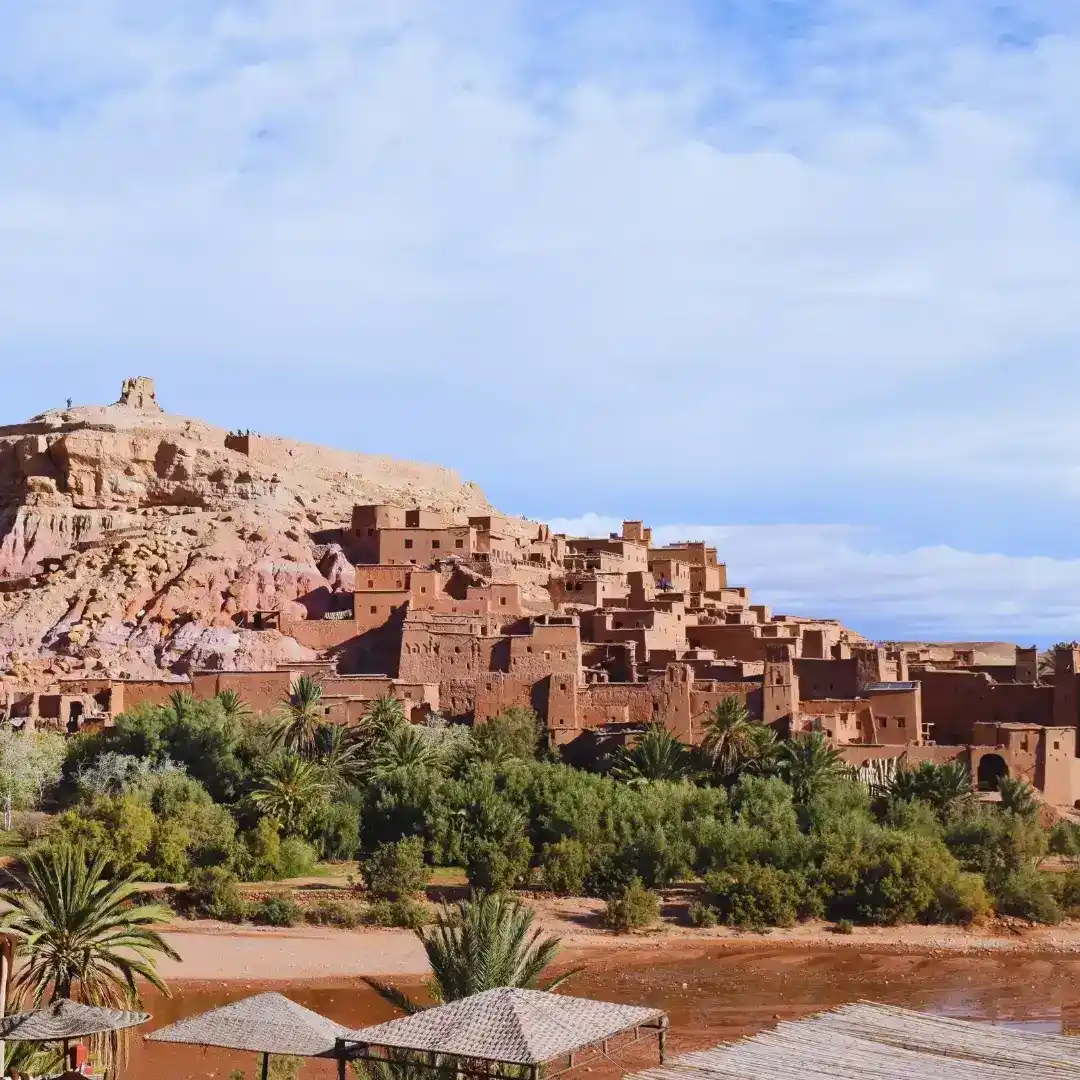
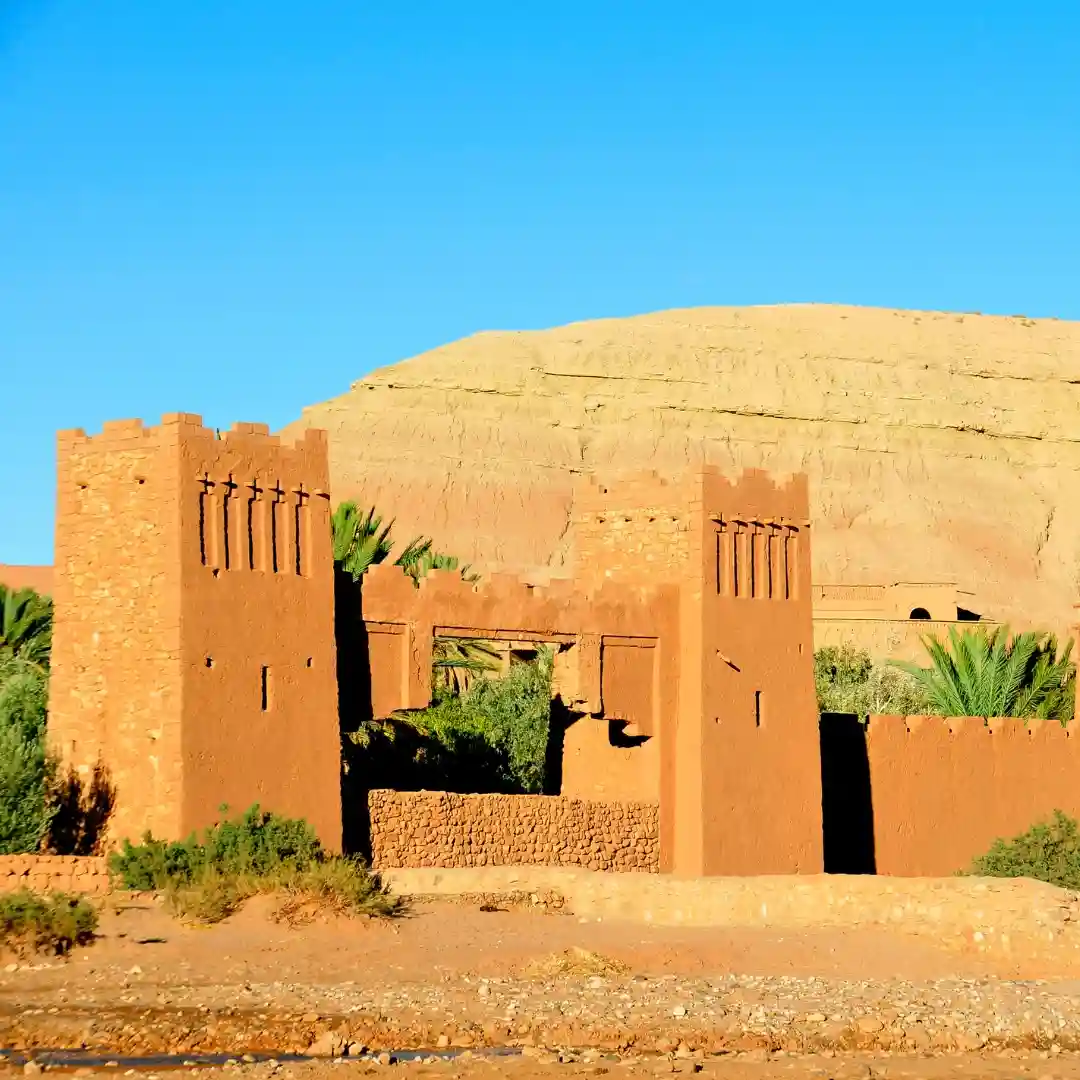
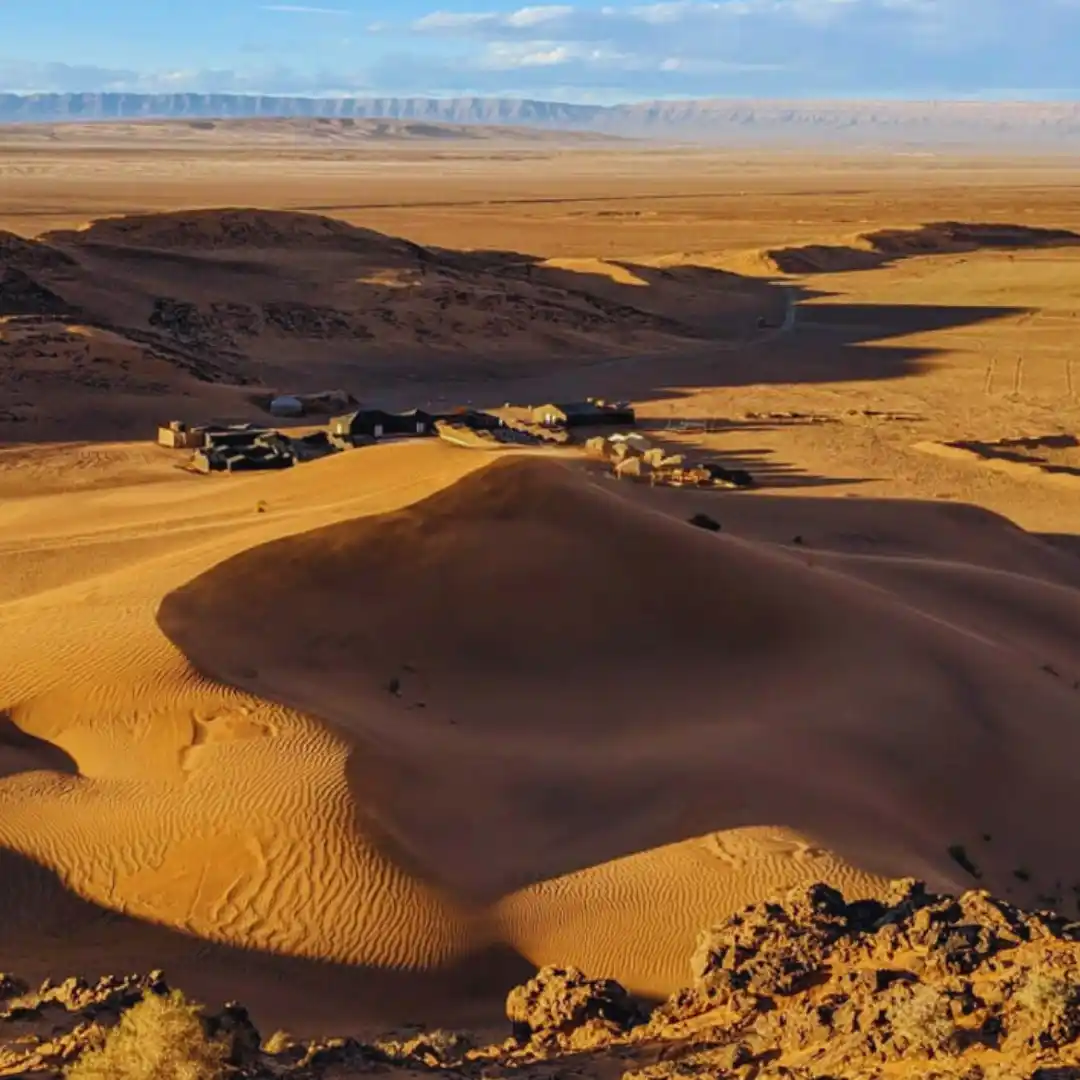
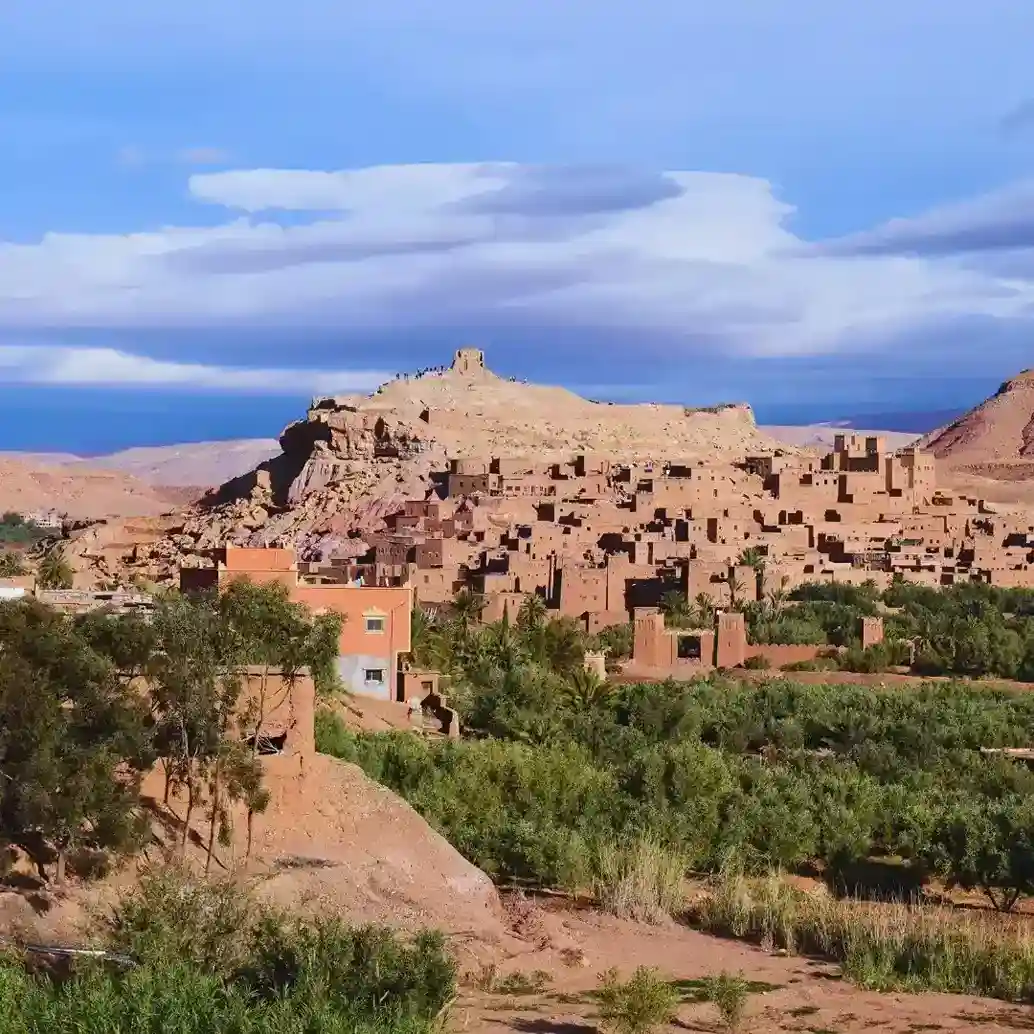
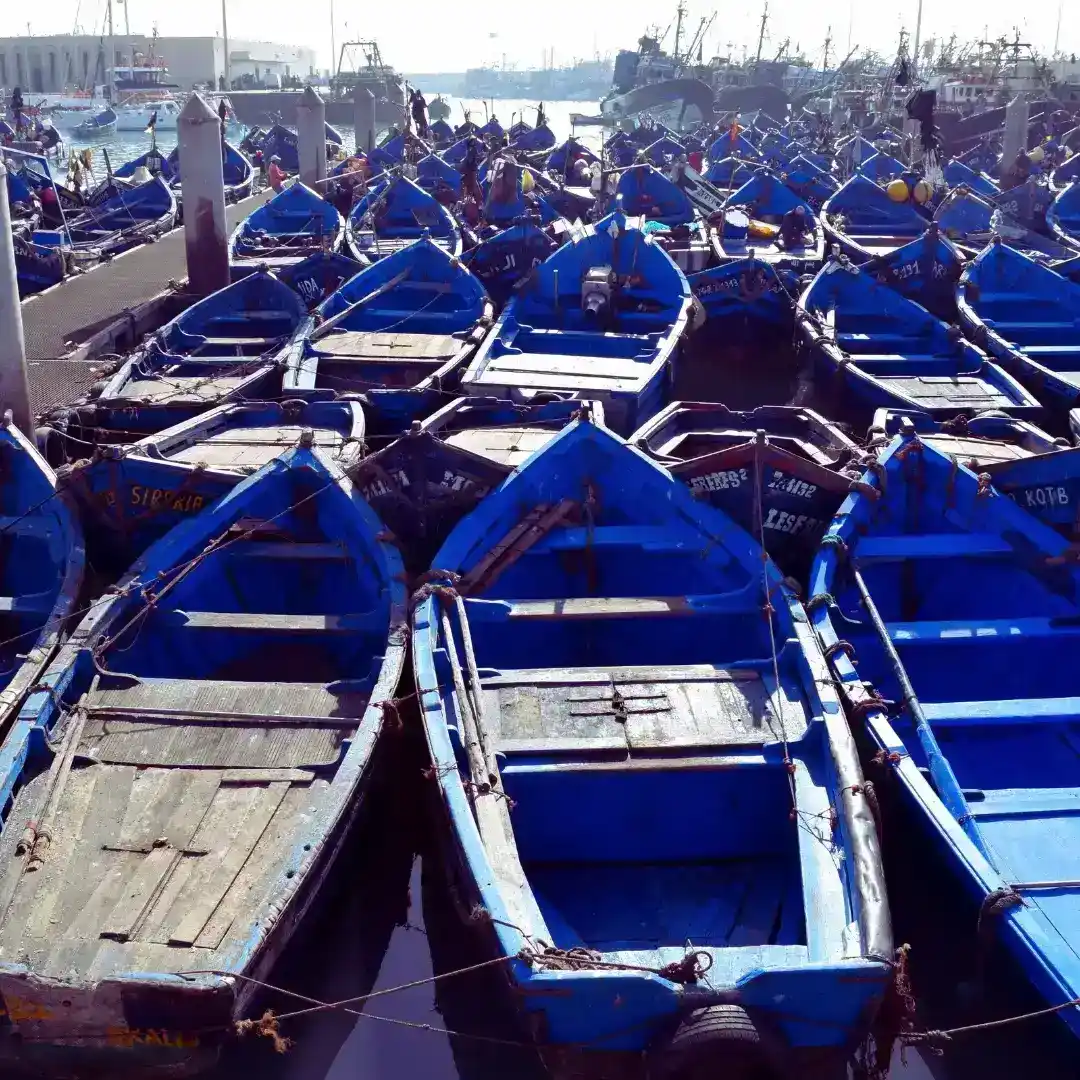

Spring
BestMar – May
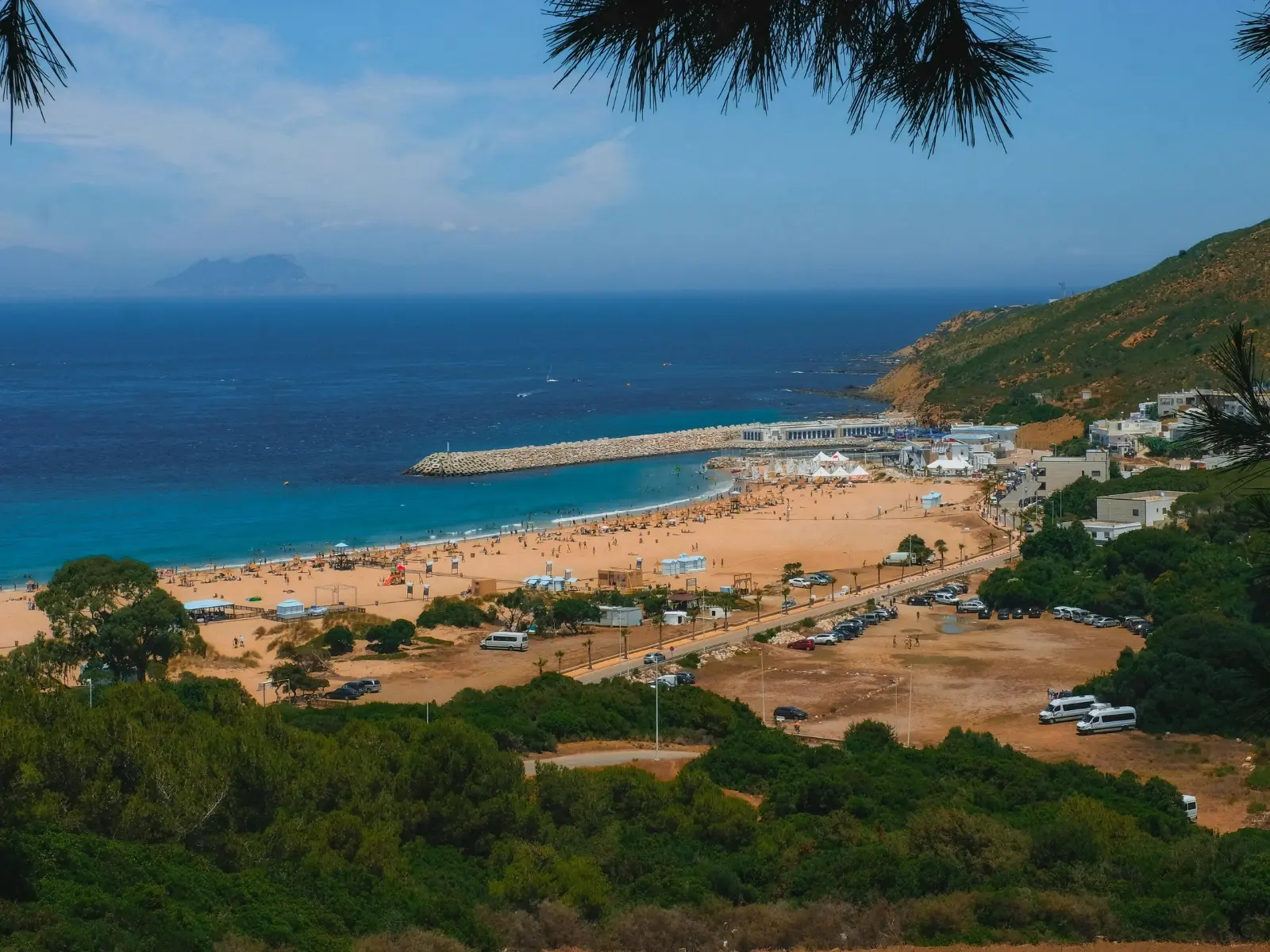
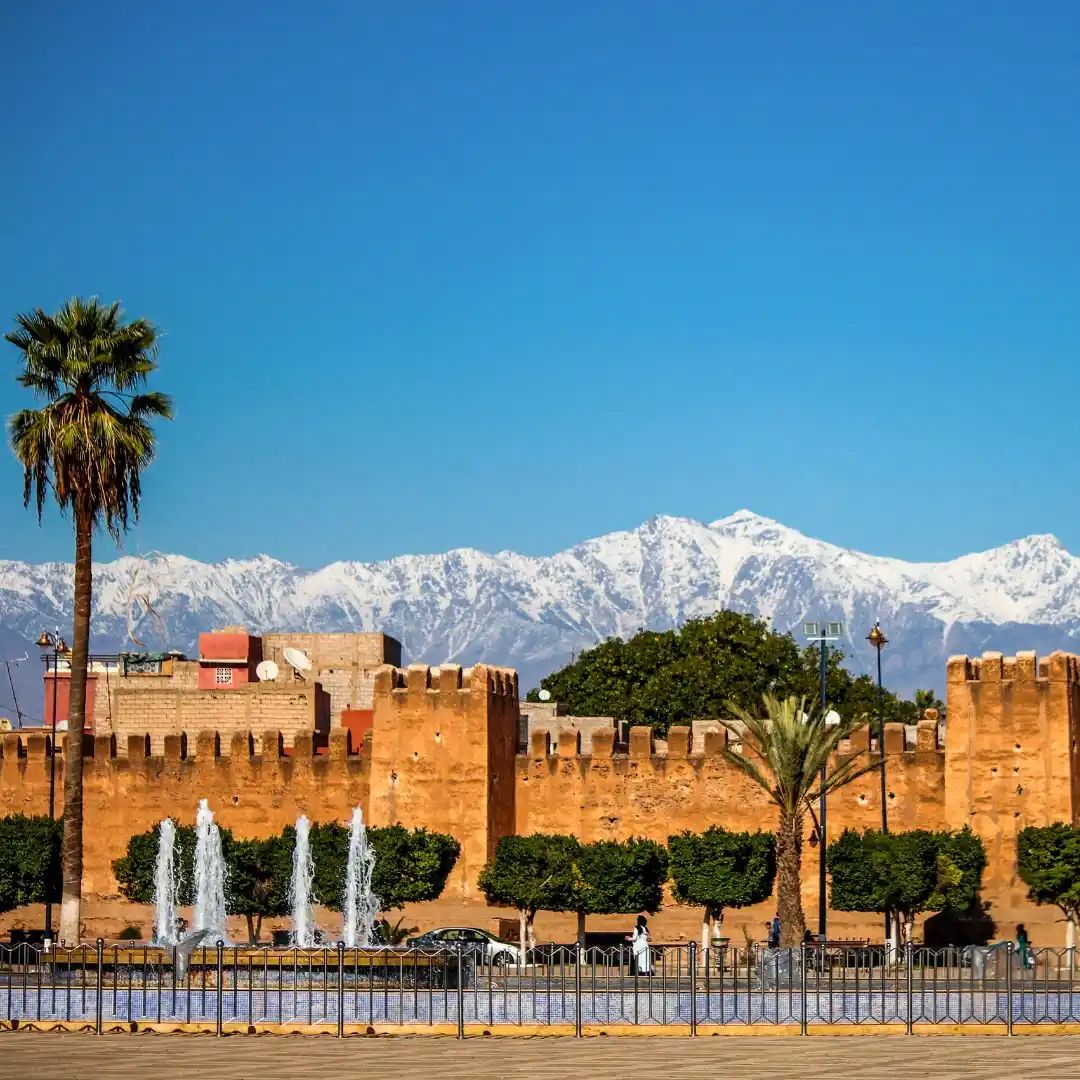
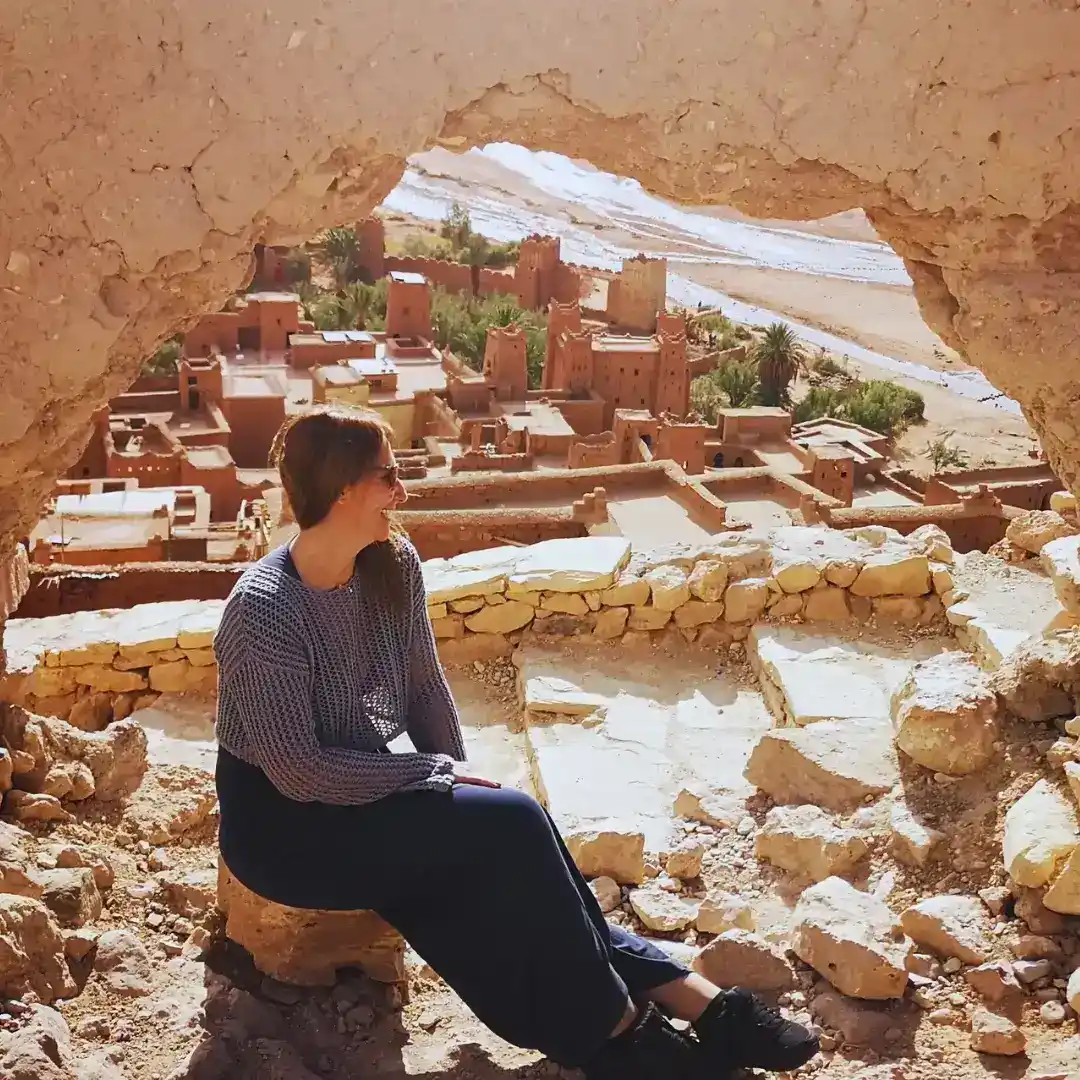
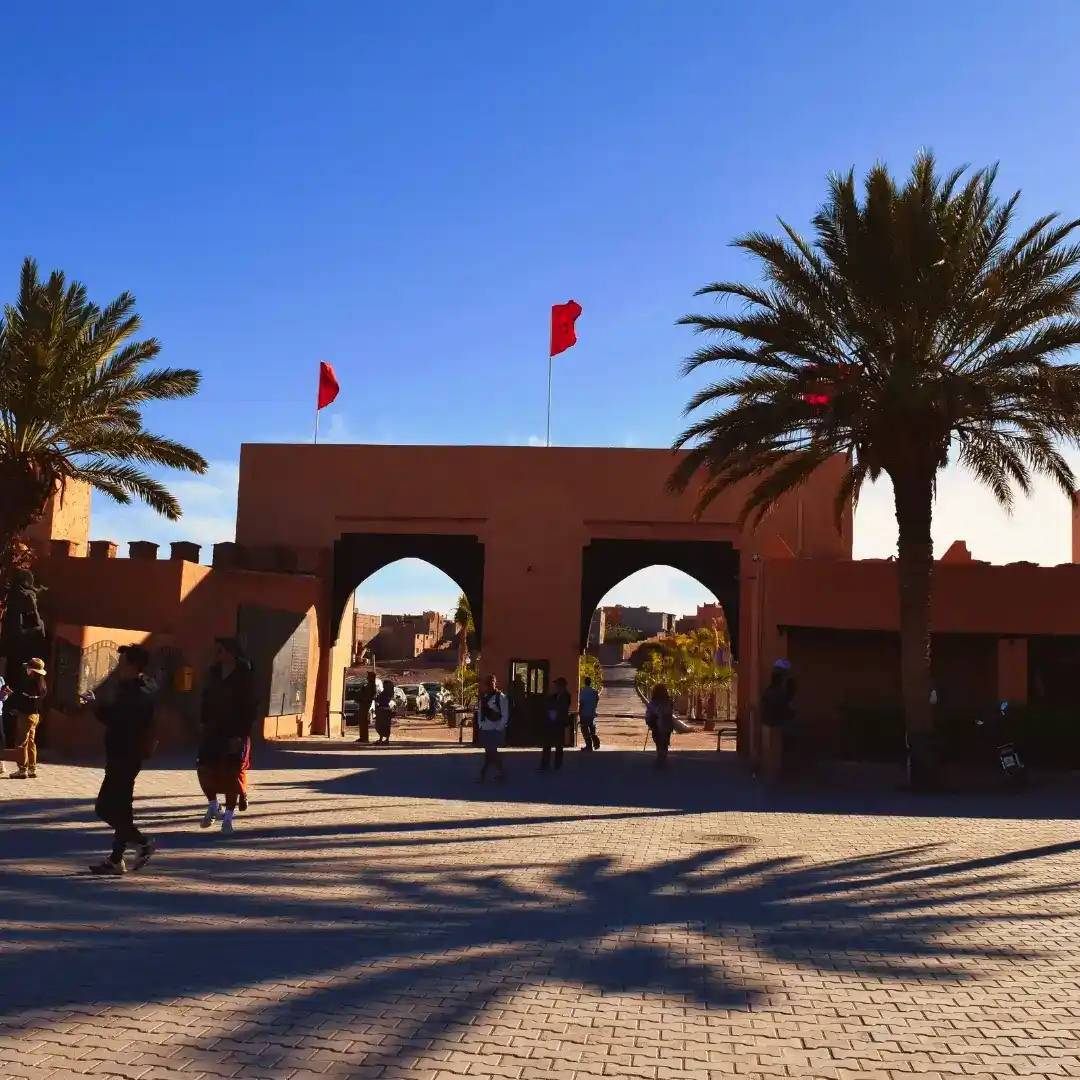
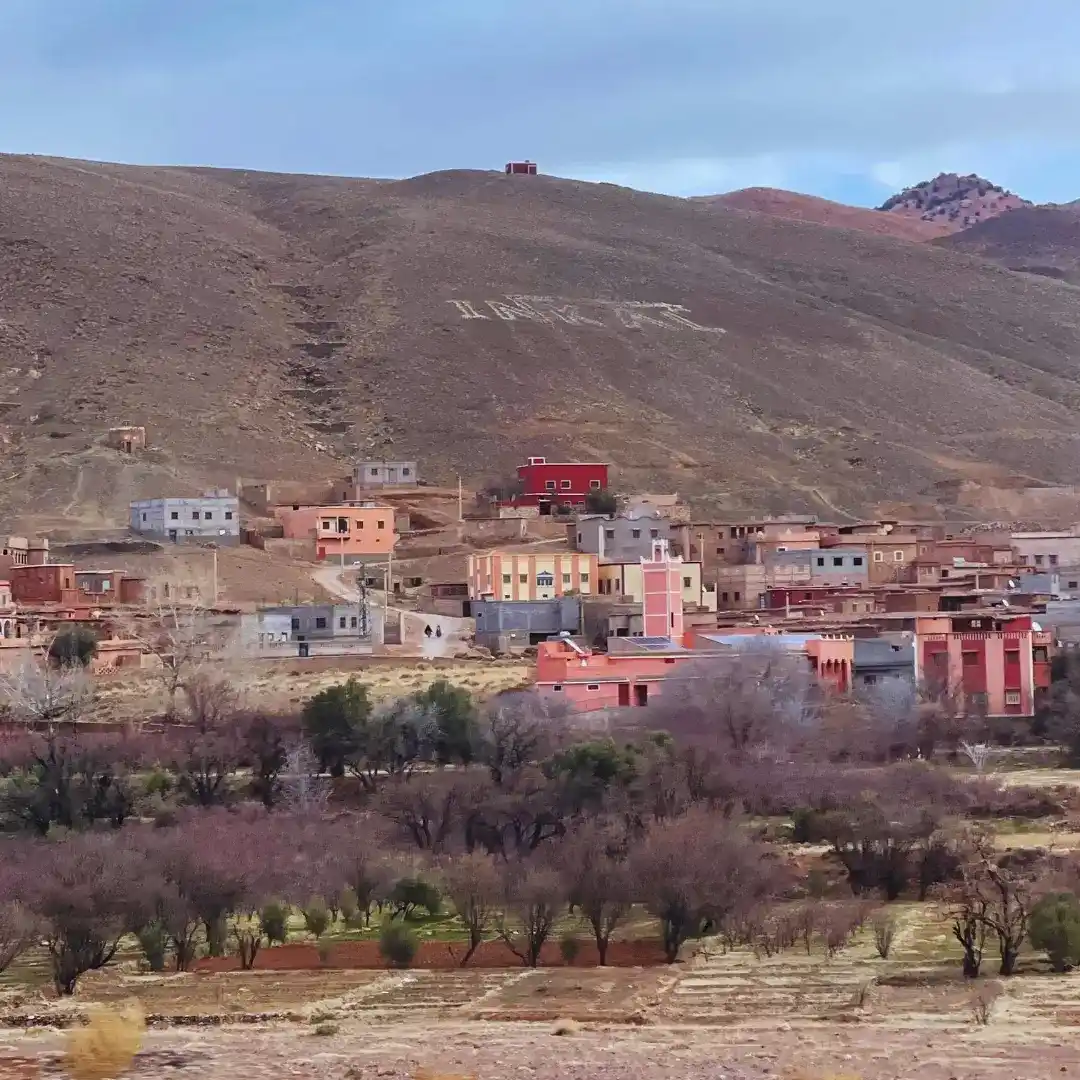
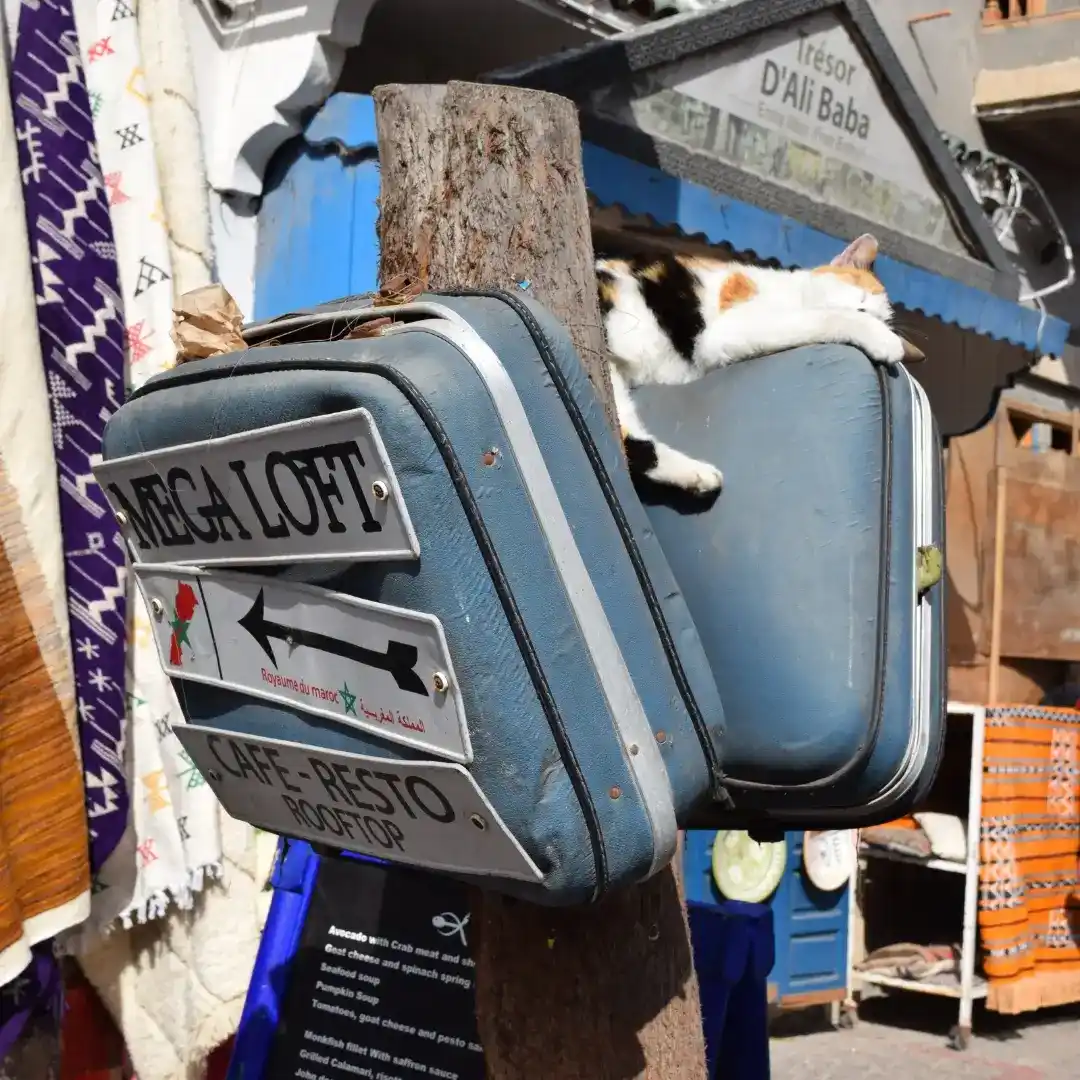
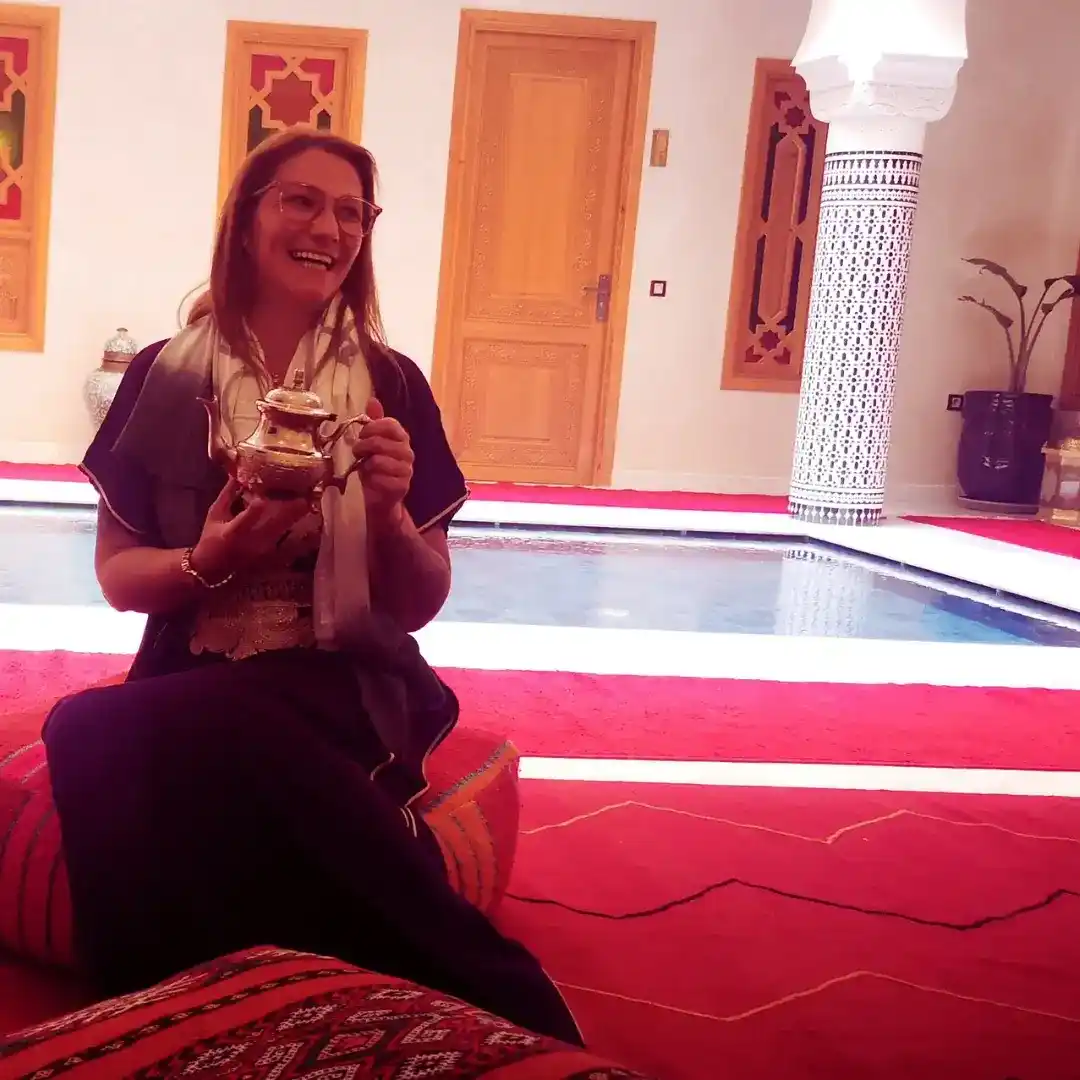
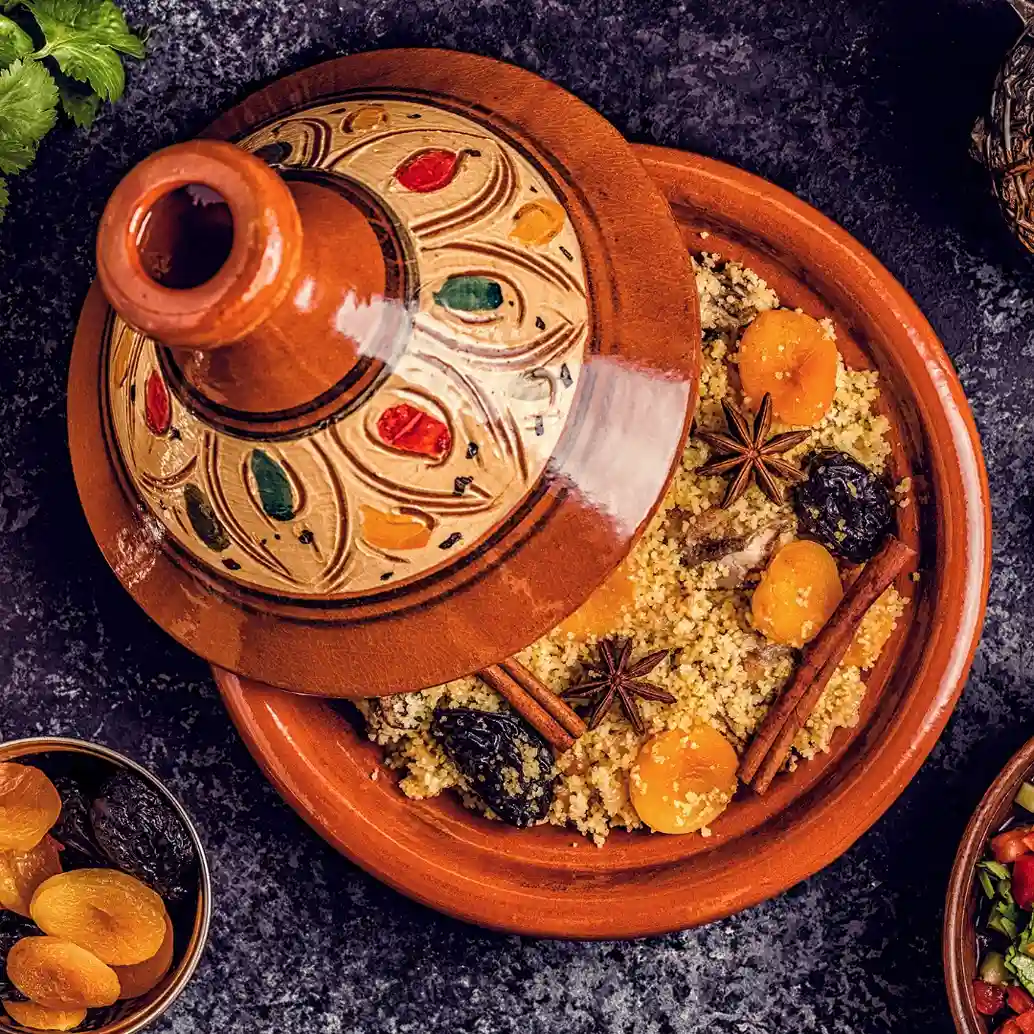
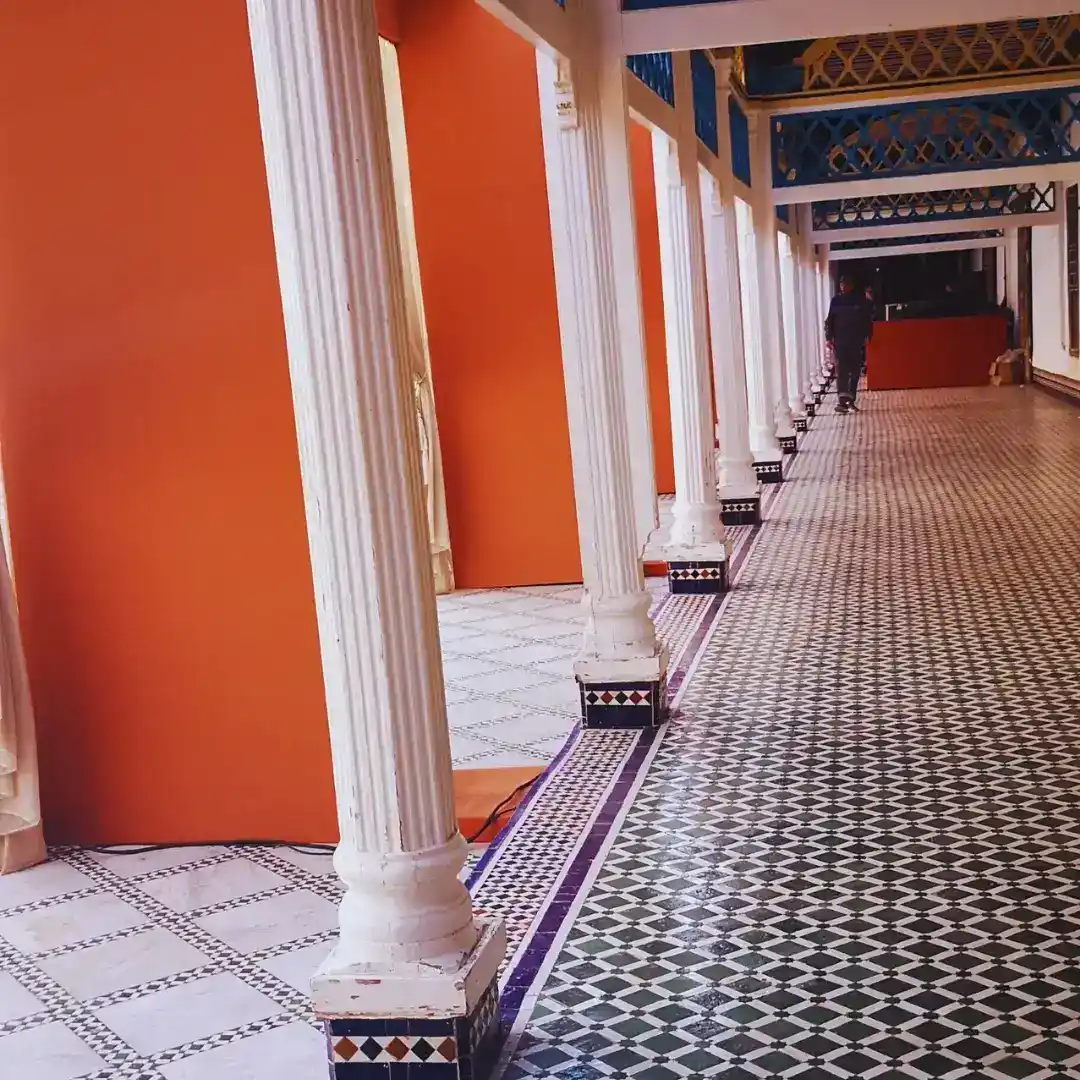
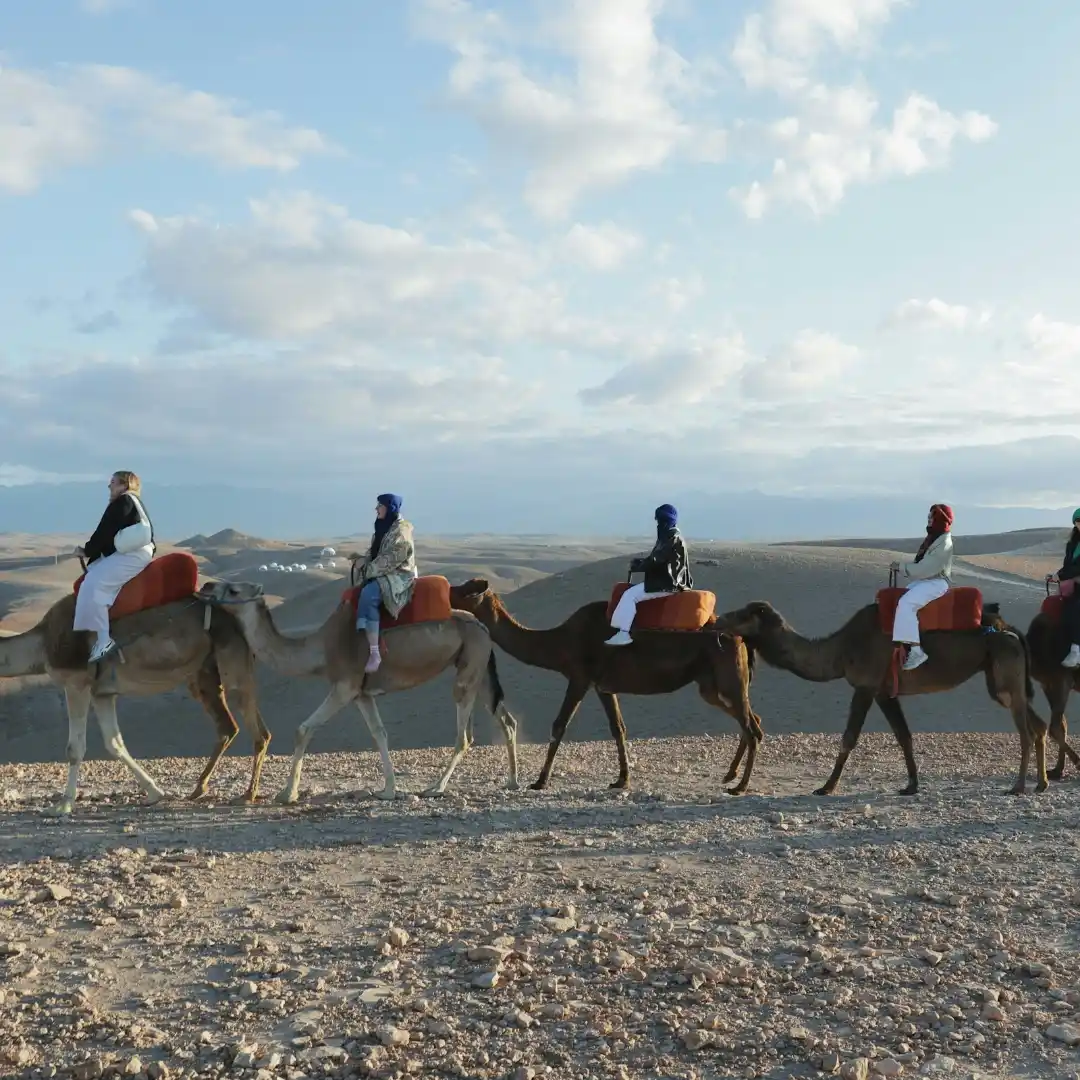
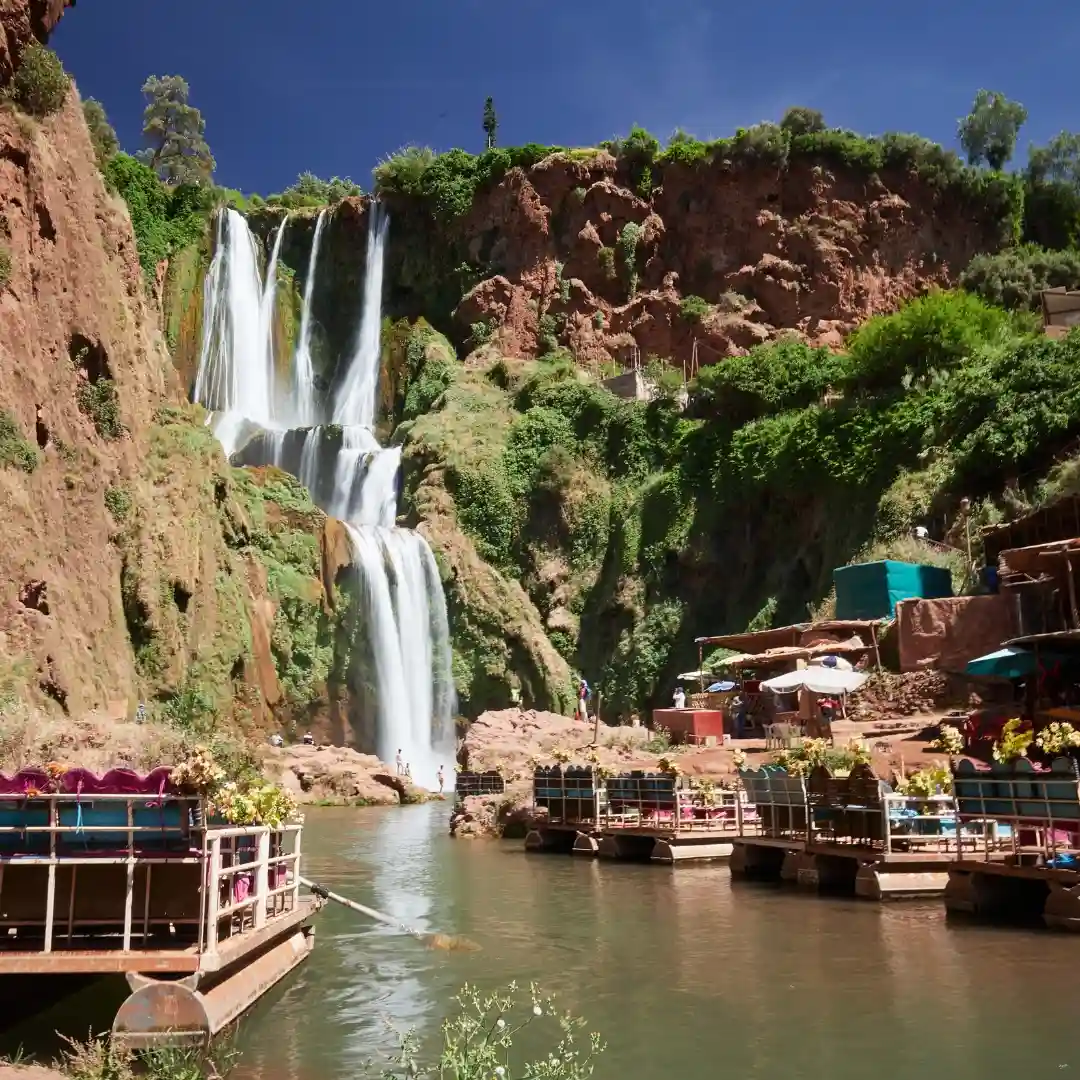
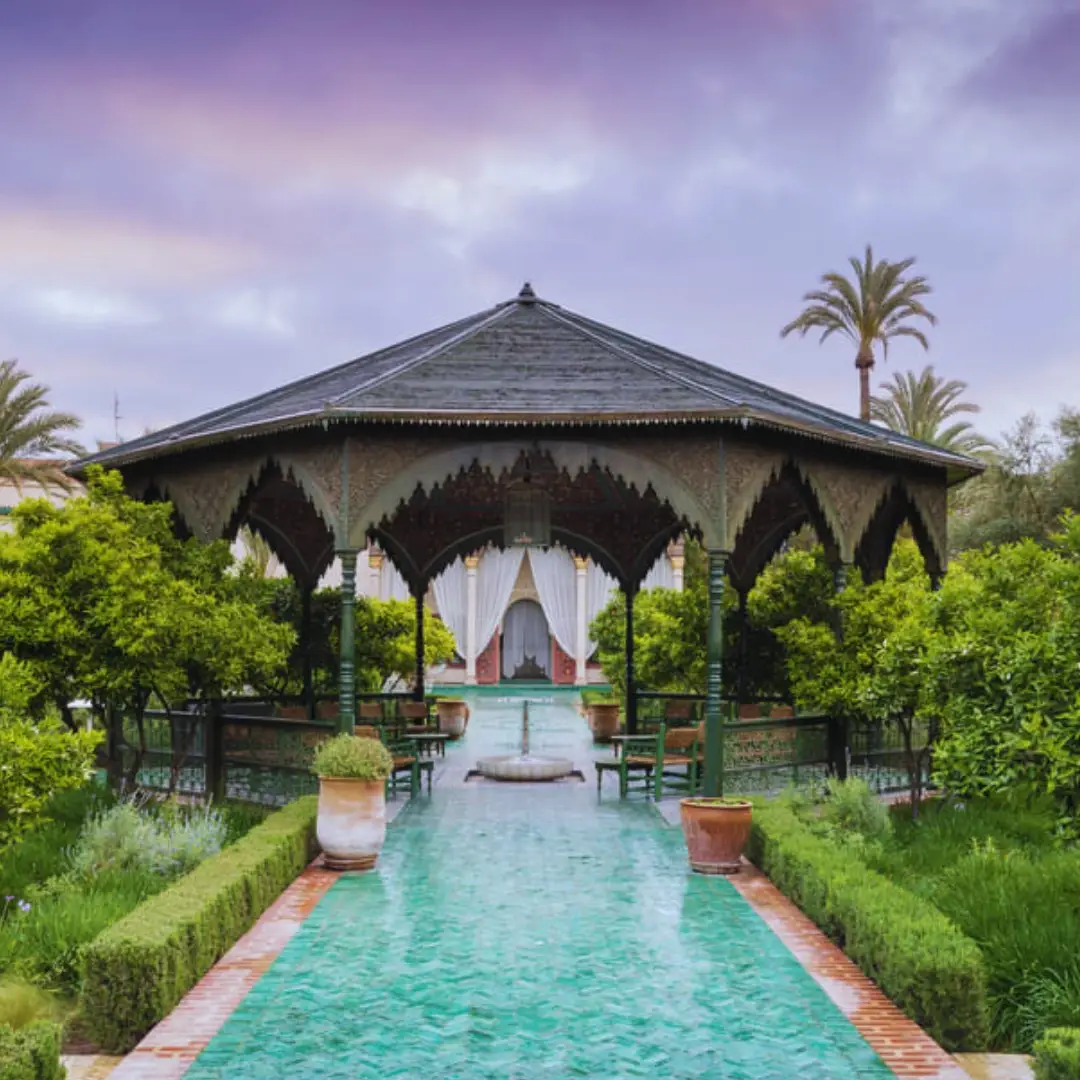
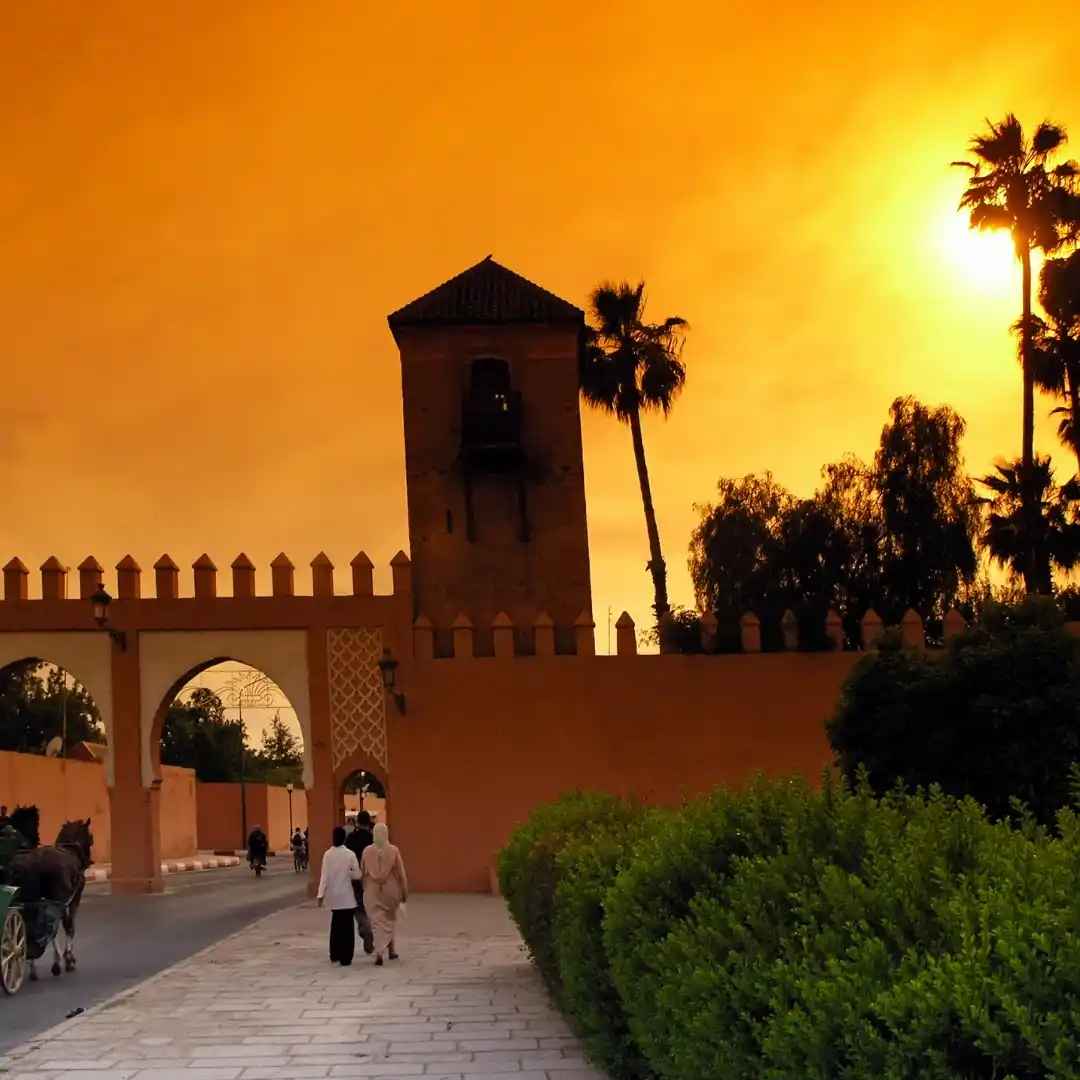
Spring brings mild temperatures and flowering landscapes.
Private journeys across Morocco
Visit Morocco Tours

A real person replies within 48 hours · Email us
Destination
A city of ochre walls, ancient souks, hidden riads and restless energy. Marrakech brings Morocco’s past and present into the same streets, often before you have finished your first mint tea.
Request Your Personal QuoteMarrakech travel guide · Updated 2 October 2026
Marrakech does not ease you into Morocco. It gets your attention.
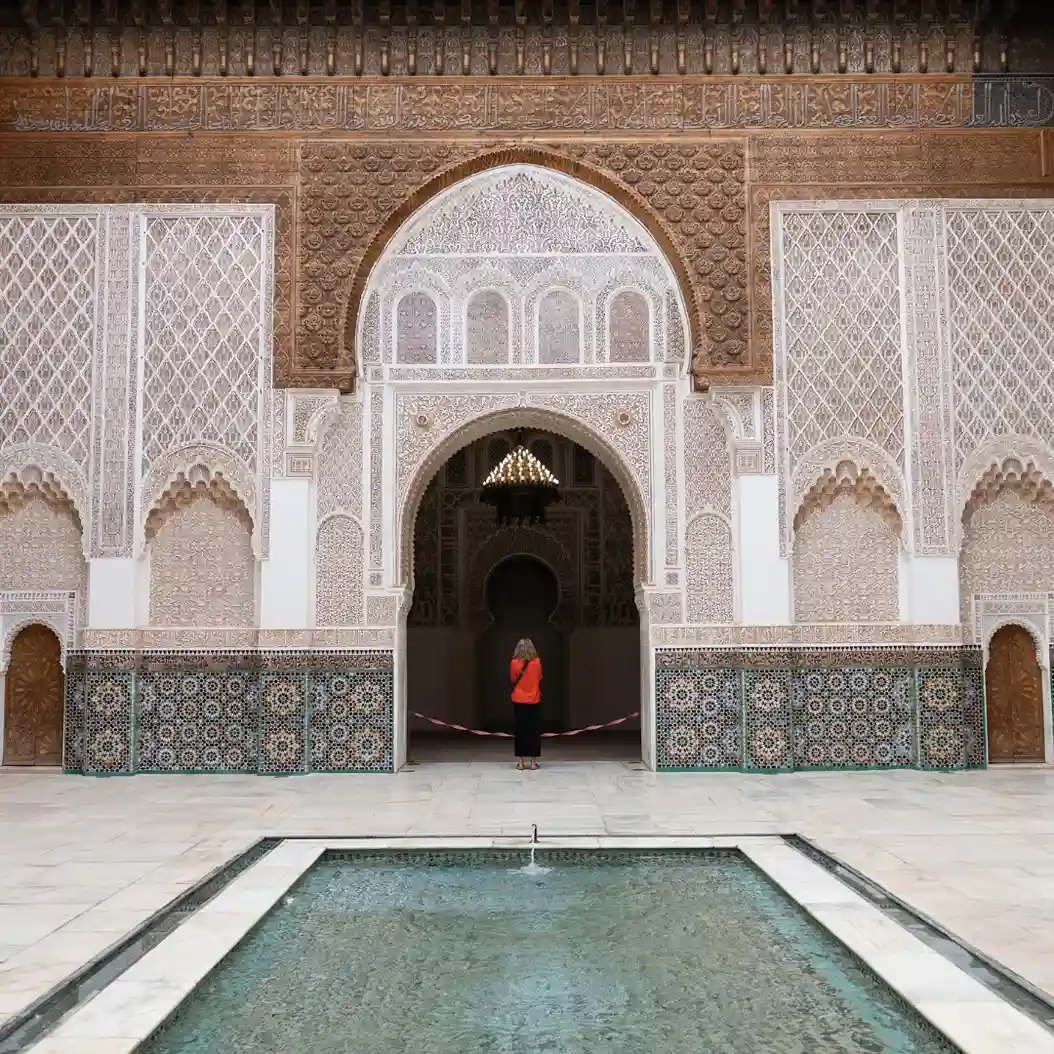
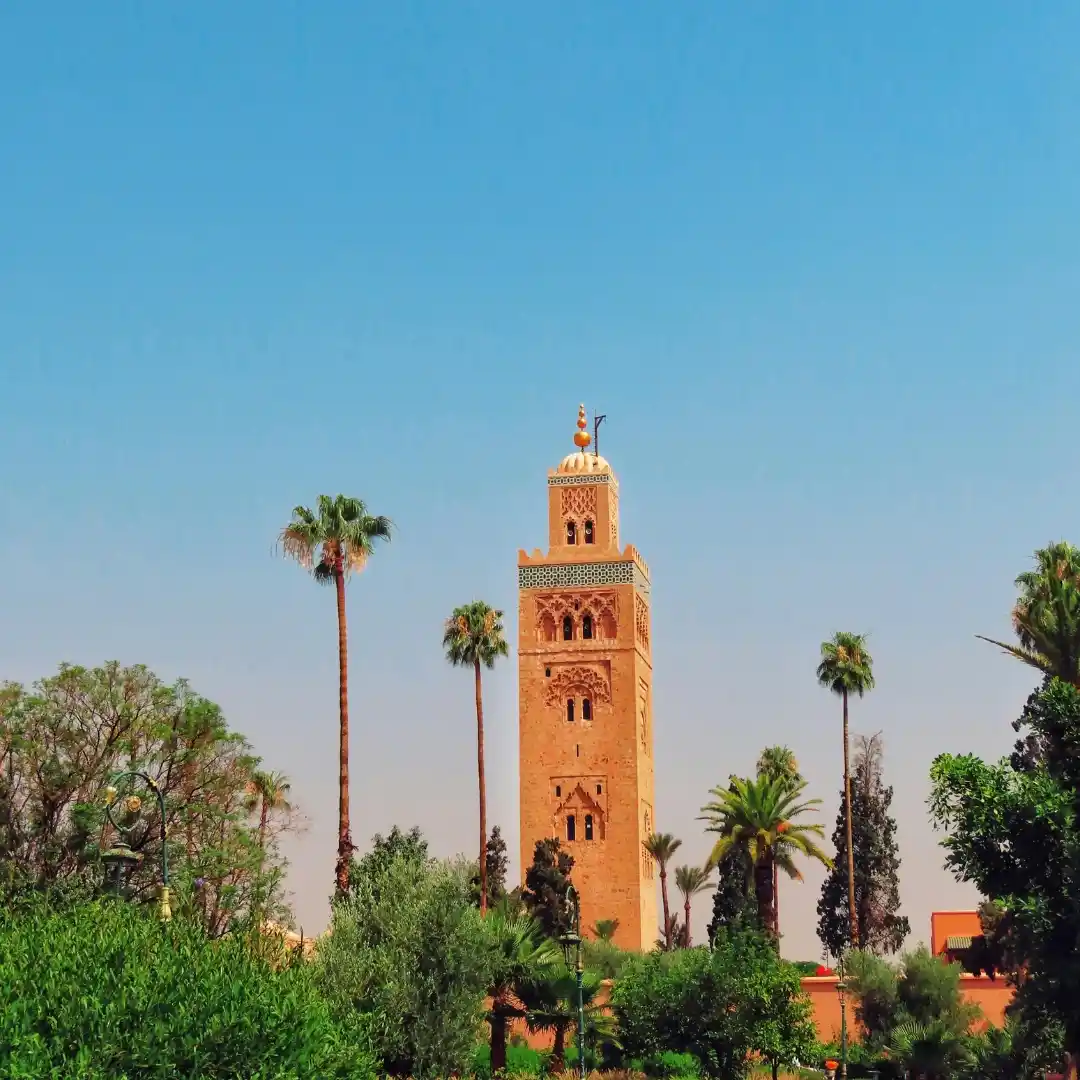
Known as the Red City, Marrakech grew around its historic Medina, where ochre walls, narrow streets, souks, palaces and mosques still shape the heart of the city. Founded in the 11th century by the Almoravid dynasty, Marrakech became one of Morocco’s great imperial cities and later gave its name to the country in several European languages. Today, its historic centre forms part of the UNESCO World Heritage site of the Medina of Marrakesh.
The city is built on contrasts. Inside the Medina, you move through centuries of Moroccan architecture, craftsmanship and commerce. Beyond the walls, neighbourhoods such as Gueliz and Hivernage bring a more contemporary side of Marrakech, with galleries, restaurants, hotels and modern cafés. The Atlas Mountains sit on the horizon, adding another layer to the city’s setting.
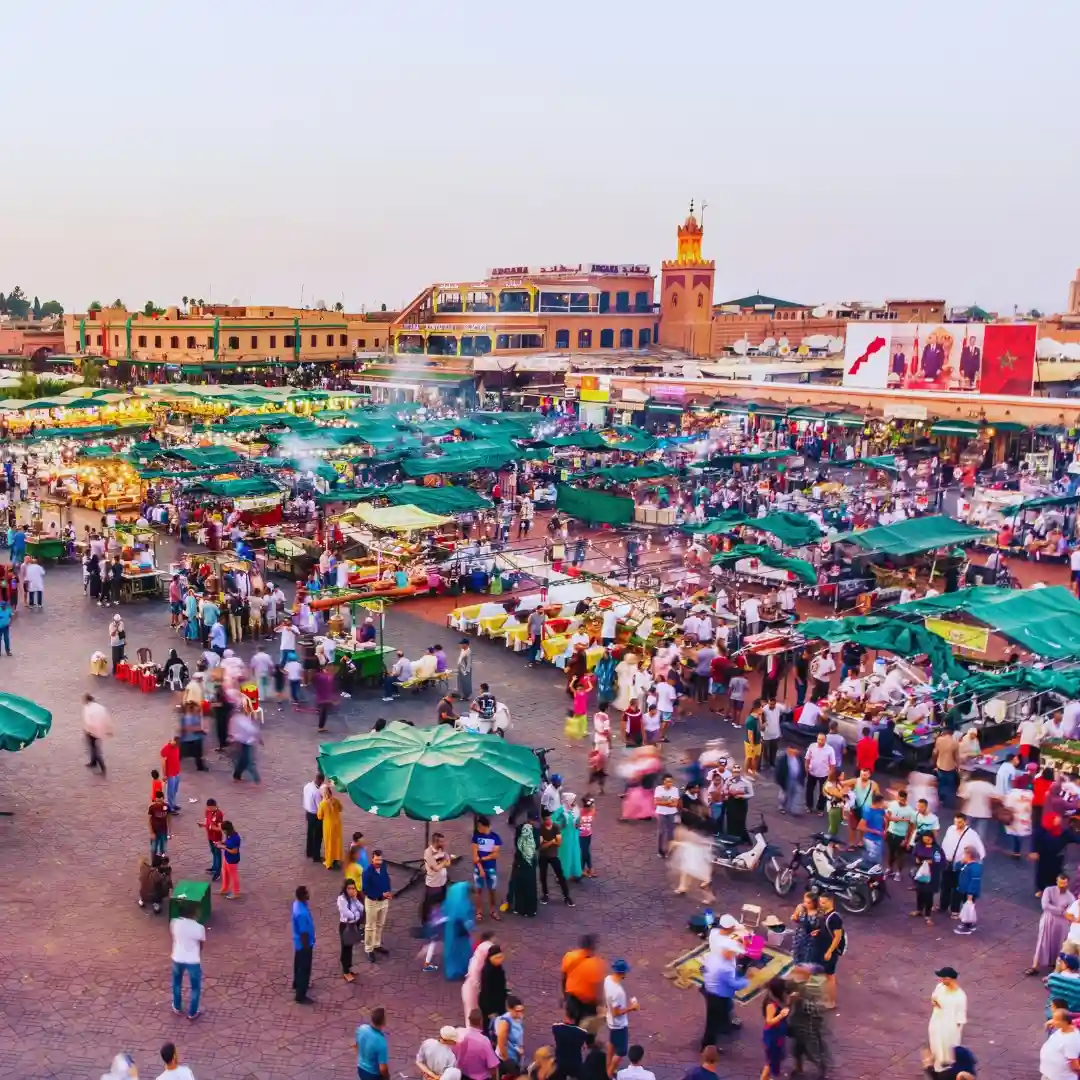
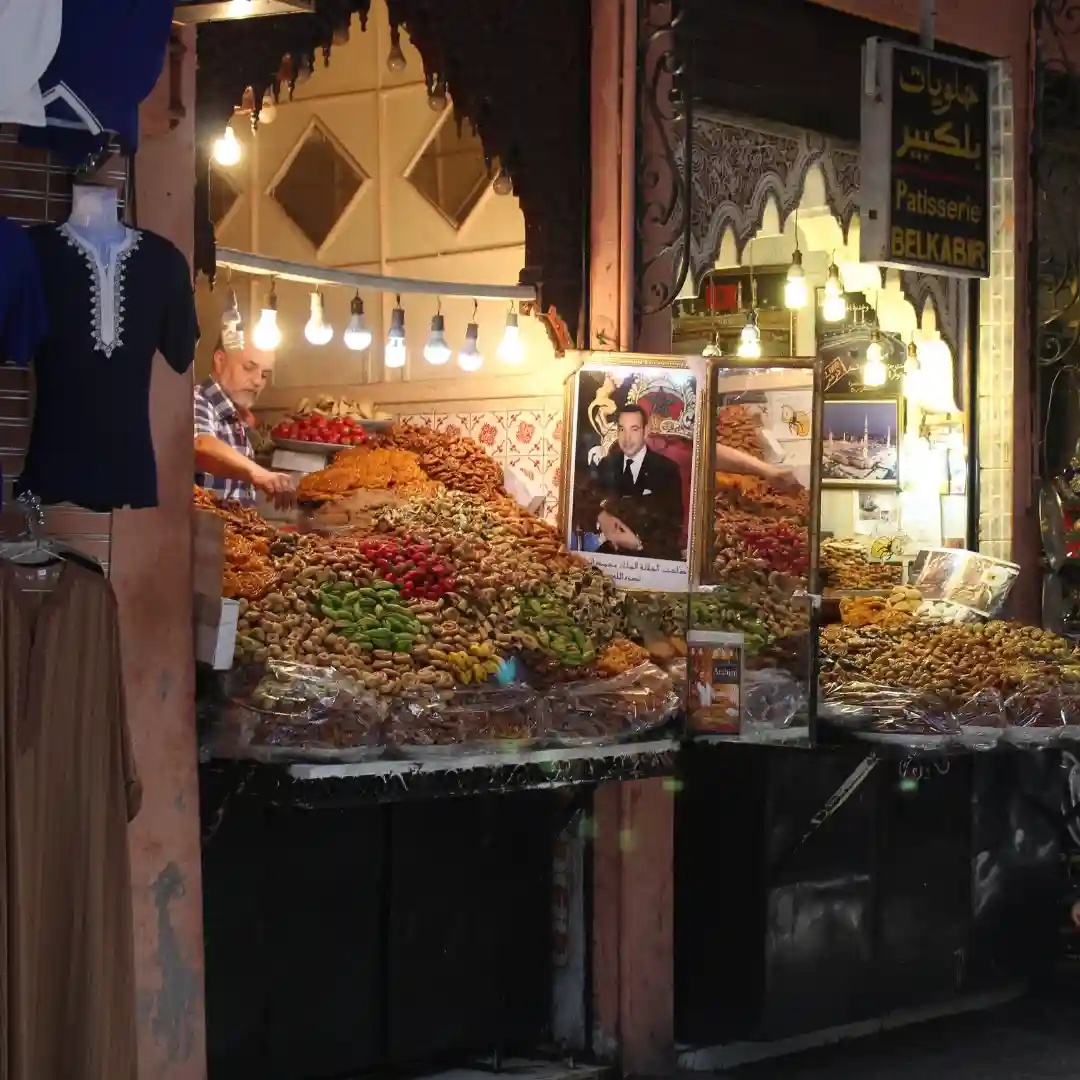
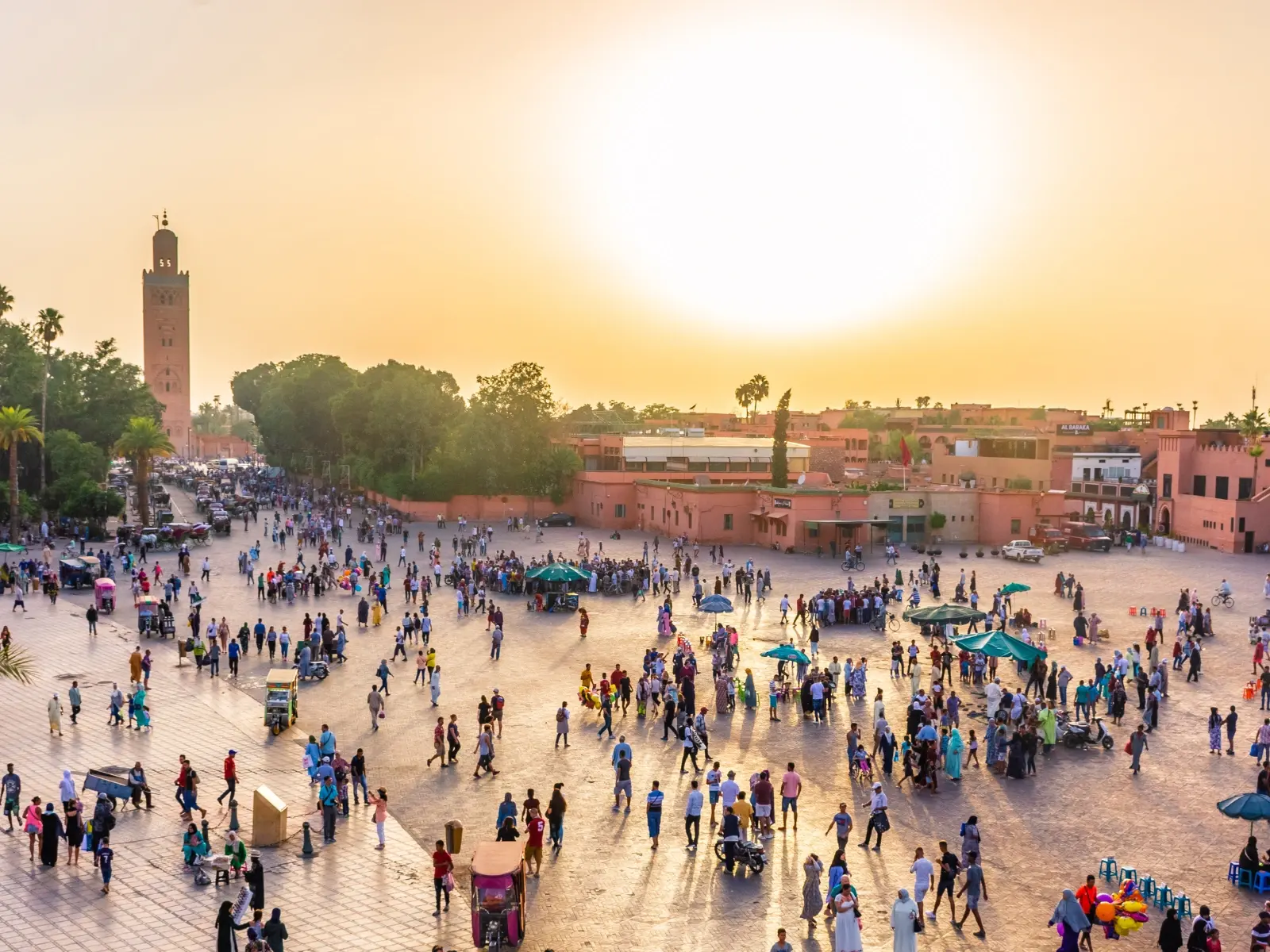
Then there is Jemaa el-Fna. By day, the square moves at its own pace. By evening, food stalls, performers and local life transform the atmosphere again. The souks continue from there, filled with leather, metalwork, textiles, ceramics and the kind of shopping decision that somehow requires another cup of tea.
Marrakech is one of Morocco’s essential destinations, but the best experience comes when you look beyond the checklist. Give yourself time to wander, notice the details and let the city unfold.
This is the Morocco of old walls and new ideas, ancient craft and modern taste.
Every journey below departs from Marrakech with a licensed local guide and a private vehicle. Prefer something of your own design? We build itineraries from scratch.
21 journeys
Four-day private weekend from Marrakech taking in the medina highlights and Atlas Mountains + Ourika Valley, with your own driver and guide
7 day trips
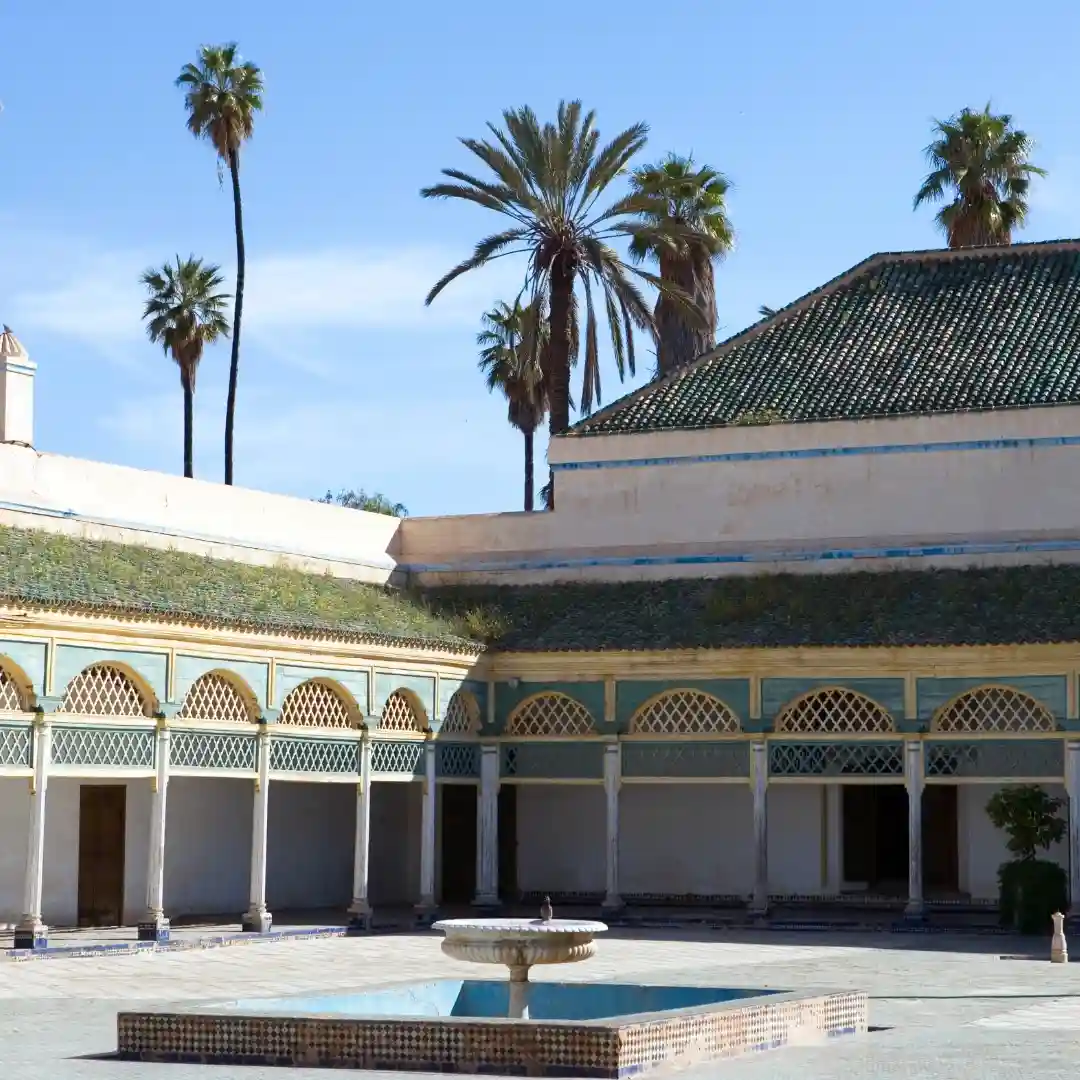
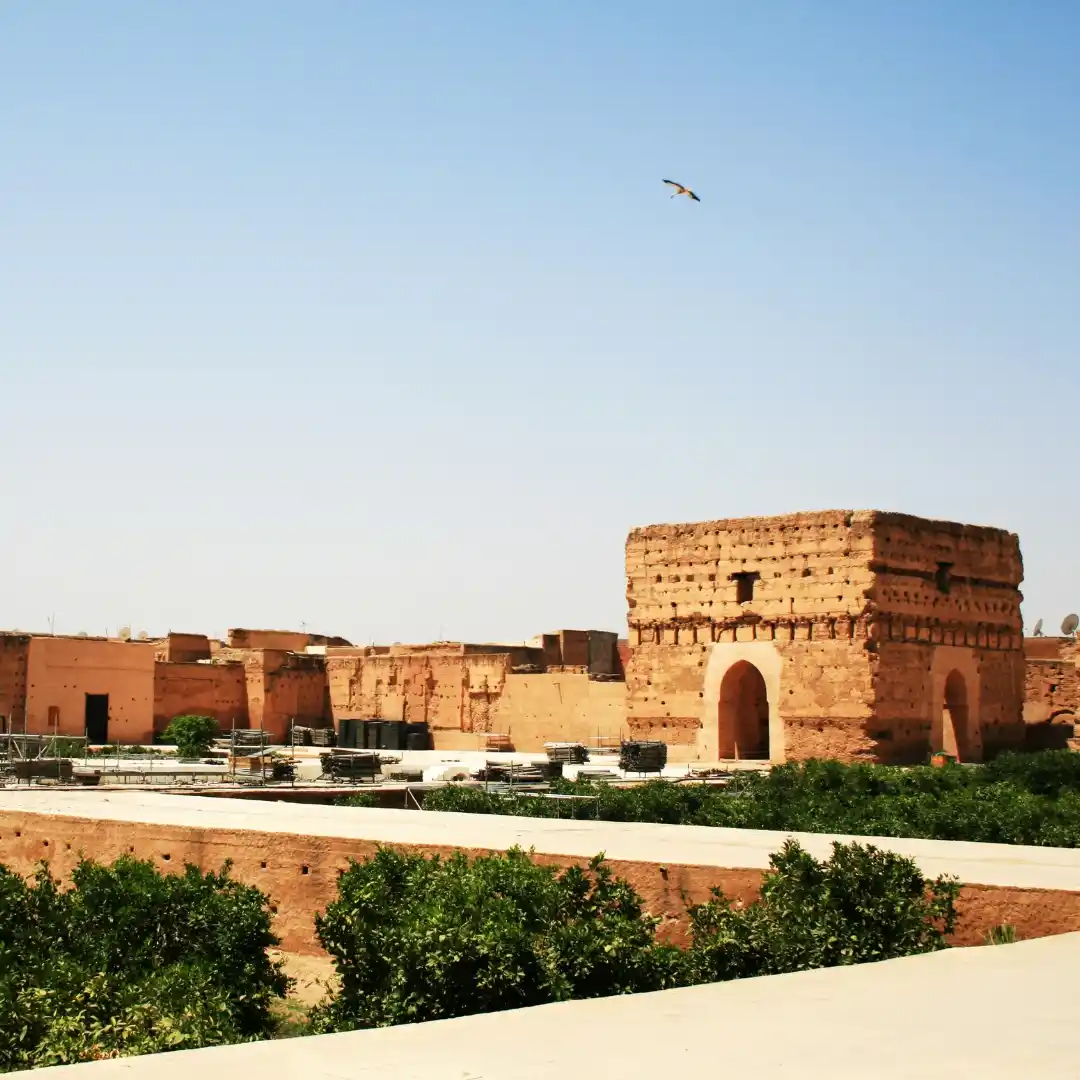
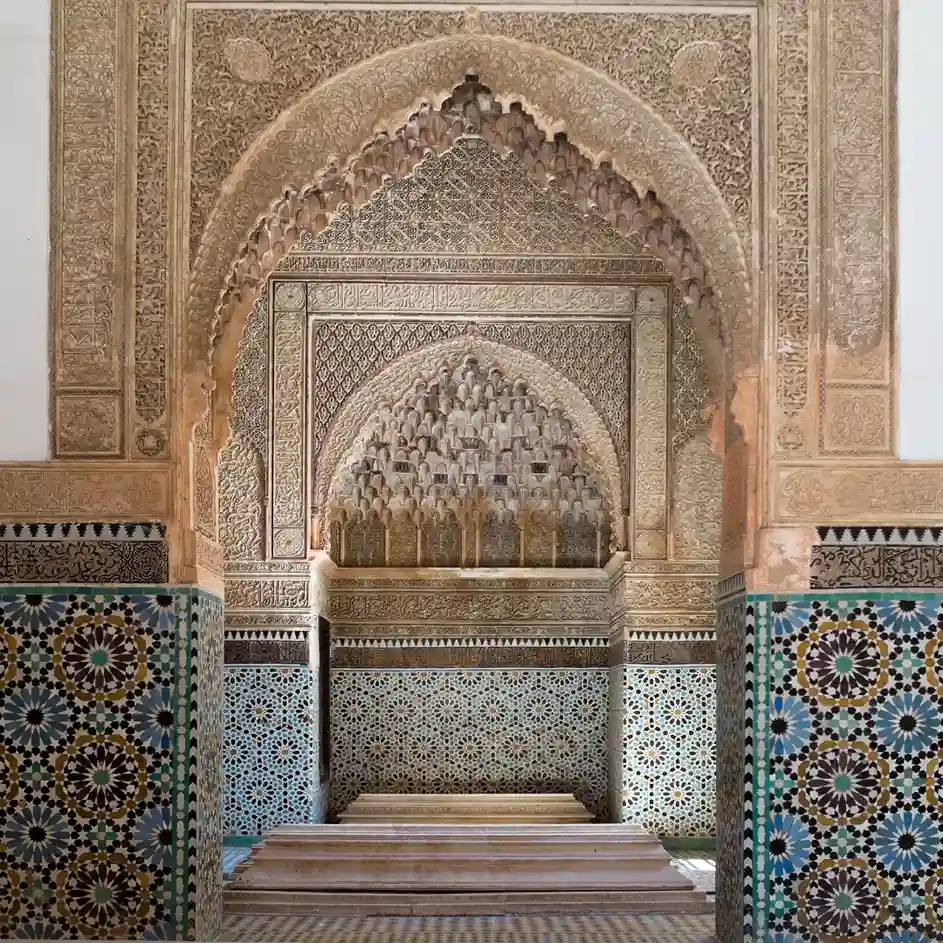
A full day inside the red city with a licensed local guide — Bahia Palace, Saadian Tombs, the souks and Jemaa el-Fnaa at dusk
11 landmarks
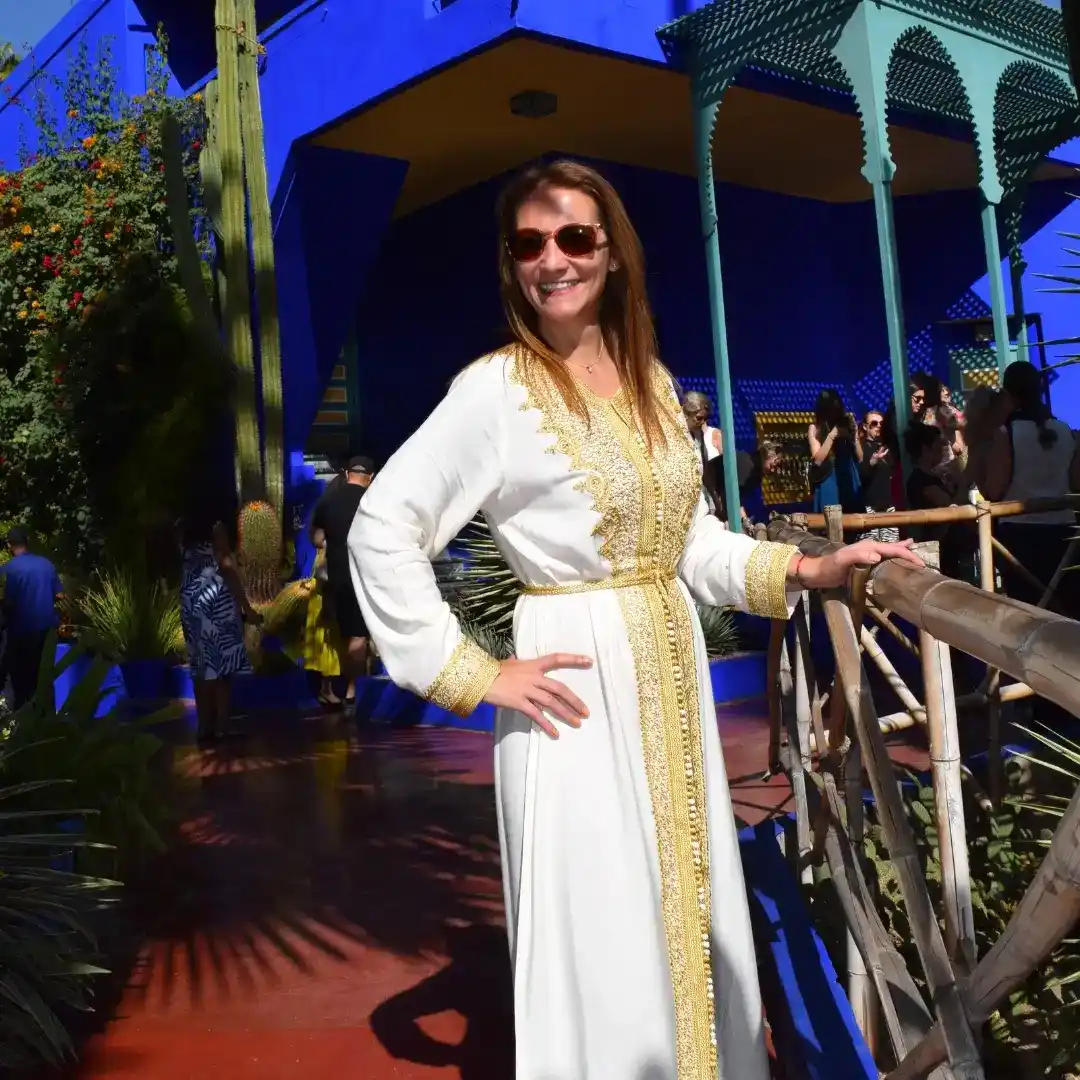
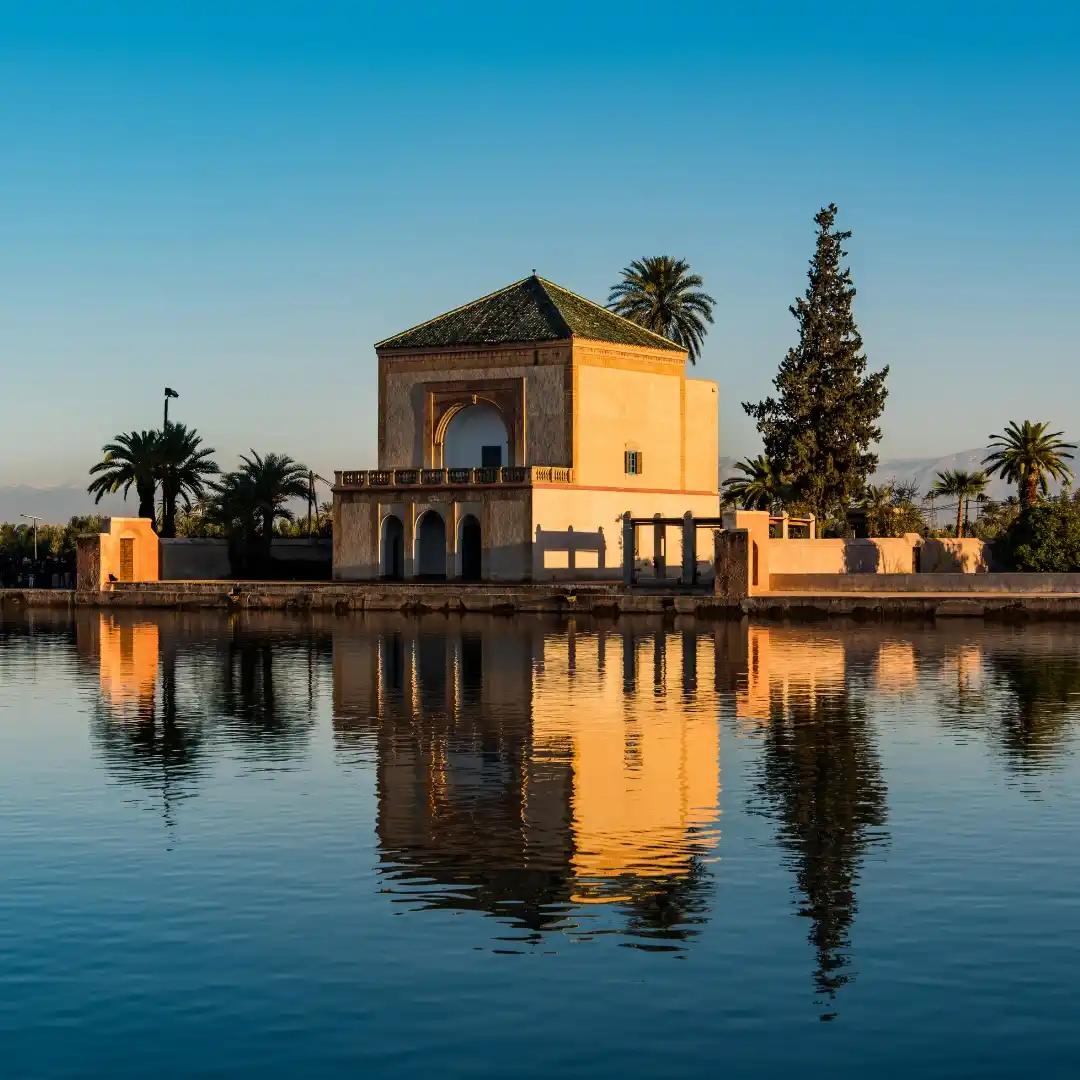
Jacques Majorelle's cobalt-blue garden in Marrakech, later restored by Yves Saint Laurent and Pierre Bergé — cacti, bamboo, lily ponds and the Berber Museum in one peaceful oasis
8 free places
No ticket, no booking — 8 places our guides send travellers to, with opening hours, the best time to go and insider tips.
Jemaa el-Fnaa is the beating heart of Marrakech: a free, open square of storytellers, musicians, food stalls and spice-scented smoke that comes alive from late afternoon into the night
1 day
You will see the headline sights, but Marrakech deserves more breathing room. A single day works best as a short stop rather than a full introduction.
2 days
A good first taste. You have time for the Medina, Jemaa el-Fna, major historic sites and some time to explore beyond the obvious route.
3 days
The sweet spot for many first-time visitors. You can combine the historic centre with Gueliz or Hivernage, allow time for shopping, food and slower exploration, and still fit in a nearby experience.
4 days or more
Useful if you want to combine Marrakech with the Atlas Mountains, Agafay, Ourika Valley or another nearby destination without turning every morning into a departure board.
Marrakech has a warm inland climate, with hotter summers and cooler winters than Morocco's Atlantic coastal cities. Spring and autumn offer some of the most comfortable conditions for exploring the city, particularly if you plan to spend long periods walking outdoors.
The Moroccan National Tourist Office notes spring temperatures of around 23°C to 26°C in Marrakech and Agadir.
For a city-focused trip, spring and autumn offer the easiest balance between comfortable temperatures and time outdoors.
Mar – May
Spring brings mild temperatures and flowering landscapes.
Jun – Aug
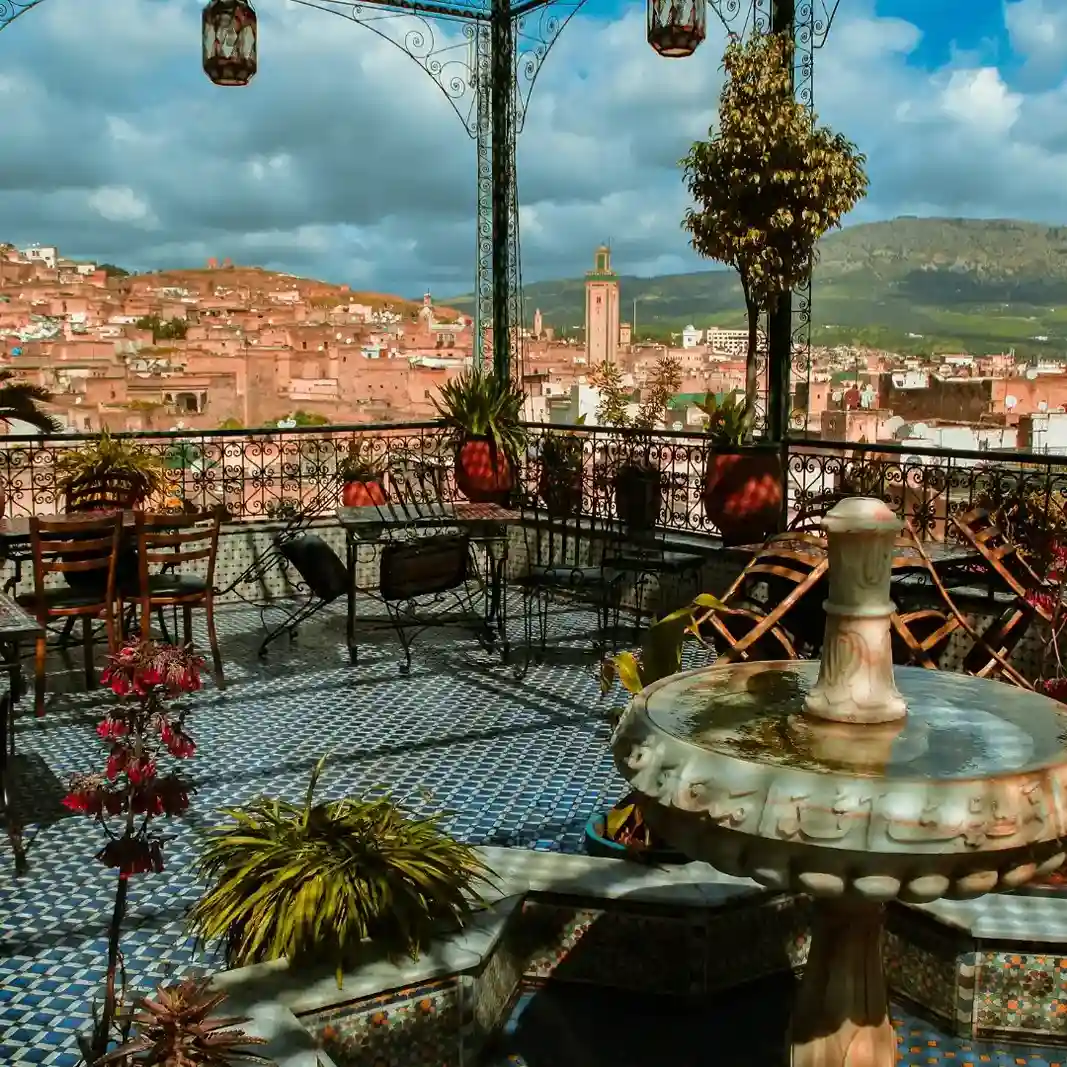
Summer is hot, particularly during the middle of the day. If you visit during this period, plan outdoor sightseeing for the morning and late afternoon, and leave the hottest hours for shaded spaces, museums, gardens, riads or a slower lunch.
Sep – Nov
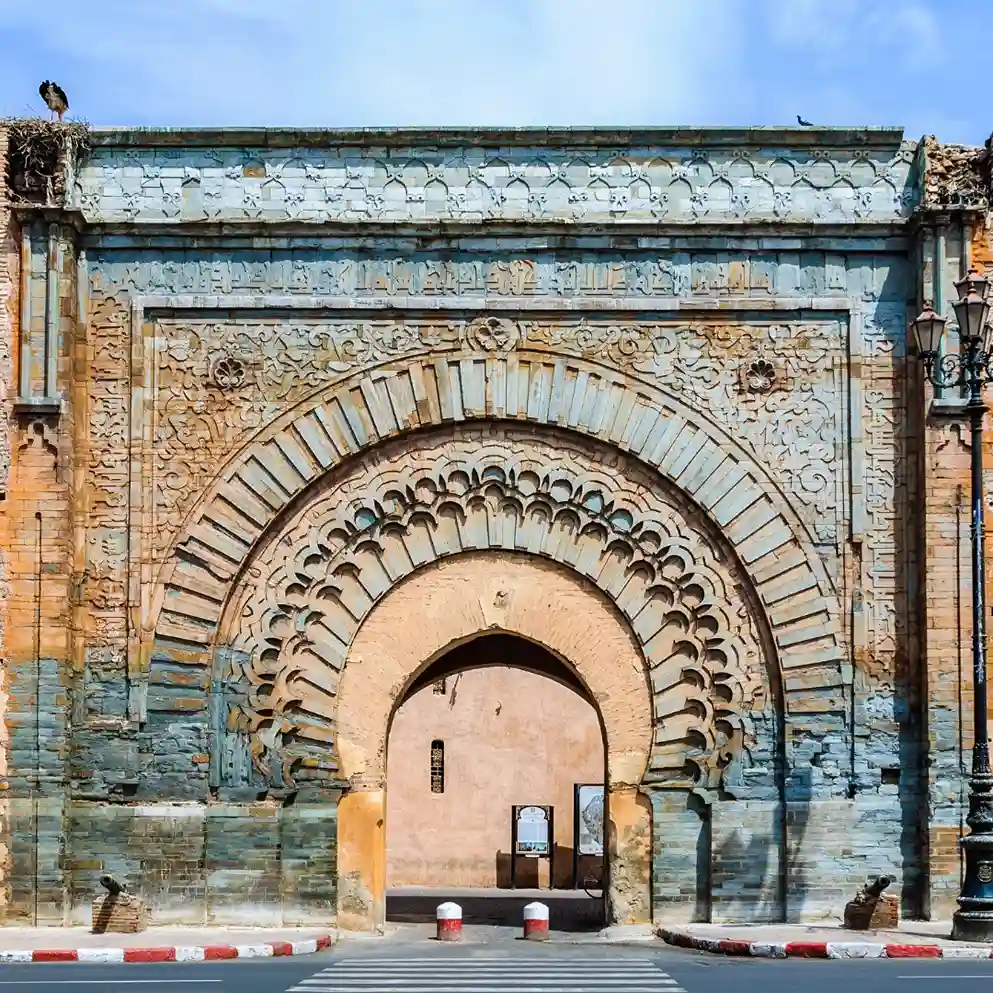
Autumn also offers comfortable conditions for sightseeing and day trips.
Dec – Feb
Winter brings cooler mornings and evenings, while daytime conditions often remain pleasant for sightseeing.
Marrakech is one of Morocco’s main international gateways. Marrakech Menara Airport, IATA code RAK, sits approximately 3.5 km from the city centre and receives international and domestic flights.
For travellers already in Morocco, Marrakech has direct rail connections with major cities including Casablanca, Rabat, Fez and Tangier. The ONCF network currently lists Marrakech routes towards Fez and Tangier, as well as connections through Casablanca and other cities.
Road travel also works well from Marrakech. Regular coach services connect the city with destinations across Morocco, while private transfers offer more flexibility for travellers combining Marrakech with the Atlas Mountains, Agafay, Essaouira or the south.
If you fly into Mohammed V International Airport in Casablanca rather than Marrakech, you have several ways to continue your journey.
The most practical option for many independent travellers is the train. ONCF operates rail services between Casablanca and Marrakech, making the two cities straightforward to combine in one itinerary.
You also have the option of a private transfer. This works particularly well if Marrakech is your first stop and you are travelling with luggage, family or a group, or if you want to continue directly towards another destination rather than travelling into central Casablanca first.
For travellers planning a wider Morocco itinerary, Casablanca and Marrakech pair naturally. Start on the Atlantic, then head south towards the Red City.
Train connections
Marrakech sits at the southern end of Morocco’s main passenger rail network.
ONCF operates Al Atlas services connecting Marrakech with cities including Casablanca, Rabat, Tangier and Fez. The exact timetable changes, so check the current ONCF schedule before travelling.
The high-speed Al Boraq service currently operates between Tangier, Kenitra, Rabat and Casablanca. From Casablanca, travellers continue towards Marrakech using the conventional Al Atlas network.
Train travel works particularly well for routes such as:
Casablanca to Marrakech. Rabat to Marrakech. Tangier to Marrakech. Fez to Marrakech.
For longer journeys, booking ahead gives you more choice of departure times and seating.
Marrakech is easiest to experience through a combination of walking and short taxi journeys.
The Medina is largely explored on foot. Its narrow streets, souks and historic lanes were not designed for modern traffic, which is one reason walking remains the best way to experience the old city.
Petit taxis operate within Marrakech and are identifiable by their orange colour. The Moroccan National Tourist Office also lists taxis and sightseeing buses among the city's transport options. You will also find horse-drawn carriages around the city, particularly near major tourist areas. They offer a slower way to see parts of Marrakech, while organised transfers are more practical for trips outside the city.
If you plan to visit the Atlas Mountains, Agafay Desert, Ourika Valley or other destinations outside Marrakech, private transport is often the most efficient option.
Yes. Marrakech offers one of Morocco’s strongest combinations of history, architecture, food, shopping, culture and contemporary life. The Medina, Jemaa el-Fna, souks and historic monuments give the city its traditional character, while neighbourhoods such as Gueliz and Hivernage show its modern side.
Three days works well for a first visit. Two days covers the main highlights. Four days or more gives you time for a day trip or a slower experience of the city.
There is no single best month for everyone. April, May, October and November generally offer comfortable conditions for sightseeing, while summer is much hotter. Spring and autumn are especially suitable if your plans involve extensive walking or outdoor excursions.
Yes. Marrakech works well as an introduction to Morocco. Major airport, good accommodations, established tourist infrastructure, walkable medina, nearby mountain/desert experiences. Many first-time visitors start here, then explore other regions.
Completely. Tell us your interests, from culture, food and shopping to adventure and relaxation, and we build around them. Day trips to the Atlas Mountains, Agafay or Essaouira can be added, and nothing is a fixed package.
Yes. Solo travellers, including women, visit Marrakech all the time. Dress modestly in the Medina, stay in well-reviewed riads and treat over-friendly strangers with polite caution. A private guide for your first day helps you find your feet in the souks.
The historic Medina is best explored on foot. Its narrow streets and souks make walking the most practical way to move between many attractions. For longer distances outside the Medina, taxis are more convenient.
Marrakech Menara Airport is approximately 3.5 km from the city centre. Taxis operate from the airport, and a city-airport shuttle bus also operates every 20 minutes according to ONDA.
Yes. ONCF operates rail services between Casablanca and Marrakech. Check the current timetable before travelling because departure times change.
Yes. Marrakech works well as a base for excursions into the Atlas Mountains, Agafay and the surrounding countryside. Essaouira and other destinations also work as longer day trips, depending on your itinerary and travel style.
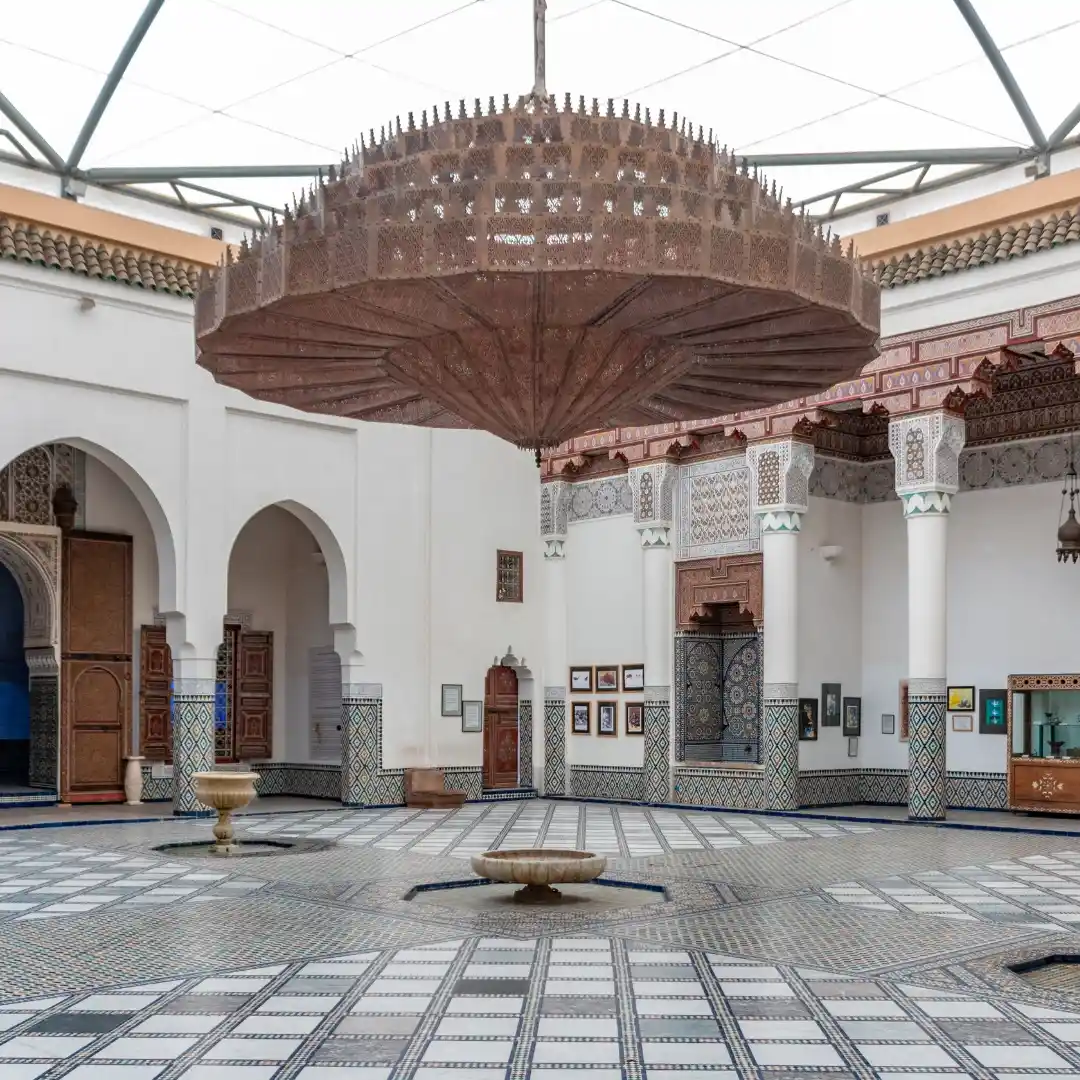
Marrakech is known for its historic Medina, ochre walls, Jemaa el-Fna, souks, riads, palaces, gardens and traditional craftsmanship. The city also has a strong contemporary side, particularly around Gueliz and Hivernage.
Marrakech is widely known as the Red City because of the distinctive reddish-ochre colour of its historic walls and much of its traditional architecture.
Yes. Marrakech is generally safe for visitors, and violent crime against tourists is rare. In the Medina and around Jemaa el-Fna, keep valuables out of sight, agree taxi fares in advance or use registered taxis, and politely decline unofficial guides. A licensed local guide makes the souks far easier to enjoy.
It depends on your travel style. As a guide, a private trip with us typically runs at about £80–120 per person per day on a budget, £150–250 mid-range and £300–500+ for a comfort trip, covering accommodation, private transport and guiding. Riads in the Medina range from simple guesthouses to luxury palaces, so your choice of stay makes the biggest difference. We send an itemised quote for your exact plans, with no hidden costs.
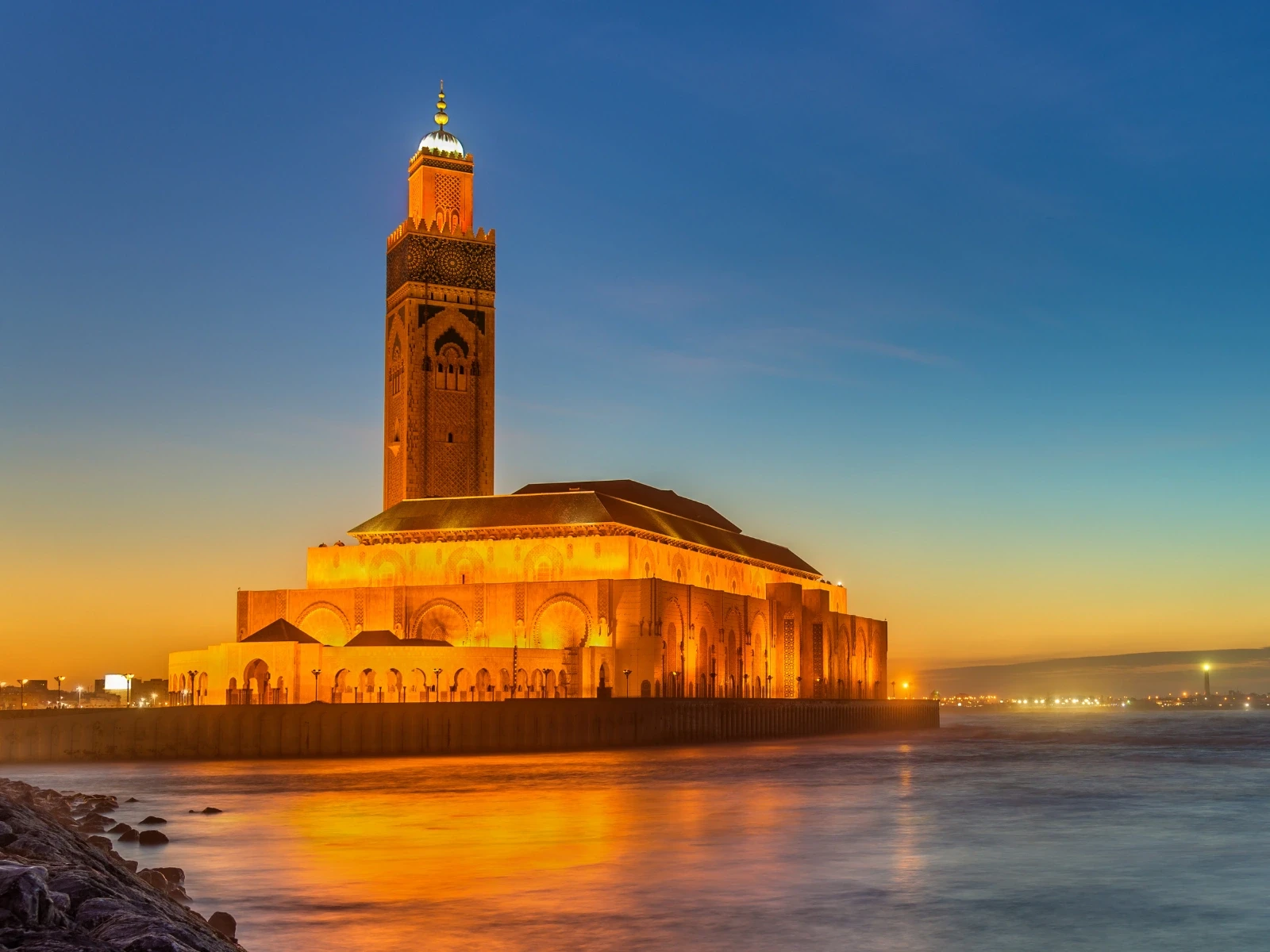
Where Morocco Meets the Atlantic
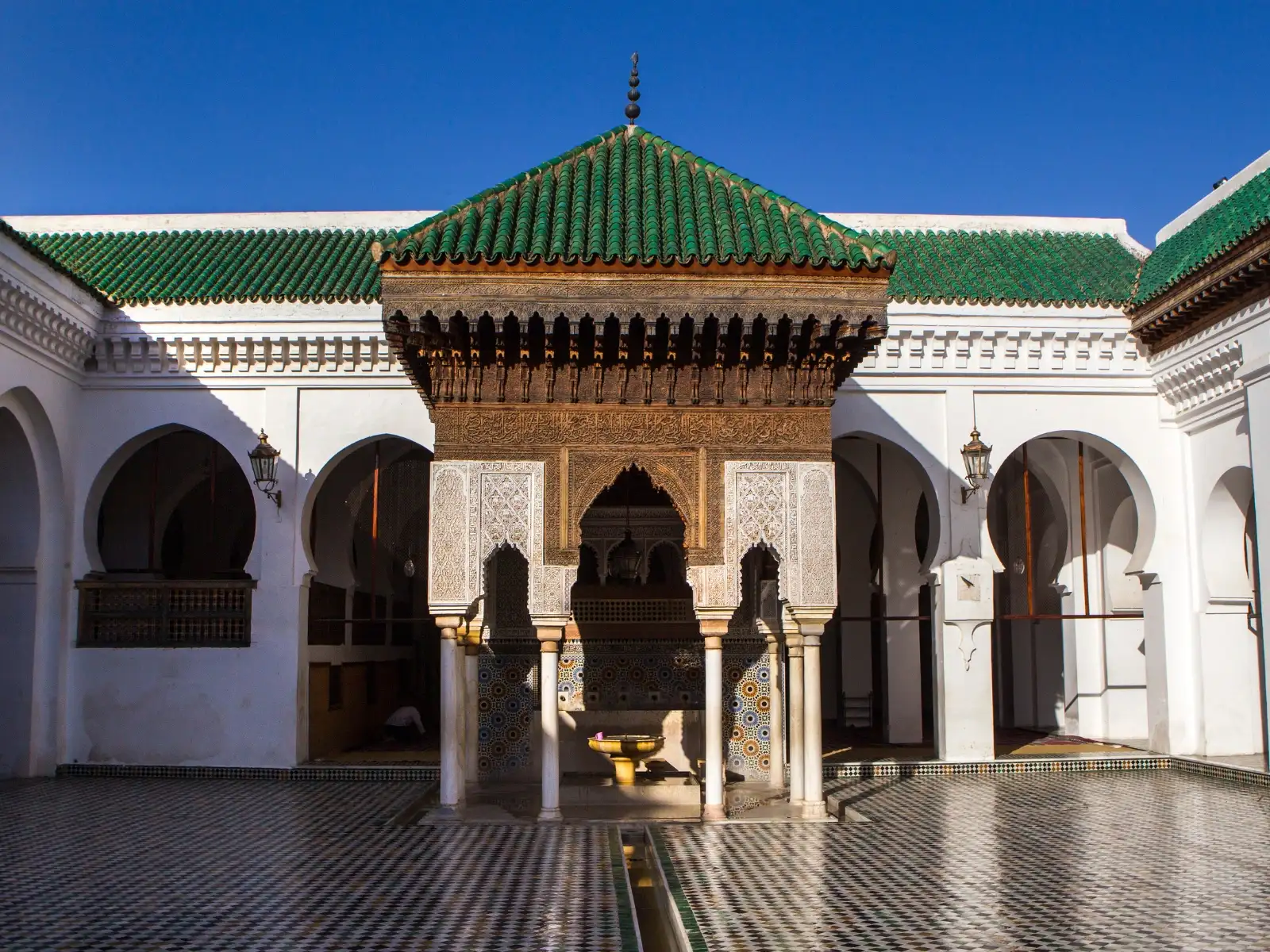
Where Morocco Keeps Its Memory
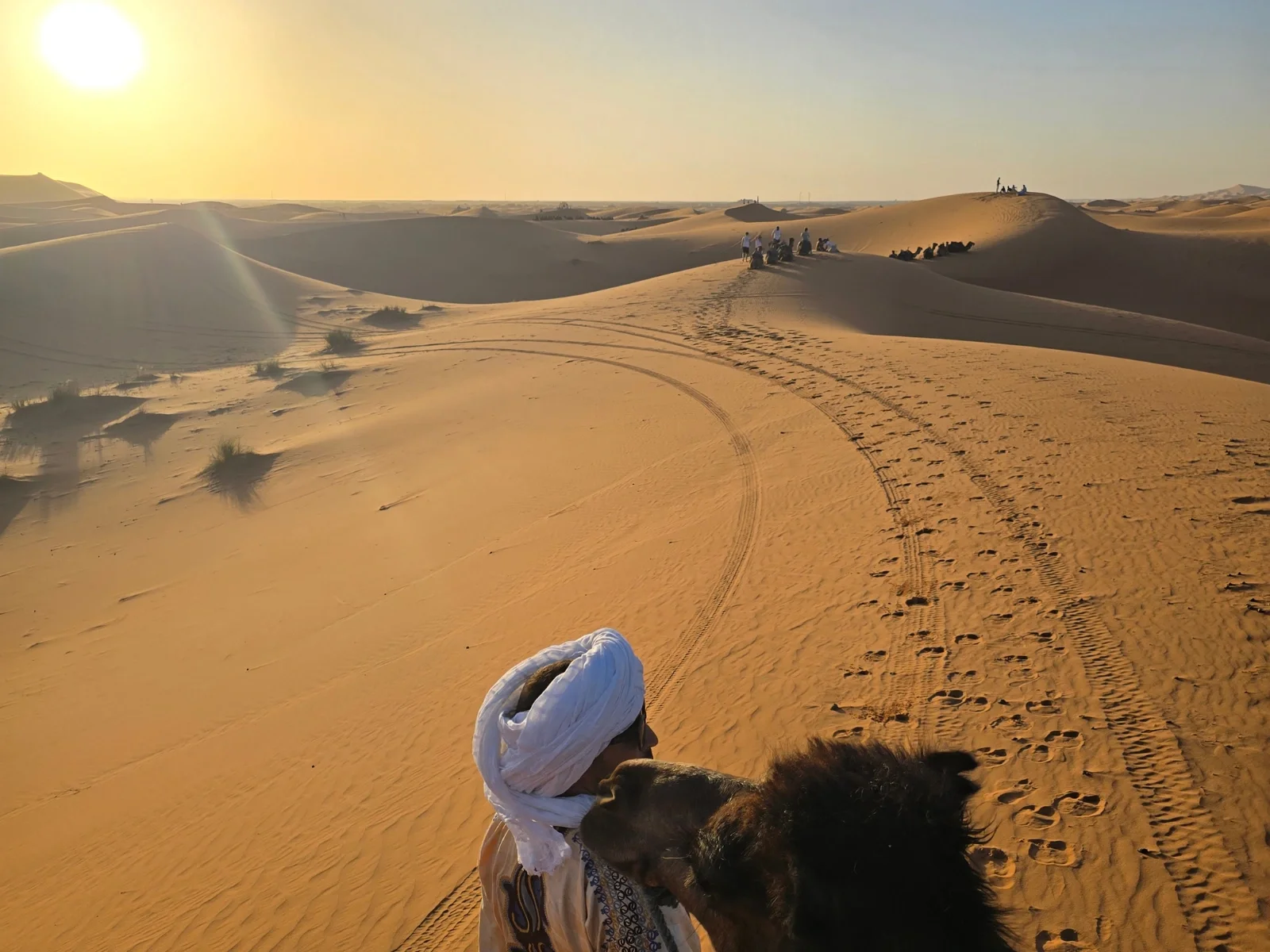
Where the Sahara Begins
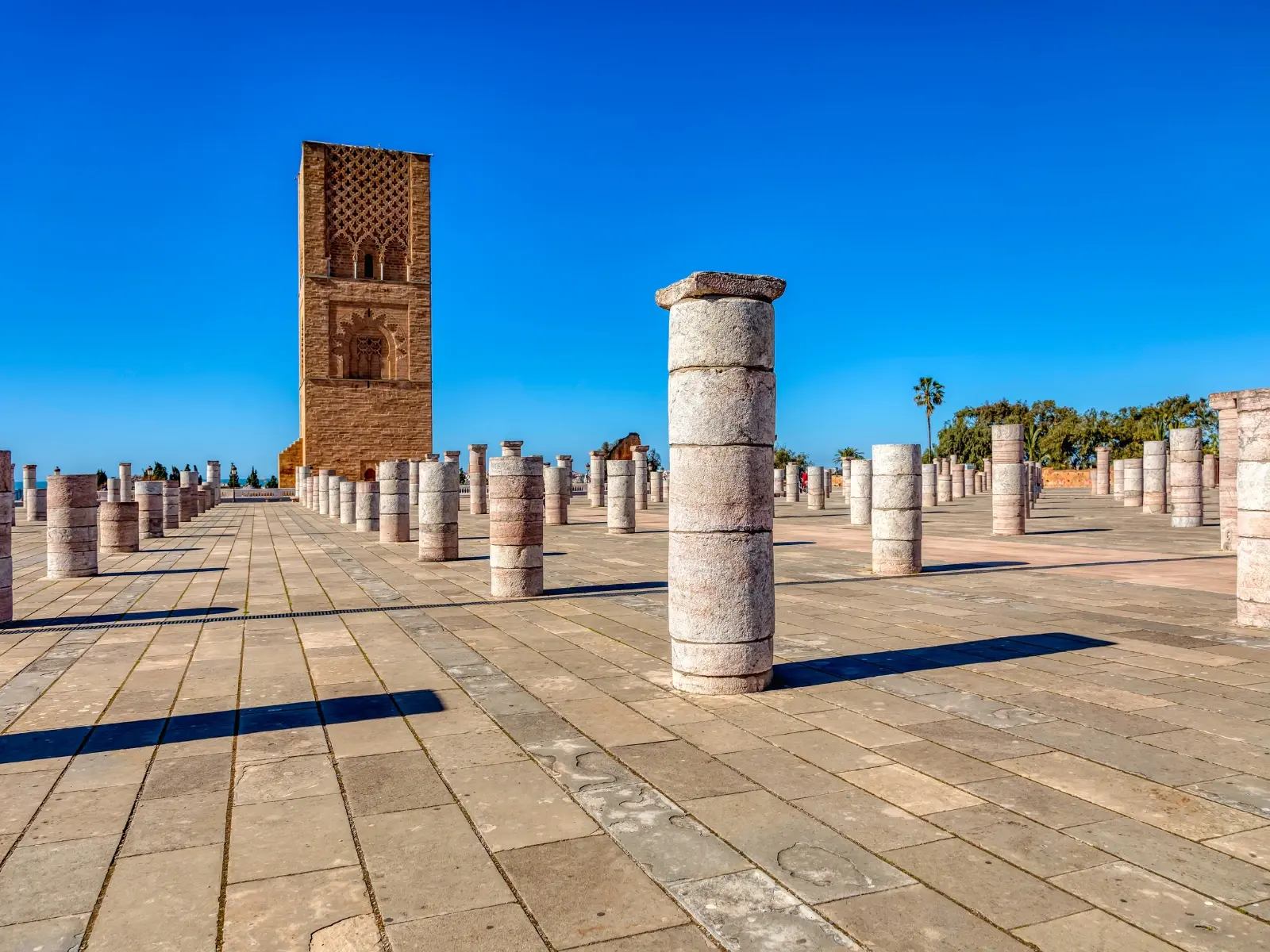
Where History Meets the Atlantic
Where Two Seas Meet
Tell us your dates and travel style — we reply with a tailored itinerary within 48 hours.