Spring
BestMar – May
Spring brings comfortable daytime conditions and changing colours across the desert landscape.
Private journeys across Morocco
Visit Morocco Tours

A real person replies within 48 hours · Email us
Destination
A small desert village beside the dunes of Erg Chebbi, where the landscape stretches wide, the nights turn quiet and the rhythm of travel slows down.
Request Your Personal QuoteMerzouga travel guide · Updated 2 October 2026
Merzouga is not a city in the usual sense. It is a small village on the edge of Erg Chebbi, one of Morocco’s best-known dune landscapes, and one of the country’s main gateways to the Sahara.
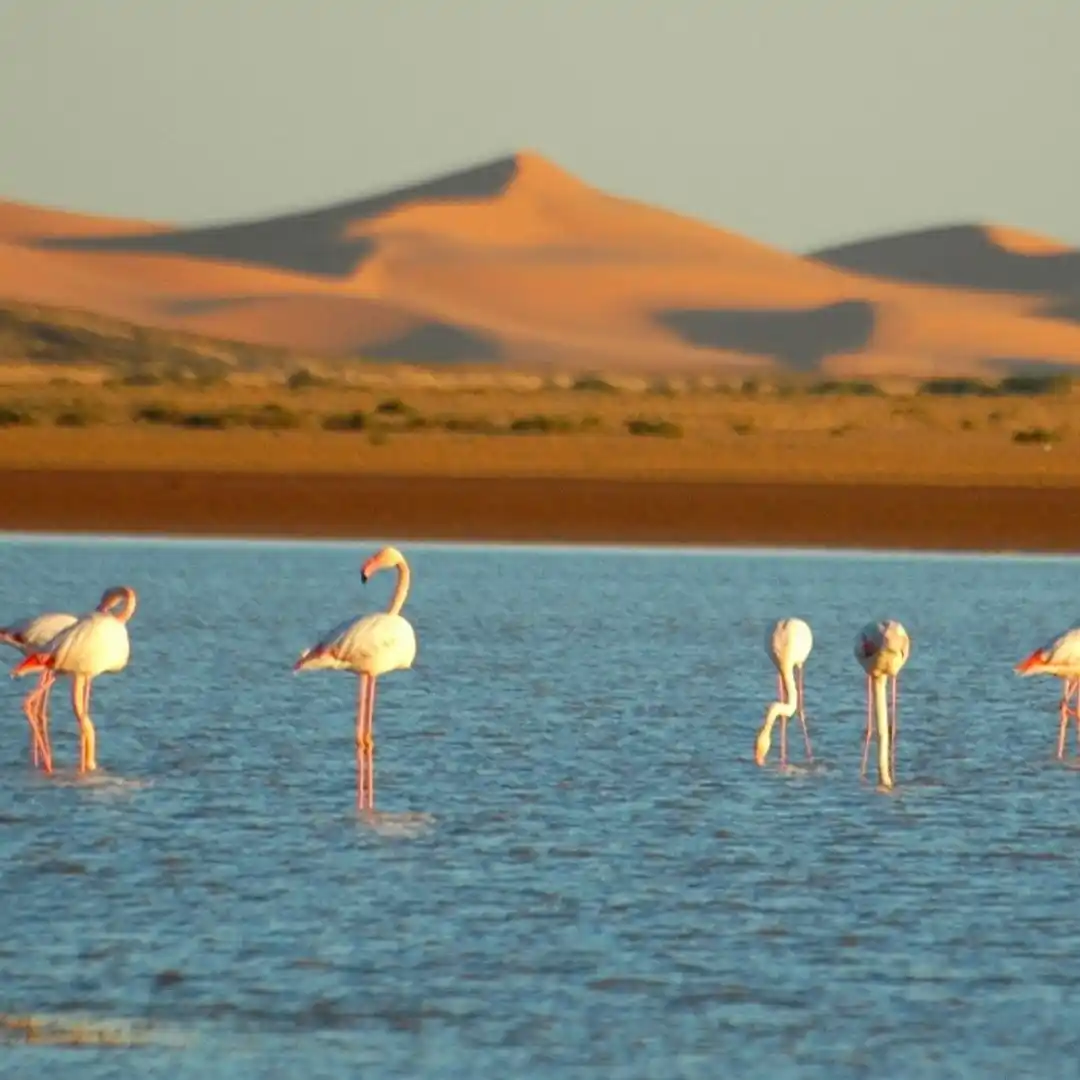
Here, the scale changes quickly. Roads give way to tracks. Buildings become smaller. The horizon opens. Beyond the village, the dunes rise and fall across the desert, with palm groves, rocky plains and seasonal wetlands adding unexpected contrasts to the landscape. Morocco’s National Tourist Office describes Merzouga as one of the gateways to the Sahara and identifies Erg Chebbi as a landscape of dunes, palm groves, tracks and hiking routes. Nearby Dayet Srij also attracts migratory birds when water is present.
Merzouga also sits within the wider Tafilalet region, an area historically connected with trans-Saharan trade. Caravans once travelled through this part of southeastern Morocco towards Timbuktu, carrying goods across routes linking North Africa with West Africa.
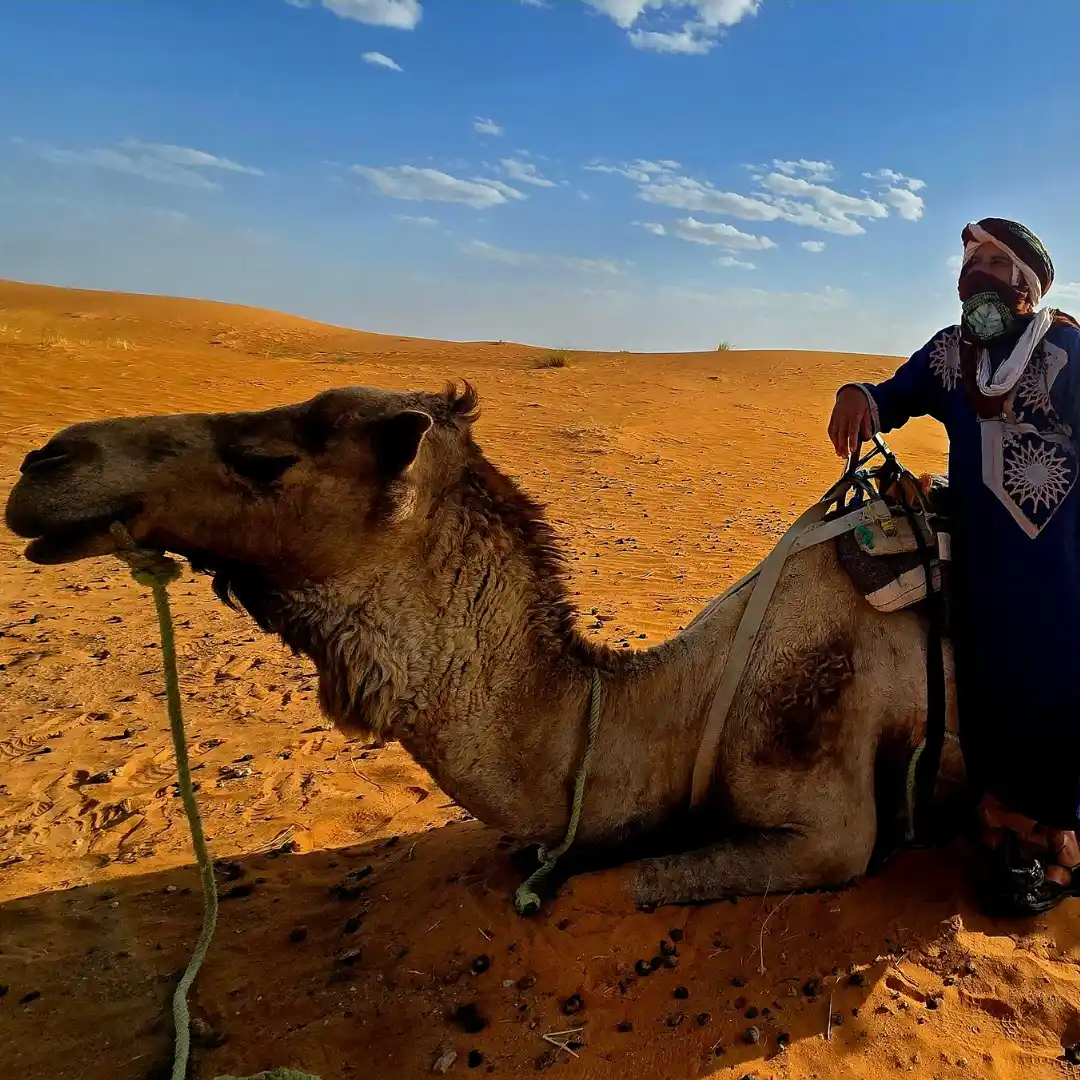
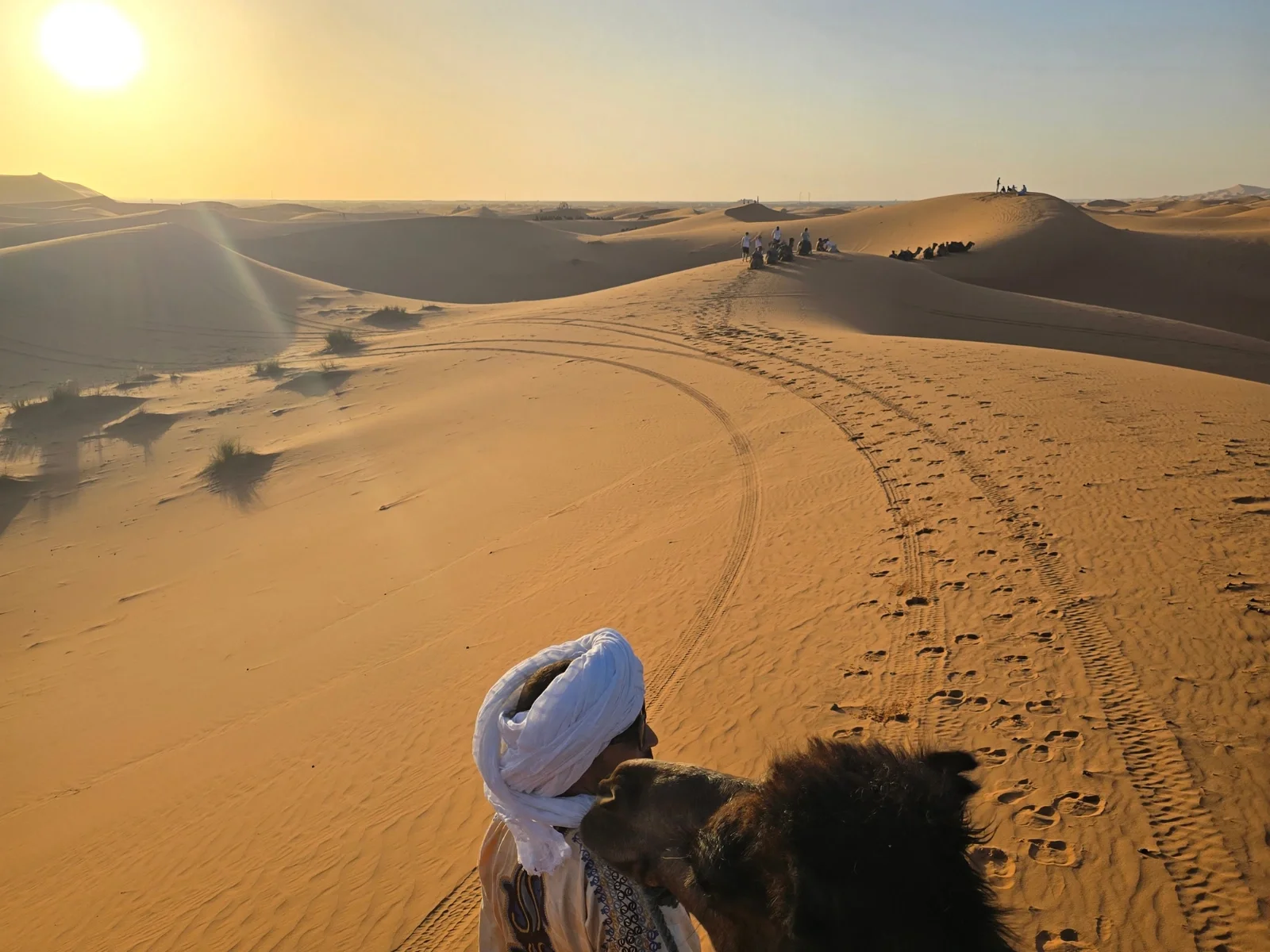
Today, travellers come for the desert itself. Sunrise over the dunes. Sunset from a high ridge. Camel trekking. 4x4 routes. Sandboarding. Desert camps. Clear night skies. Tea shared far from the traffic of the cities.
But Merzouga is more than a backdrop for a desert photograph.
Spend time here and you begin to notice the relationship between the desert, the villages, the oases and the people who have adapted to this environment over generations.
This is where Morocco gets wonderfully quiet.
Every journey below departs from Merzouga with a licensed local guide and a private vehicle. Prefer something of your own design? We build itineraries from scratch.
1 journeys
Marrakech over the Tizi n'Tichka pass, Aït Benhaddou and Todra Gorge, then camel trek into Erg Chebbi for a night under the stars
5 day trips
2 landmarks
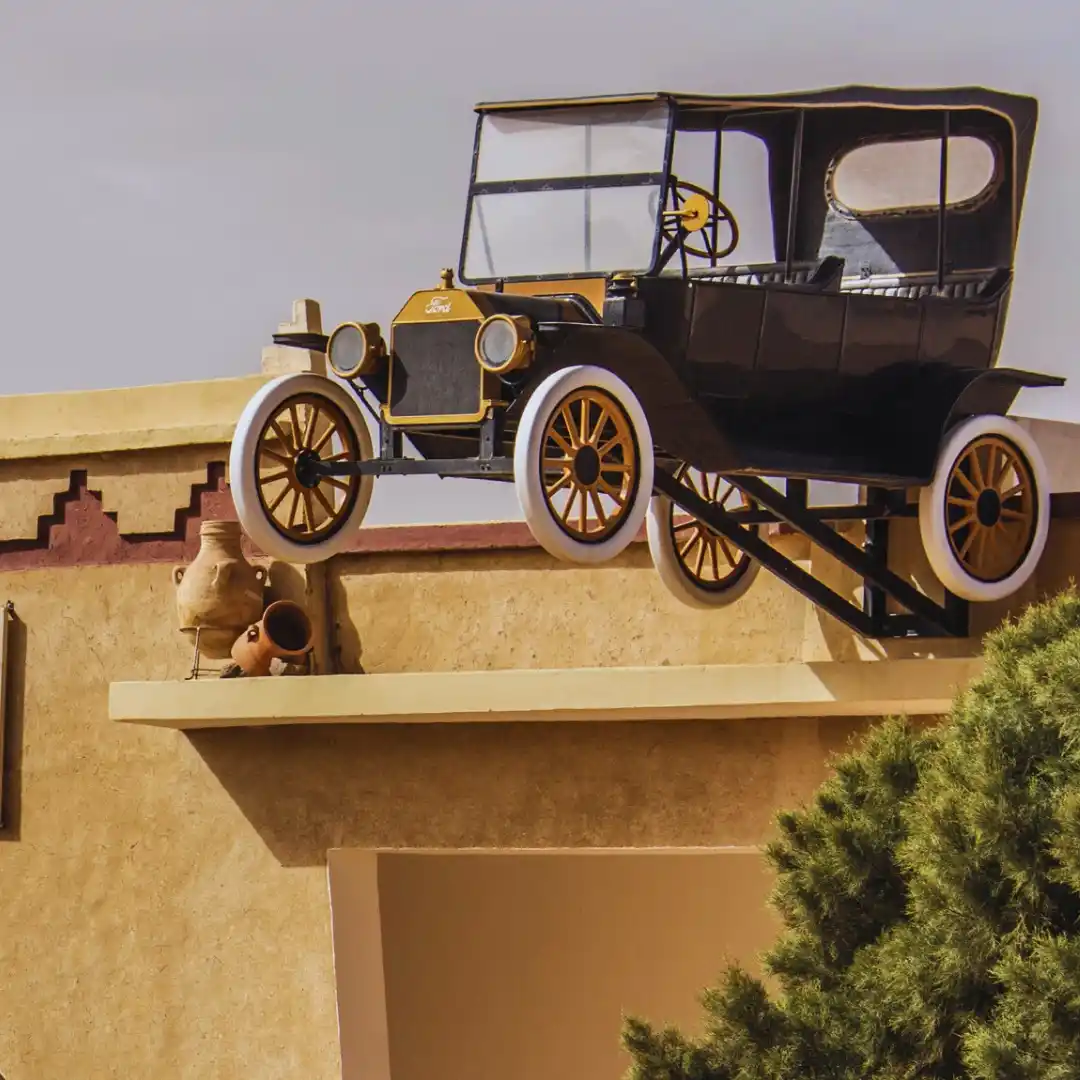
A collection of desert 4x4 vehicles at the edge of the Erg Chebbi dunes near Merzouga, telling the story of motoring and exploration in the Sahara
1 day
Possible, but rushed. You will spend much of the day travelling and have limited time for the desert itself.
2 days
A good minimum for experiencing Merzouga properly. You have time for the dunes, sunset or sunrise, a desert experience and some time around the village.
3 days
A better choice if you want to slow down. You can combine a desert camp with 4x4 exploration, camel trekking, sandboarding, local communities or nearby landscapes without turning every activity into a race.
4 days or more
Useful if Merzouga forms part of a slower desert itinerary. Extra time gives you space for photography, nature, cultural experiences and nearby destinations in the wider Tafilalet region.
For most first-time visitors, two nights gives you enough time to experience the desert without treating Merzouga as a single sunset stop.
Merzouga has a desert climate, with hot summers and cooler winters. Temperatures can vary sharply between day and night, so the season affects the experience as much as the temperature itself.
Spring and autumn are generally the best seasons for visiting the Sahara. Morocco's National Tourist Office specifically recommends spring and autumn for travelling into the country's southern desert regions.
The Moroccan National Tourist Office notes temperatures in southern Morocco reaching around 38°C on average during summer.
If you visit during the hotter months, plan outdoor activities around the cooler parts of the day. Sunrise, late afternoon and evening work far better than the middle of the afternoon.
For desert activities, photography and overnight stays, spring and autumn offer the most comfortable balance.
Mar – May
Spring brings comfortable daytime conditions and changing colours across the desert landscape.
Jun – Aug
Summer is extremely hot.
Sep – Nov
Autumn offers similarly pleasant conditions for outdoor activities, especially around sunrise and sunset.
Dec – Feb
Winter brings cooler days and cold desert nights. Sunrise and early morning temperatures can feel surprisingly low, so warm layers matter even when the afternoon sun feels comfortable.
Merzouga sits in southeastern Morocco, close to the Algerian border and around 35 km from Rissani. It does not have its own commercial airport or railway station, so reaching the desert means travelling overland for the final part of your journey.
The most practical options are private transport, rental car or long-distance coach.
From Marrakech, the journey is long enough to make a direct transfer an exhausting day. A multi-day route through the High Atlas, Ouarzazate, the Dades or Todra region and then Merzouga makes far more sense for travellers who want to experience the landscape rather than watch it through a vehicle window.
From Fez, Merzouga also works well as part of a longer route through the Middle Atlas and the Ziz Valley.
Supratours, an ONCF subsidiary, operates coach services to Merzouga and other destinations not served by the railway network. Its current destination listings include Merzouga, with connections from cities including Marrakech, Fez, Ouarzazate and Errachidia.
There is no commercial airport in Merzouga.
The nearest airport is Moulay Ali Cherif Airport in Errachidia, IATA code ERH. Merzouga sits roughly 120 km from the airport by road, making Errachidia the most practical air gateway for travellers who want to reach the desert without first travelling through Marrakech or Fez. Current route information places the road distance at around 121 km.
From Errachidia Airport, you can continue by private transfer, taxi or arranged transport.
A private transfer is particularly useful here. Public transport options from the airport itself are limited, while the road journey takes you through the Tafilalet region towards Erfoud, Rissani and finally Merzouga.
For travellers arriving by air, arranging the onward transfer before arrival makes the journey considerably simpler.
Train connections
Merzouga has no railway station.
Morocco's ONCF rail network does not reach Merzouga, Erfoud or Rissani. The final part of the journey takes place by road.
This is where Supratours becomes useful. The company operates as an ONCF subsidiary and provides coach connections to destinations without railway stations, including Merzouga.
For independent travellers, another option is to take the train as far south and east as the railway network allows, then continue by coach or private transport. In practice, most travellers visiting Merzouga as part of a Morocco itinerary choose road transport from Marrakech, Fez or Ouarzazate.
If your priority is the journey itself, a private route gives you far more flexibility for stops along the way.
Merzouga is small enough to explore on foot around the village.
The desert is different.
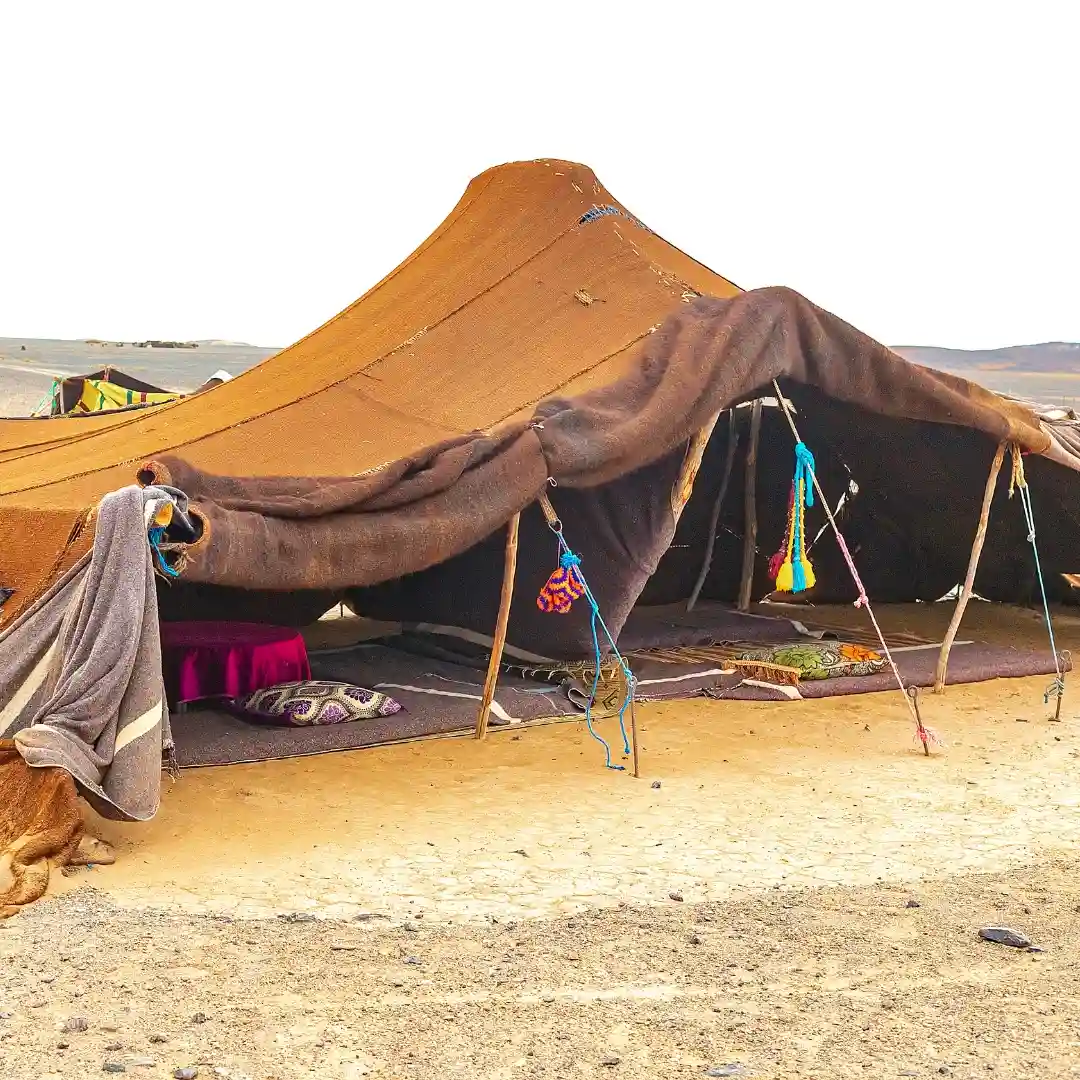
Once you move beyond the paved roads, transport depends on where you are going and what you want to experience. 4x4 vehicles are the practical choice for reaching remote desert areas, visiting nomadic communities, exploring the dunes and accessing desert camps. Camel trekking remains one of the traditional ways travellers experience Erg Chebbi. For a shorter experience, sunset and sunrise camel rides are popular. For a deeper desert experience, combine camel trekking with a night in a desert camp.
Quad bikes and other motorised activities are also available in the Merzouga area, although travellers should consider where and how these activities operate, particularly around fragile desert environments.
For excursions beyond Merzouga, private transport is usually the most flexible option.
Yes, especially if you want to experience Morocco's Sahara landscapes. Merzouga provides access to Erg Chebbi, with opportunities for camel trekking, 4x4 excursions, sandboarding, desert camps and sunrise or sunset experiences.
Two nights works well for a first visit. Three nights gives you more time for desert activities and cultural experiences without rushing.
One night gives you the main desert experience, usually including sunset, an overnight camp and sunrise. Two nights gives you much more time and makes the journey to Merzouga feel worthwhile.
Spring and autumn generally offer the most comfortable conditions for desert activities. Summer brings extreme heat, while winter brings cold nights. The Moroccan National Tourist Office specifically recommends spring and autumn for exploring Morocco's southern desert regions.
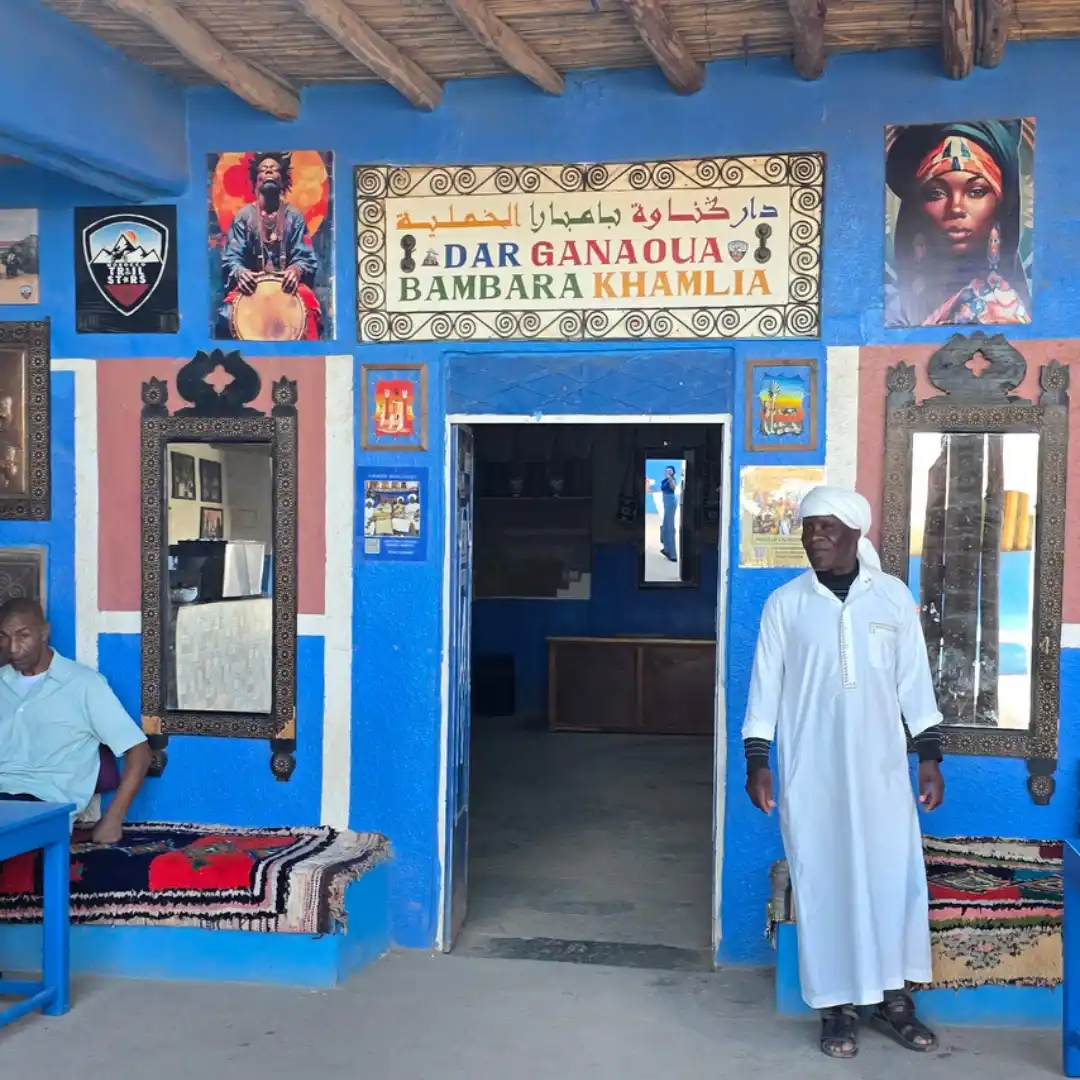
Yes. You choose the pace: a sunset camel trek, sandboarding, 4x4 exploration, nomad visits, Gnawa music in Khamlia or simply time to watch the dunes. We also plan the overland route to and from the desert around your interests.
Yes. Many solo travellers visit Merzouga, and desert camps are friendly and social. Travelling with a private driver and guide is the easiest way to reach the desert, given the long distances and limited public transport.
No. Merzouga has no commercial airport. The closest airport is Moulay Ali Cherif Airport in Errachidia, approximately 120 km away by road.
The most practical option is a private transfer or taxi. The road journey covers roughly 120 km and passes through the Tafilalet region towards Erfoud and Rissani before reaching Merzouga.
No. Merzouga has no railway station. ONCF's Supratours coach network provides road connections to Merzouga from parts of Morocco's rail network.
You can travel by coach, private vehicle or as part of a multi-day desert route. Supratours lists Merzouga among its destinations. A private multi-day journey is usually more practical for travellers who want to experience the Atlas and southern Morocco along the way.
Merzouga is one of Morocco's main gateways to the Sahara and sits beside the Erg Chebbi dune field. The Moroccan National Tourist Office describes the area as one of the country's entrances to the Sahara.
Wear lightweight clothing during the day, comfortable closed shoes for walking on sand and warm layers for winter nights. A scarf or head covering also helps protect against sun and blowing sand.
Yes. Merzouga is a small, welcoming village and generally very safe. The main things to plan for are the climate and the desert itself: travel with a licensed operator for camel treks and 4x4 trips, carry water, and dress for the heat by day and the cold at night.
It depends on your travel style. As a guide, a private trip with us typically runs at about £80–120 per person per day on a budget, £150–250 mid-range and £300–500+ for a comfort trip, covering accommodation, private transport and guiding. In Merzouga, the choice between a standard and a luxury desert camp makes the biggest difference. We send an itemised quote for your exact plans, with no hidden costs.
Where Morocco Meets the Atlantic
Where Morocco Keeps Its Memory
Where the Red City Comes Alive
Where History Meets the Atlantic
Where Two Seas Meet
Tell us your dates and travel style — we reply with a tailored itinerary within 48 hours.