Free to do · Rabat
National Library Gardens
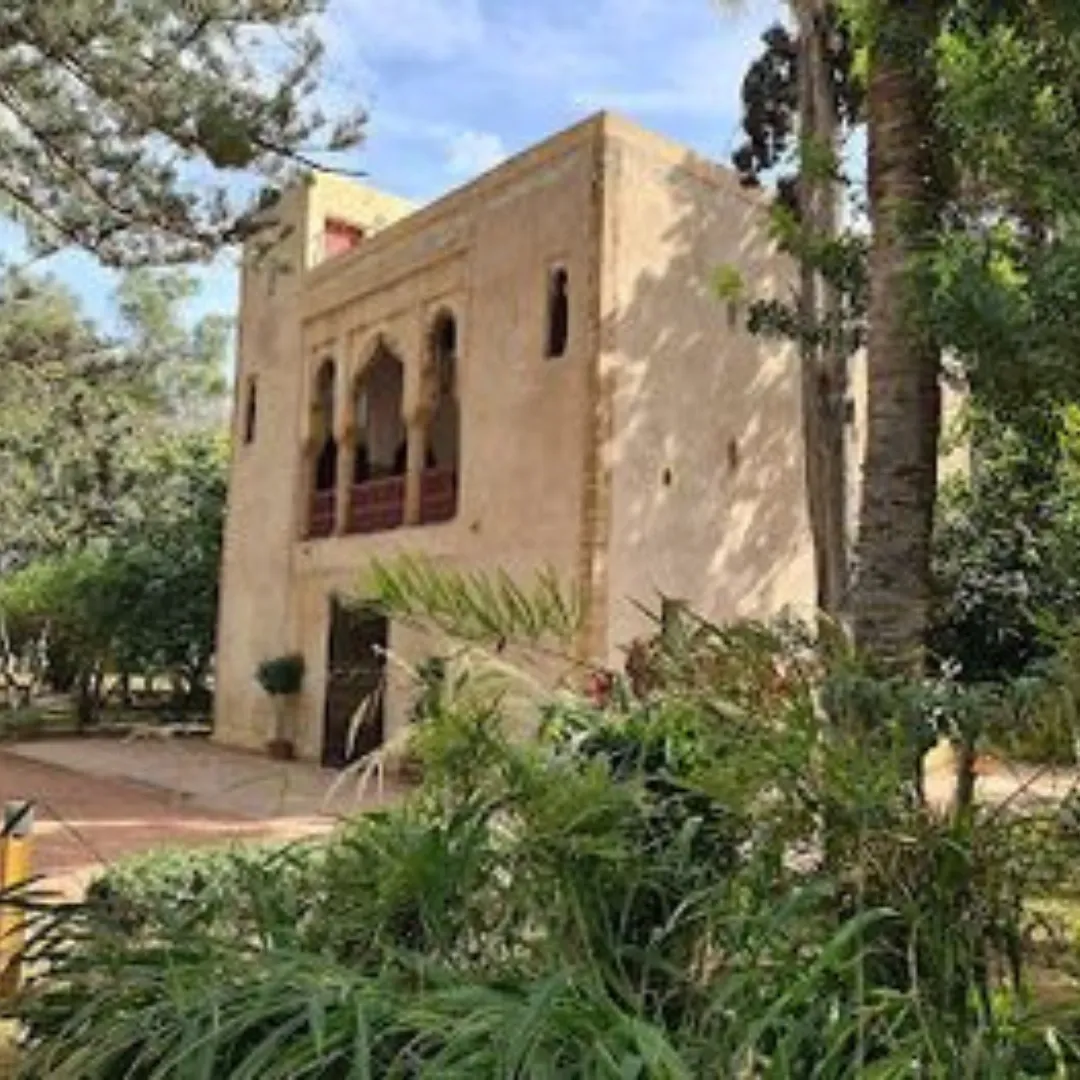
The National Library Gardens in Rabat are a quiet, free green space of olive trees, gravel paths and shaded benches where locals come to read, rest and escape the city’s pace.
- Entry
- Free — no ticket needed
- Opening hours
- 24/7
- Location
- Rabat, Morocco
- How to visit
- On your own, or on a private multi-day journey
Free to visit — and one of the places we make time for on our private multi-day journeys through Rabat.
A visit to the National Library Gardens begins where silence meets shade, and where gravel paths remember footsteps. Hidden behind the city’s pulse, this peaceful garden is one of the most overlooked treasures in Rabat. It offers more than rest — it offers rhythm. Here, olive trees lean in, whispering stories as old as the medina itself.
Good to know
- Best time to visit
- Late morning or early afternoon (10 AM–1 PM) offers soft light and fewer visitors. Spring (March–May) and autumn (September–October) provide mild weather, ideal for walking, reading, or resting in shaded areas.
- Address
- Av. Ibn Khaldoun, Rabat, Morocco
- Accessibility
- The garden is mostly wheelchair accessible, with smooth gravel paths and benches spaced regularly beneath olive and citrus trees. Visitors with limited mobility should note: there’s no ramp at the entrance garden gate, but the paths are level and the space is calm and navigable.
Insider tips
Arrive just before or after prayer times to enjoy a soft, quiet atmosphere. Bring a scarf or light mat if you prefer to sit directly on the gravel. Locals often know of a nearby gate connecting to the Botanical Gardens — worth exploring if open.
Is this experience for you?
Answer 3 quick questions and we'll tell you honestly whether this visit is your kind of day.
01How do you like a day like this to run?
02How much walking and effort are you up for?
03What are you hoping to get out of the visit?
0 of 3 answered — answer them all to see your result
Visiting the National Library Gardens
A visit to the National Library Gardens begins where silence meets shade, and where gravel paths remember footsteps. Hidden behind the city’s pulse, this peaceful garden is one of the most overlooked treasures in Rabat. It offers more than rest — it offers rhythm. Here, olive trees lean in, whispering stories as old as the medina itself.
Among the top free things to do in Rabat, the National Library Gardens invite you to sit, slow down, and breathe. Morning light filters through citrus branches. Stone benches wait beneath trees not for photos, but for presence. This is not a tourist stop — it’s a return to stillness. Visitors often describe Rabat’s gardens as “just gorgeous,” praising their peaceful beauty and public accessibility.
Why This Place Matters
In a capital of diplomats and ministries, this quiet patch of green remains deeply human. The garden, which stretches beside Morocco’s Bibliothèque Nationale, reflects a balance between knowledge and nature. It’s not just a park — it’s a living space where Rabat’s story continues to unfold.
National Library Gardens is among the few places in Rabat where architecture bows to silence. Once visited by scholars, now open to all, it bridges old books with new breaths. It’s mentioned in poems, remembered in routines, and gently protected by those who need nothing from it but peace. According to Archnet, the National Library’s design reflects Morocco’s vision of modernity, rooted in heritage, blending open space with civic dignity.
According to the Fonds pour la Sauvegarde du Patrimoine Culturel de Rabat (opens in a new tab), Rabat’s historic gardens—including quiet civic spaces like the National Library Gardens—form part of the city’s living heritage and are protected under its UNESCO World Heritage designation. Furthermore, as part of Rabat’s literary and cultural core, the building of the National Library was recently highlighted in the city’s designation as UNESCO (opens in a new tab) World Book Capital 2026.
As one of the most authentic green spaces in Rabat, the gardens offer something rare: a breathing archive of community, memory, and stillness — all for free.
What to Notice
Notice the shadows underfoot — they shift slowly, like time. Gravel crunches softly as you move between trimmed hedges and weathered benches. Olive and citrus trees line the paths, their leaves catching light like script.
Look up. You’ll see mosaic walls, chipped but proud. Pigeons balance on gates. Some corners hold the scent of jasmine or warm dust. And sometimes, in the quiet, you’ll hear music — someone tuning a guitar, or the hum of distant prayer.
Textures speak here. They’re not curated. They just are — part of Rabat’s rhythm, wrapped in light and leaf.
Pair This With Nearby Free Gems
Your walk doesn’t have to end here. Just five minutes away, Bab Rouah Gallery displays bold new Moroccan art — a free exhibit that changes with the times. Head down Avenue Mohammed V for colonial echoes woven into the city's present.
Pair this with a morning at the Kasbah of the Udayas, one of Rabat’s oldest quarters, where sea breeze meets painted blue walls. Or rest your thoughts at the Chellah ruins, where Roman columns and nesting storks hold the silence together.
These spots form a constellation of calm — each one a free window into the city’s layered soul.
What Locals Know
Locals come to the National Library Gardens not to take pictures, but to exhale. Some sit between errands. Others close their eyes and listen. You’ll find teens sketching, elders trading stories, and sometimes, a musician tuning quietly near the hedge.
Vendors near the library gates often nod at familiar faces. A quiet loyalty grows here — not spoken, but felt. Couples who met here sometimes return years later with children running between the benches. Locals often recommend peaceful garden spots like this one for reading or studying in Rabat — spaces where the city breathes more slowly.
This space holds memory, but lightly. It lets you carry your own.
Tips Before You Go
-
Bring a notebook or book. This isn’t a place to scroll — it’s a place to reflect.
-
Wear flat shoes for the gravel. It’s easy to walk, but not ideal for heels.
-
Water is essential, especially in the dry light of late spring or summer.
-
Arrive just after morning prayers or around sundown for the best atmosphere.
-
Don’t rush. This isn’t a checklist stop — it’s a soft pause between moments.
Hidden Corners to Discover
Among the most peaceful spots in the gardens, there’s a low bench tucked beside a mosaic wall. Few people sit there, but it listens well. A narrow path winds behind a row of citrus trees — one of the hidden treasures in Rabat’s quiet gardens — and ends in a small clearing where the breeze gathers like a secret. If you're looking for what to see in Rabat for free, or simply longing for silence, this quiet corner holds your answer.
One shaded corner near the back sometimes hosts stray cats sunbathing in silence. Another leads to a nearly invisible door toward the old botanical garden — a gate known mostly by locals. This garden doesn’t shout. It waits. And if you walk gently enough, it reveals its quiet miracles.
The National Library Gardens are not only a destination — they’re an invitation. To sit. To listen. To return. In this place, time doesn’t stop. But it does soften.
Highlights
- Why This Place Matters
- What to Notice
- Pair This With Nearby Free Gems
- What Locals Know
- Tips Before You Go
Official information
- Rabat, Modern Capital and Historic City (opens in a new tab)UNESCO World Heritage Centre
- Visiting Rabat (opens in a new tab)Moroccan National Tourist Office
Frequently asked
More to see in Rabat
- Free Things To Do in Rabat
- Kasbah of the Udayas
- Chellah Ruins
- Hassan Tower
- Medina Walk
- Bouregreg River
- Andalusian Gardens
- Oudayas Beach
Tagged
Multi-day journeys through Rabat
Private and tailor-made — with time to enjoy National Library Gardens at your own pace
Book the Imperial Short Circuit: 3-Day Tour From Rabat
- 3 days / 2 nights
- Rabat