.webp "Authentic Morocco vs Instagram Morocco: What Tourists Actually See (Behind the Scenes)")
Sahara · For travellers
Authentic Morocco vs Instagram Morocco: What Tourists Actually See (Behind the Scenes)
Morocco looks different in real life than it does on Instagram. Social media gives you polished riads, colourful souks, rooftop breakfasts, desert sunsets and perfectly framed photographs.
- Reading time
- 12 min read
- Published
- 24 August 2026
- Written by
- Our Morocco team
- Written for
- Travellers
Morocco looks different in real life than it does on Instagram. Social media gives you polished riads, colourful souks, rooftop breakfasts, desert sunsets and perfectly framed photographs. Those moments exist. The difference is what happens around them. Behind the photograph, Morocco is busy, noisy, imperfect, practical and deeply local. A beautiful courtyard might sit behind an ordinary-looking doorway. A famous viewpoint might involve a crowded road and a queue. A desert photograph showing one person and a camel might have several other travellers nearby. None of this makes Morocco less attractive. It makes the experience more realistic. If you are planning your first trip, understanding the difference between the Morocco you see online and the Morocco you experience on the ground helps you plan better.
What Instagram Morocco gets right
First, the obvious point. Many of the images you see online are genuine. Morocco has: Traditional riads with intricate architecture Colourful souks Historic medinas
Luxury desert camps
Sunrise and sunset landscapes The problem is not the photographs. The problem starts when social media makes these places look like the entire experience. Morocco is more varied than a collection of perfect photographs.
The medina is beautiful. It is also busy. Instagram often shows an empty alley with beautiful doors, tiled walls and soft morning light. Visit the same medina during a busy period and you might encounter: Local residents Shopkeepers Delivery workers Tour groups Motorbikes Donkeys Street vendors Children going to school
Visitors taking photographs
People going about their daily lives The medina is not a film set. People live and work there. This is part of what makes places such as Marrakech and Fès interesting. You are walking through functioning neighbourhoods, not an attraction designed exclusively for visitors. A local guide helps you understand what you are seeing instead of reducing the experience to photographs.
The souk is not a shopping catalogue
Online photographs often show perfectly arranged displays of lamps, rugs, leather goods and ceramics. Walk through a Moroccan souk and you see the complete picture. There are beautiful products. There are also negotiations, busy passages, shopkeepers inviting you inside, deliveries moving through narrow streets and people navigating the same spaces for everyday reasons. Shopping is part of the experience. You do not need to buy something from every shop. You also do not need to treat every interaction as a sales trap. A good guide helps you understand the difference between a genuine artisan experience, a commercial shop visit and ordinary life in the medina.
The famous blue streets are not always empty
Chefchaouen is one of the clearest examples. Photographs often show an empty blue staircase, one person wearing carefully chosen clothes and perfect light. Reality depends on when you visit.
Popular streets attract visitors. Photographers stop. People walk through the frame. Residents open doors. Shops operate. The famous blue colour is still there. The difference is that you are sharing the town with other people. Early mornings often offer a quieter experience. Timing matters.
The desert is bigger than the photograph
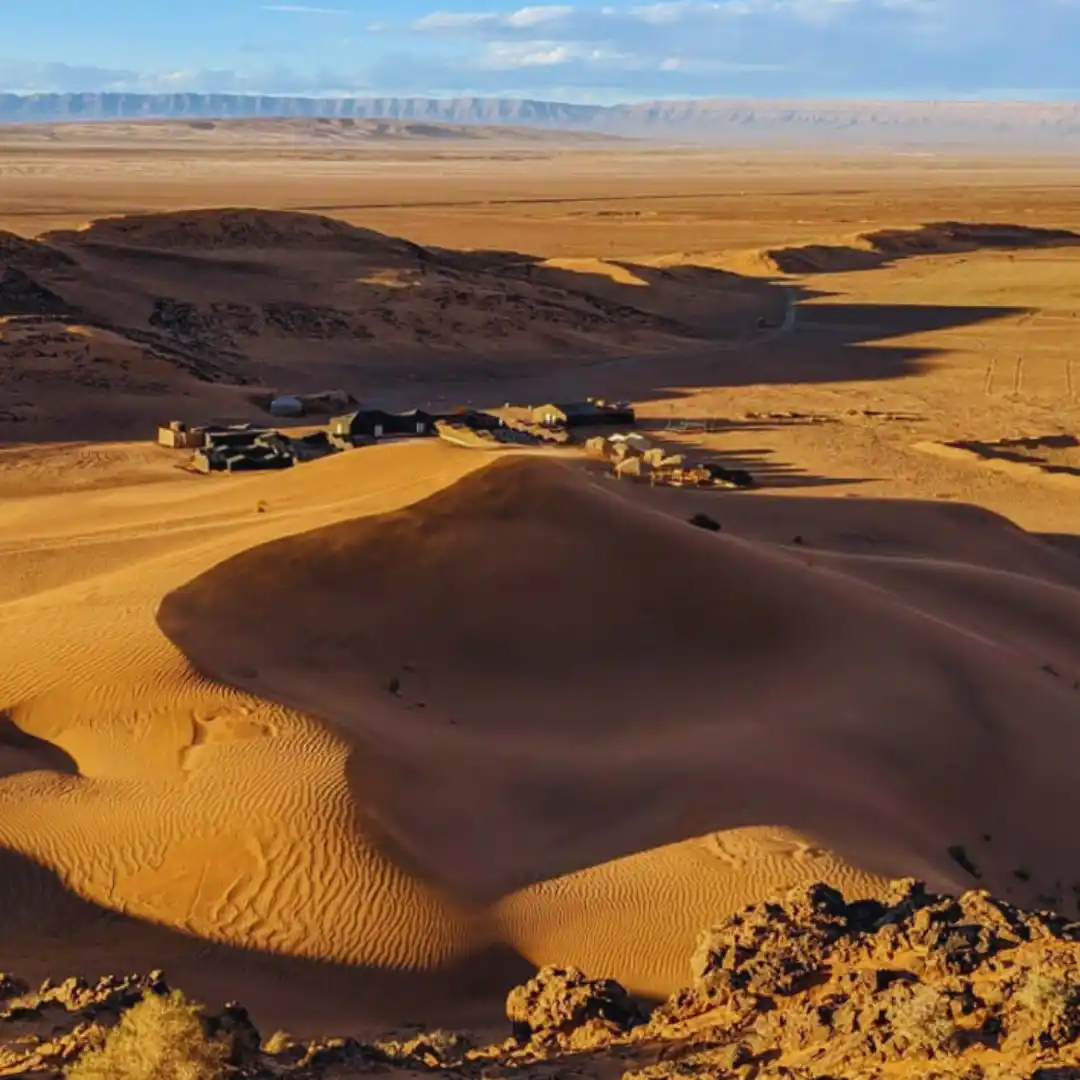
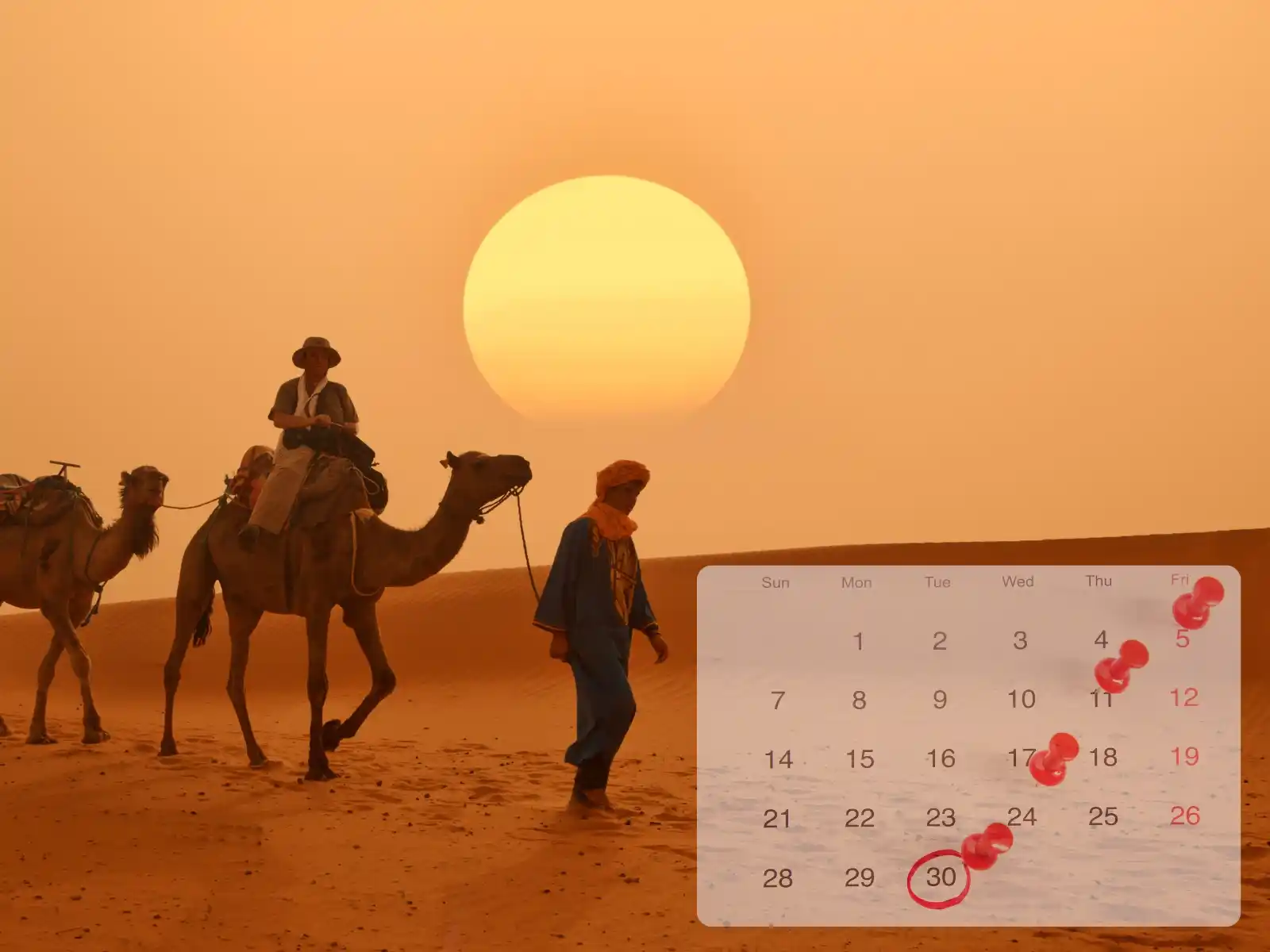
The Sahara is one of Morocco's most photographed experiences. Instagram usually gives you: Golden dunes A camel A sunset A tent A cup of Moroccan tea A star-filled sky All of those experiences are possible. The photograph rarely shows the logistics. Getting to the desert takes time. You need suitable transport. You need to consider the season. You need to choose your camp carefully.
You need to understand where the camel experience starts. You need to allow enough time for the journey. You also need to know what happens when the weather changes. This is where local planning matters. A desert programme should not be built around one photograph. It should be built around the complete experience. For example, a Morocco itinerary that includes Merzouga needs to consider the route into the region, arrival time, desert activities, accommodation and the following day's journey. A local operator such as Visit Morocco Tours works with the practical side of these experiences, from transport and desert activities to accommodation and local coordination. The photograph is the final five seconds. The programme behind it takes considerably longer.
The camel photograph is not the whole desert experience
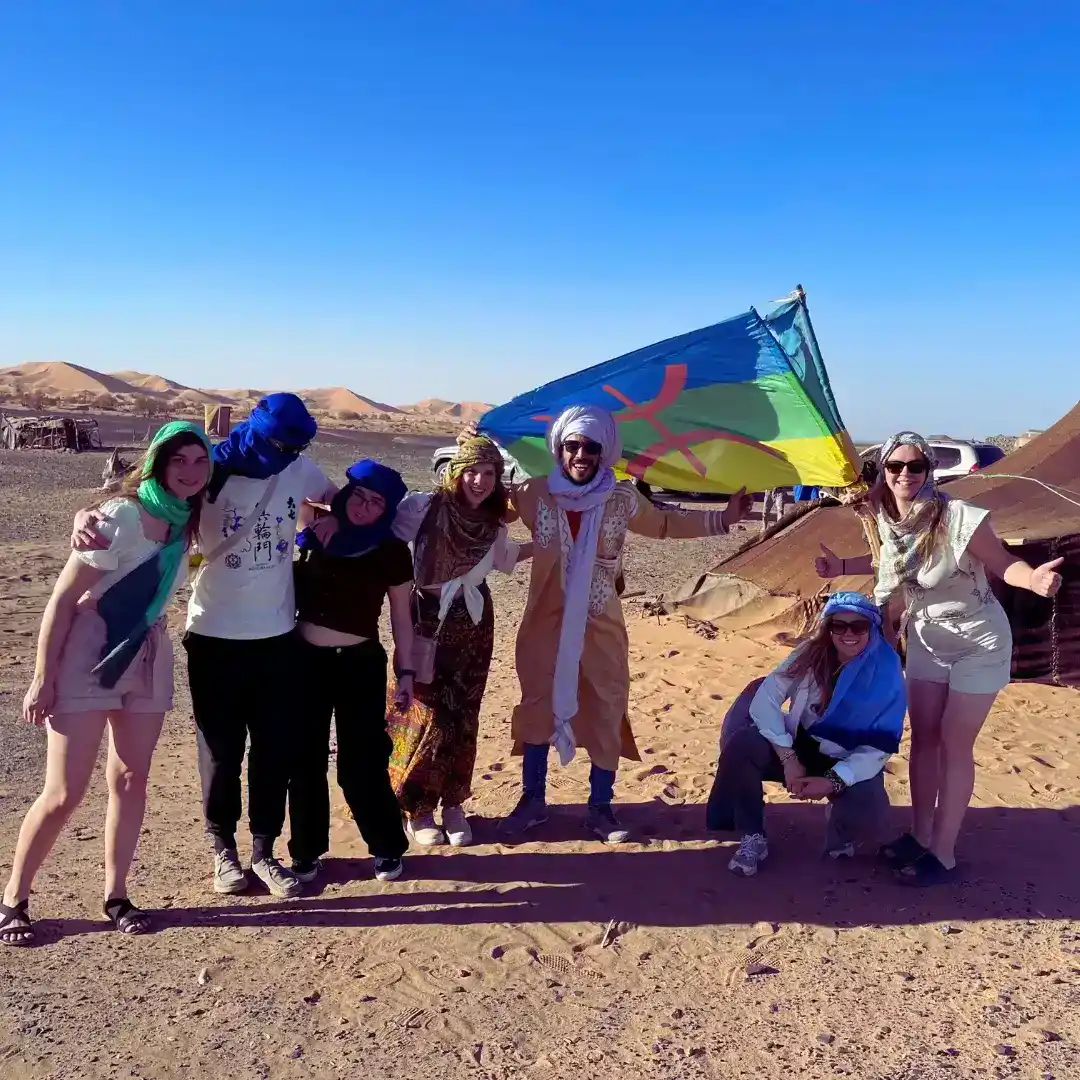
You will often see a traveller sitting on a camel as the sun sets behind the dunes. What you do not see: The journey to the dunes The other travellers The camel handlers The route back The camp Dinner Temperature changes Early morning departures The logistics of luggage The actual walking conditions
The experience is still worth doing. You simply get more from it when you know what to expect. If you want a quieter desert experience, discuss timing and camp location with your local operator before booking.
Morocco's food looks perfect online because food
photographers have one job Moroccan food photographs well. Tagines. Couscous. Pastilla. Fresh bread. Mint tea. Dates. Olives. Pastries. The real experience involves more than a beautifully arranged plate. Food is connected to daily life. You might eat in a busy local restaurant. You might have lunch in a family-run establishment. You might eat at a roadside stop during a long transfer. You might sit on a rooftop. You might have dinner in a riad. You might also encounter flavours you did not expect. A good food experience does not need to look perfect. It needs to be appropriate for the client, location and programme.
The riad entrance might look ordinary
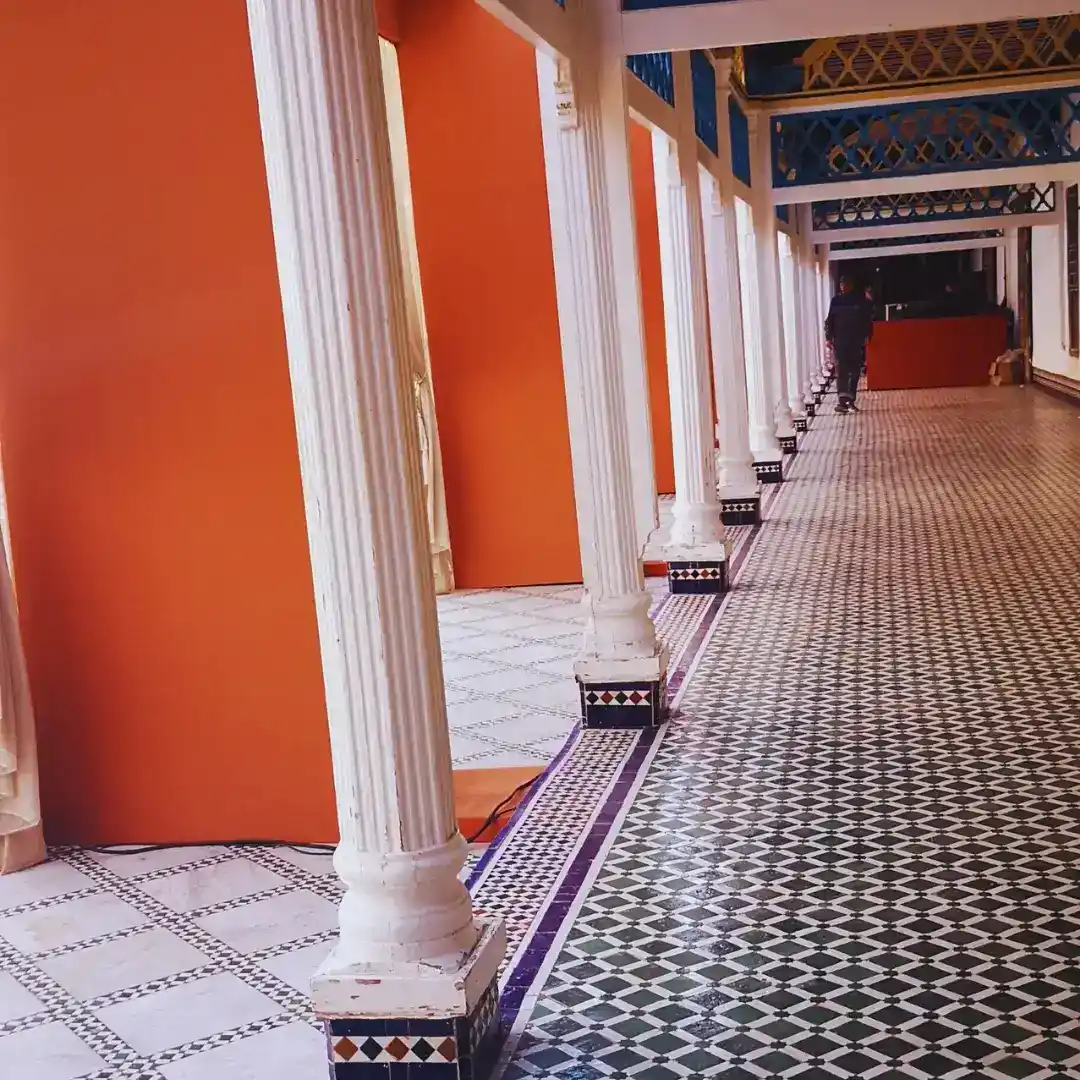
This is one of the best examples of the Instagram effect. A photograph might show a spectacular courtyard surrounded by zellige tiles, carved plaster and traditional architecture. From the street, the entrance might look completely different. Traditional riads often hide their interiors behind relatively understated entrances. You enter through the doorway. Then the courtyard opens up. This contrast is part of the architecture. Do not judge a traditional property from its exterior alone.
Marrakech is not one endless rooftop sunset
Marrakech has plenty of beautiful rooftops. You will find restaurants and cafés with views across the medina and towards the Atlas Mountains. But Marrakech is also: Busy Noisy Fast-moving Commercial Residential Historic Modern Touristic Local All at once.
You might spend the morning exploring historic architecture, the afternoon drinking tea and the evening eating on a busy rooftop. The city works because these different sides exist together. A good itinerary leaves room for both.
The Atlas Mountains are not a backdrop
Instagram often treats the Atlas Mountains as scenery behind Marrakech. The mountains are a destination in their own right. The experience changes depending on the route, season, altitude and activity level. A mountain day might involve: Walking Village visits Local meals Scenic drives Valley landscapes Tea with local residents Guided hikes Photography Rest You do not need to be an experienced hiker for every Atlas Mountain experience. You do need to choose an activity appropriate for your fitness level and the season.
Morocco is not permanently sunny
Social media rarely posts the boring weather. Morocco has varied climates. You can experience:
Hot summer conditions
Cool winter mornings Rain Strong sun Cold desert nights Snow in mountain areas Wind Seasonal temperature changes The same itinerary might feel completely different in July and January. This matters when planning: Desert trips Mountain walks City sightseeing Outdoor dining Beach time Long road journeys The best itinerary is not the one with the most attractions. It is the one suited to the conditions during your travel dates.
Some distances look shorter online
A map makes Morocco look simple. Marrakech to Fès. Fès to Merzouga. Merzouga to Ouarzazate. Ouarzazate to Marrakech.
The line looks straightforward. The actual journey includes roads, mountains, stops, meals, traffic, sightseeing and changes in terrain. This is one reason local itinerary planning matters. A route should consider actual travel time. A DMC or local tour operator should tell you when a proposed route creates an unnecessarily long day. Adding another destination does not always improve a trip. Sometimes it simply adds six hours in a vehicle.
You will see ordinary Morocco too
This is one of the biggest differences between social media and real travel. You might see: People commuting Children walking to school Farmers working Local cafés Markets Construction Delivery vehicles Families shopping Mechanics repairing vehicles Small shops Busy roads Residential streets These moments rarely become the cover photograph.
They are still part of Morocco. For many travellers, these ordinary moments become some of the most memorable parts of the trip.
Not every experience needs to be exclusive
There is a growing expectation online that every travel experience should be private, empty and personalised. Real travel does not always work like this. A traditional market is shared. A public square is shared. A historic monument is shared. A popular restaurant is shared. A desert destination is shared. You do not need an empty Morocco. You need an itinerary that manages the busiest moments intelligently. That might mean: Starting early Visiting popular attractions outside peak periods Using a private guide Choosing quieter neighbourhoods Selecting less crowded restaurants Building free time into the itinerary Avoiding unnecessary peak-hour transfers A local guide knows where timing matters.
What tourists often do not see behind the photograph
A polished travel photograph might involve: Finding the right location Waiting for other people to move Choosing the right time Walking to a viewpoint Changing the itinerary Returning at a quieter hour Using a local guide Knowing where to stand Understanding the location The photograph does not show the planning. Good travel planning does. This is especially relevant when you are booking a private Morocco tour. Your guide and driver should not simply take you from one attraction to another. They should help you understand how the day works.
Authentic does not mean uncomfortable
There is another misunderstanding worth addressing. Some travellers think an "authentic" Morocco experience means avoiding comfort. You do not need to sleep badly, eat poorly or spend hours in uncomfortable transport to experience local culture. Authenticity is not a competition. You might stay in a beautiful riad and still experience local culture. You might travel in a comfortable private vehicle and still visit villages. You might enjoy a luxury desert camp and still experience the desert.
You might eat at an excellent restaurant and still taste traditional Moroccan cuisine. Comfort and cultural connection are not opposites.
Authenticity also does not mean avoiding tourist areas
Tourist areas exist because tourists visit them. That does not automatically make them inauthentic. Jemaa el-Fnaa is popular. The souks are popular. Chefchaouen is popular. The Sahara is popular. The Bahia Palace is popular. These places are popular for reasons. The better approach is to understand what you are visiting and combine major sights with less commercial experiences. A strong itinerary might include both.
What a local guide adds
A guide changes the experience from looking at Morocco to understanding Morocco. A guide might explain: Why a medina developed in a particular way How traditional houses are designed Why certain foods are associated with specific regions How local markets operate What different architectural details mean Which streets are residential Where artisans work
How to behave respectfully in certain settings
When to visit busy attractions A photograph gives you the visual. A good guide gives you the context.
Behind the scenes with Visit Morocco Tours
At Visit Morocco Tours, the planning process starts with the traveller rather than the Instagram checklist. The question is not: "How do we fit every famous Moroccan photograph into one itinerary?" The better question is: "What type of Morocco experience suits this traveller?" For one client, the answer might be Marrakech, the Atlas Mountains and a relaxed desert experience. For another, it might be Fès, the northern cities and a slower cultural itinerary. For another, it might be a private luxury journey with carefully selected riads, private guides and distinctive dining experiences. The same country can produce completely different trips. Local knowledge helps determine where to go, when to go and how much time to spend there. It also helps with the parts travellers rarely see online: Transport Supplier coordination Guide selection Hotel choices Activity timing Seasonal considerations
Route planning Local logistics
The goal is not to remove the authentic parts of Morocco. The goal is to make the complete experience work.
How to experience the real Morocco without abandoning your expectations
You do not need to reject the places you saw online. Use them as a starting point. Then go further. Instead of visiting only the famous photograph location, explore the surrounding area. Instead of spending the entire day in a souk, combine the visit with a local food experience. Instead of treating the Sahara as a sunset photograph, spend a night there. Instead of seeing the Atlas Mountains from a viewpoint, consider a guided walk or village visit. Instead of photographing a riad courtyard, learn about the architecture. Instead of collecting destinations, spend enough time in each place to experience them. This creates a more balanced trip.
Ordinary daily life
Both versions exist. One simply fits inside a photograph. The other takes place around you.
The best Morocco memories often happen outside the frame
A photograph might capture a sunset. It does not capture the conversation you had before dinner. It might show a beautiful doorway. It does not show the guide explaining its history. It might show a camel crossing the dunes.
It does not show the silence after everyone leaves the ridge. It might show a plate of tagine. It does not capture the people you shared the meal with. Travel is larger than the photograph. That is why planning matters. Morocco rewards travellers who leave some space for the unexpected while still having a sensible structure behind the trip. You do not need to choose between Instagram Morocco and authentic Morocco. You need to understand the difference. Then build a trip that gives you both the places you wanted to see and the experiences you could never have planned from a photograph. FAQ Is Morocco really like Instagram? Many of the places shown on Instagram are genuine, but photographs usually show selected moments. Real Morocco includes busy streets, local residents, changing weather, traffic and everyday life alongside the beautiful architecture and landscapes. Is Marrakech as beautiful as Instagram shows? Yes, but Marrakech is also busy and commercial. The medina, souks, historic buildings, gardens and rooftops are part of a much larger city where people live and work. Is the Sahara desert worth visiting? For many travellers, yes. The experience involves much more than a camel ride or sunset photograph. The journey, desert landscape, camp, food, night sky and sunrise all form part of the experience. Is Chefchaouen always quiet? No. Popular areas become busy, especially during peak periods. Early visits often provide a quieter experience. Is authentic Moroccan travel uncomfortable? No. You do not need to sacrifice comfort to experience Moroccan culture. Comfortable accommodation, private transport and local experiences work well together.
How do I avoid tourist crowds in Morocco?
Travel during quieter periods, start early, use local guides and include less-visited areas in your itinerary. Timing often makes a bigger difference than avoiding famous destinations completely. Should I avoid tourist attractions in Morocco? No. Major attractions are popular for good reasons. Combine them with local experiences and less commercial areas for a broader trip. Do I need a guide in Morocco? A guide is not essential for every part of a trip, but a good local guide adds context, helps with navigation and gives you access to local knowledge that you will not get from photographs or guidebooks. How do I plan an authentic Morocco itinerary? Start with your interests rather than a list of Instagram locations. Combine major attractions with local experiences, allow enough time in each destination and use local knowledge to plan routes and timing. What is the best way to experience the Sahara? Choose a desert programme suited to your travel style, season and comfort level. Consider the route, camp, transport, activities and amount of time in the desert rather than booking only a camel excursion. What does a local Morocco tour operator do? A local operator coordinates elements such as accommodation, transport, guides, activities and local suppliers. They also help make sure the itinerary works in practice.
Official sources
- Morocco travel advice: entry requirements, safety and health (opens in a new tab)UK Foreign, Commonwealth & Development Office
- Medina of Marrakesh (opens in a new tab)UNESCO World Heritage Centre
- Medina of Fez (opens in a new tab)UNESCO World Heritage Centre