Planning · For travellers
Your First Trip to Morocco: What You Need to Know Before You Go
Morocco is easier to travel through when you understand a few basics before you arrive. You do not need to know every Moroccan city, learn Arabic or plan every hour of your holiday.
- Reading time
- 17 min read
- Published
- 24 August 2026
- Written by
- Our Morocco team
- Written for
- Travellers
Morocco is easier to travel through when you understand a few basics before you arrive. You do not need to know every Moroccan city, learn Arabic or plan every hour of your holiday. You do need to understand how entry requirements work, how people move around the country, when to use trains or private transport, how money works, what to expect in a medina and how much travel time your itinerary really requires. That last point matters. Morocco looks relatively compact on a map. Marrakech, Fès, Merzouga, Tangier and Essaouira might all appear on the same itinerary, but distances between them still take time. One recent 2026 first-time Morocco guide makes the same practical point, advising visitors to resist collecting cities and instead allow enough time in the places they visit. Your first trip will be easier if you plan around the country rather than trying to conquer it.
Check your entry requirements before booking
Visa requirements depend on your nationality. Morocco's official tourism authority directs travellers to the Accès Maroc platform to check whether they require a visa, an electronic visa or an Electronic Travel Authorisation to Morocco, known as an AEVM.
Do not rely on a travel blog from three years ago for this. Check the official requirements for your nationality before travelling. The Moroccan National Tourist Office states that the maximum tourist stay is 90 days, subject to the applicable entry conditions. For organised trips, the official tourism guidance states that the passport must cover the duration of the stay. Before departure, check: Your passport validity Visa requirements Whether an eVisa applies Whether an AEVM applies Your arrival airport Your return or onward travel arrangements Any requirements specific to your nationality The official Accès Maroc portal provides the nationality-based eligibility checker and application services.
Morocco uses the Moroccan dirham
The official currency is the Moroccan dirham, abbreviated MAD or DH. Cash still matters. International Visa and Mastercard cards are accepted at many hotels, restaurants, shops and petrol stations, while ATMs are widely available. Some smaller businesses and places where card payment is unavailable require cash in dirhams. You should therefore arrive with access to some cash rather than assuming every purchase will go through your card. You will see prices written as: 10 DH 50 DH 100 DH 200 DH
The currency is not interchangeable with the euro or US dollar, despite the occasional optimistic shopkeeper who seems determined to make every currency his own. For currency exchange, official Moroccan tourism guidance lists airports, banks, hotels and exchange offices among the available options.
Learn a few words before you arrive
Morocco is multilingual. Arabic and Amazigh are the country's official languages. French has a strong presence in business, administration, hospitality and everyday communication. Spanish also has a stronger presence in parts of northern Morocco. English is increasingly common in tourism, especially in major destinations. Still, learning a few words makes daily interactions easier. Useful words include: Salam alaykum, hello Shukran, thank you Afak, please Naam, yes La, no Bslama, goodbye Howa, how much? Even a small effort often changes the tone of an interaction.
Do not expect Morocco to feel the same everywhere
Morocco has major regional differences. Marrakech feels different from Casablanca. Fès feels different from Agadir. Tangier feels different from Merzouga. Essaouira feels different from Rabat. The landscape changes too.
You have Atlantic and Mediterranean coastlines, the Rif and Atlas mountain ranges, fertile plains, urban centres and desert regions. This matters when planning your first trip. If you want historic cities, focus on destinations such as Fès, Marrakech, Rabat and Meknès. If you want beaches, look towards destinations such as Agadir, Essaouira or the northern coast. If you want mountains, consider the Atlas. If you want the Sahara, plan around the south-east rather than treating the desert as a quick excursion from Marrakech.
Do not try to see all of Morocco in one week
This is probably the most useful planning rule in the entire article. A first-time visitor often starts with a list: Marrakech Casablanca Rabat Chefchaouen Fès Merzouga Ouarzazate Essaouira Agadir Then tries to fit everything into seven days. Please do not. You will spend a large part of your holiday travelling between places. For seven days, two major destinations plus one contrasting experience often creates a more comfortable programme. For ten days, you have more room for three major stops or a desert-focused route. For two weeks, a multi-region itinerary becomes much more realistic.
Your route should depend on your arrival and departure airports as well as the places you want to visit.
Decide what kind of Morocco you want to experience
Before choosing your itinerary, decide what interests you most. History and architecture? Food? Markets? Mountains? Desert? Beach? Photography? Luxury? Adventure? Relaxation? Culture? A mixture? Your answer should determine the route. For example: Marrakech + Atlas Mountains works well for a shorter first trip combining city and mountains. Marrakech + Essaouira gives you city and Atlantic coast. Fès + Rabat + Casablanca suits travellers interested in northern and central Morocco. Marrakech + Sahara suits travellers who specifically want a desert experience and have enough time for the journey. Agadir + Essaouira suits travellers looking for Atlantic coast and a slower pace. There is no single correct Morocco itinerary. There is only the itinerary that fits your available time and interests.
Understand how you will get around
Morocco offers several transport options. The national railway connects many major cities. ONCF operates conventional trains and Al Boraq high-speed services. The current Al Boraq network serves Tangier, Kenitra, Rabat and Casablanca. ONCF also operates Al Atlas services connecting cities including Marrakech, Fès, Tangier, Casablanca and other destinations. The Moroccan National Tourist Office also lists coaches, taxis, buses, trams and car rental among the country's transport options. For many first-time visitors, the simplest approach is to combine transport methods. Use trains between well-connected cities. Use private transport for destinations where rail connections are limited. Use local taxis within cities. Use a local driver or organised transport for longer routes when you want the journey coordinated.
Learn where trains make sense
Trains are particularly useful in northern and central Morocco. Al Boraq connects Tangier with Kenitra, Rabat and Casablanca. ONCF currently lists a Tangier to Casablanca journey at around 2 hours 10 minutes and Rabat to Tangier at around 1 hour 20 minutes. ONCF also publishes current schedules for routes including: Casablanca to Tangier Casablanca to Rabat and Kenitra Casablanca to Marrakech Marrakech to Fès Marrakech to Tangier Tangier to Fès Meknès to Fès Schedules change, so check ONCF before travelling rather than relying on an old screenshot from someone's 2019 itinerary. Check current ONCF train schedules and tickets
Understand when private transport makes more sense
Private transport becomes useful when your route involves places without convenient rail connections or when you want door-to-door travel. This is especially relevant for: Desert routes Atlas Mountain excursions Rural areas Multi-stop itineraries Airport transfers Families Small private groups Travellers with substantial luggage A private vehicle also gives you greater control over departure times and stops. That does not mean every journey needs a private car. Use the transport method that makes sense for the route.
Be realistic about driving distances
Travel time is part of your holiday. Marrakech to Merzouga is not a short excursion. Fès to Merzouga is also a substantial journey. Essaouira and Marrakech are much easier to combine. Casablanca and Rabat are relatively close. Tangier, Rabat and Casablanca work particularly well together because of the rail network. The mistake is not travelling long distances. The mistake is pretending long distances do not exist. If the desert matters to you, give the desert enough time. If you only have five days, choose a route that does not require several long transfers.
Choose your accommodation carefully
Morocco offers several types of accommodation. Hotels Riads Kasbahs Desert camps Guesthouses Resorts Luxury properties A riad is a traditional house organised around an internal courtyard, often with rooms opening towards the central space. Staying in a riad gives you a different experience from a large international hotel. There is one practical consideration. Traditional riads often sit inside medinas where vehicles have limited access or cannot reach the property directly. You might need to walk with your luggage from the nearest accessible point. That is perfectly manageable when you know in advance. It is less amusing when you arrive at 11 pm with two oversized suitcases and discover that "five minutes from the taxi" means five minutes according to a person who has lived there for 20 years.
Decide whether you want a riad or hotel
Choose a riad if you want: Traditional architecture Smaller-scale accommodation A central medina location A more intimate setting Choose a hotel if you prefer: Larger facilities
Easier vehicle access
International hotel standards Neither option is automatically better. Your travel style should decide. For a first visit, a combination also works well. You might spend several nights in a riad in a historic city and then choose a larger hotel or resort for a different part of the trip.
Food is a major part of travelling through Morocco
Moroccan food extends far beyond tagine. Try: Couscous Pastilla Harira Tanjia Bissara Rfissa Moroccan salads Fresh bread Olives Dates Mint tea Regional pastries
The exact food available varies by region and season. Do not assume every Moroccan meal looks like the menu of a tourist restaurant. Local food culture is regional. Ask your guide or accommodation staff where locals eat and what is particularly good in the area.
Be sensible with drinking water
Bottled water is widely available. Many travellers choose bottled water for drinking, especially during their first days. If you buy bottled water, check the seal before opening. Use common travel hygiene practices with food and drinks, especially if you have a sensitive stomach. Also remember that your body is adapting to a different climate, diet and routine. Do not spend your first day eating everything in the market because you have decided that travelling means accepting every culinary challenge humanity has invented.
Dress respectfully
Morocco is a Muslim-majority country. Dress standards vary between cities, tourist areas, beaches and rural communities. You do not need to dress in traditional Moroccan clothing. You should dress respectfully, particularly when visiting religious or more conservative environments. For general sightseeing, clothing covering the shoulders and knees is a sensible choice, especially outside resort areas. Loose, breathable clothing also works well in warmer weather. For mosques and religious sites where non-Muslim visitors are permitted, follow the specific requirements of the site.
Understand medina etiquette
Medinas are living urban neighbourhoods, not theme parks. People live and work there. You will see shops, homes, schools, workshops, restaurants, delivery workers and children alongside tourists.
Walk with awareness. Keep to the side when motorbikes or carts approach. Do not block narrow passages for photographs. Ask before photographing people closely. Respect private doorways and residential areas. If someone offers help, directions or a service, establish whether there is a charge before accepting.
Expect some sales pressure in tourist areas
Morocco has active markets and commercial districts. In popular tourist areas, shopkeepers and vendors might approach you. You do not need to buy something because someone starts a conversation. A polite "la, shukran" is usually enough when you are not interested. If you do want to buy something, negotiation is part of the commercial culture in many souks. Do not negotiate aggressively over a tiny amount if the price difference means little to you. At the same time, do not assume every initial price is the final price.
Tipping is part of the service culture
Tipping is common for many services in Morocco. You might tip: Guides Drivers Hotel staff Restaurant staff Porters Other service providers The appropriate amount depends on the service and circumstances. There is no single mandatory percentage covering every situation.
For organised tours, ask your tour operator about current tipping guidance because group arrangements vary.
Photography needs a little awareness
Morocco is exceptionally photogenic. People are also not scenery. Ask before photographing individuals, particularly children, workers and people in situations where a photograph feels intrusive. Take extra care around sensitive locations such as airports, police facilities, military installations and other restricted sites. If you are unsure, ask.
Morocco is not one climate
Weather varies significantly across the country. The Atlantic coast, Mediterranean north, inland cities, mountains and desert all have different conditions. This affects packing and itinerary planning. Summer Hot conditions dominate much of the interior. Outdoor activities need careful timing. Desert programmes require particular attention to heat. Spring and autumn These seasons often provide comfortable conditions across many popular destinations, although regional differences remain. Winter Days can be pleasant in many cities, while nights can become cold. Mountain areas have different conditions from Marrakech or the coast. The official Moroccan tourism information emphasises the country's contrasting climates, influenced by the Atlantic, Mediterranean, Rif and Atlas ranges and desert regions.
Pack for the actual itinerary
Your packing list should follow your route.
For most first trips, consider: Comfortable walking shoes Light layers A warmer layer for evenings Sun protection Sunglasses Reusable water bottle Universal travel adaptor Power bank Small day bag Modest clothing for cultural visits Swimwear if your accommodation or itinerary includes swimming Any required medication If your itinerary includes the Sahara, mountain areas or winter travel, add clothing appropriate for cooler nights. Comfortable footwear matters more than fashionable footwear when you are walking through a medina for several hours. Your feet will eventually issue a formal complaint.
Internet and mobile data
Major Moroccan cities have widespread mobile coverage. For longer trips, consider buying a Moroccan SIM or using an eSIM compatible with your phone. Check whether your home mobile provider offers affordable roaming before departure. Do not assume your usual roaming package applies in Morocco. Hotels, cafés and restaurants often provide Wi-Fi, but having mobile data gives you more flexibility for maps, messaging and transport information.
Keep your important documents accessible
Keep digital and physical copies of:
Important medication information
Do not keep every original document in the same bag. A lost phone and lost passport at the same time is a poor way to begin a holiday.
Think about travel insurance
Travel insurance is worth arranging before your trip. Look for cover appropriate to your itinerary. If you are planning: Desert activities Hiking 4x4 excursions Adventure activities Water activities Multiple destinations Expensive equipment Check that your policy covers the activities you intend to undertake. Do not assume an ordinary policy covers every adventure activity.
Understand Ramadan before you travel
Ramadan follows the Islamic lunar calendar, so the dates change each year. During Ramadan, daily routines change. Restaurants and cafés might operate different hours.
Meal times shift. People who are fasting do not eat or drink during daylight hours. Evening life becomes more active after sunset. Morocco's official tourism information states that the country's time changes from GMT+1 to GMT during Ramadan. Visitors do not need to fast. Respect the people around you. Avoid making a public spectacle of eating or drinking in situations where people are fasting. Your itinerary might also need adjustments.
Do not expect everything to run on your preferred schedule
Travel in Morocco involves a different rhythm from many European countries. Transport delays happen. Meals might take time. A shop might close unexpectedly. A road journey might take longer than expected. A driver might suggest a different stop. A medina route might take longer than Google Maps suggests. This does not mean Morocco is disorganised. It means you should leave some flexibility in your itinerary. If every minute has a booking attached to it, one delay becomes five delays.
Decide whether you want to travel independently
Morocco works for independent travel. The major cities have established tourism infrastructure, trains connect many major destinations and there is extensive accommodation for international visitors. Independent travel suits people who enjoy: Planning routes Using public transport
Do not confuse a tour with a rigid schedule
A private tour does not need to mean someone dictates every minute. A well-designed private itinerary should leave room for personal interests and changes. You might want more time in a market. You might want to skip an attraction. You might want a longer lunch. You might want to photograph a particular location. Tell your operator. Private travel should be built around you.
Think carefully before adding the Sahara
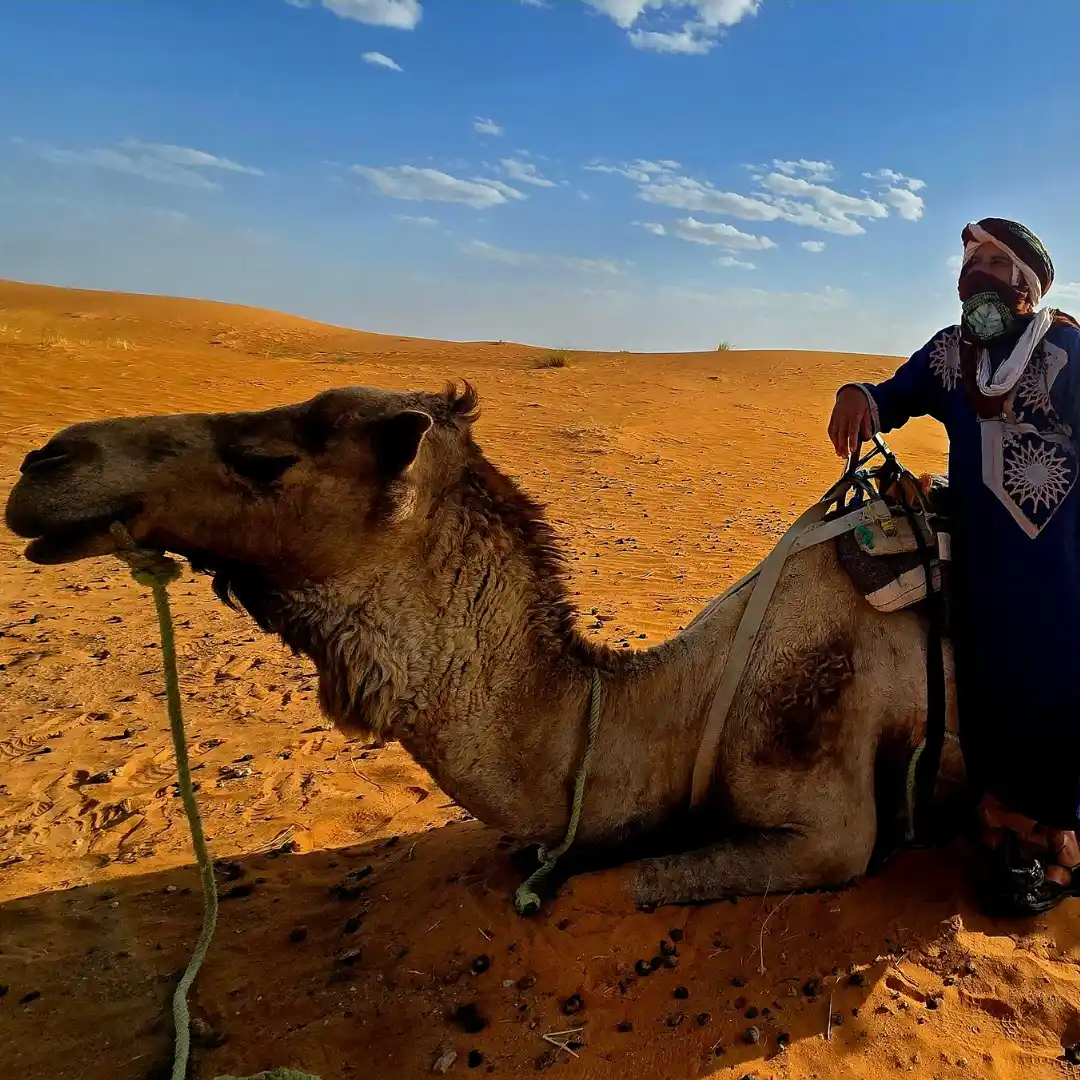
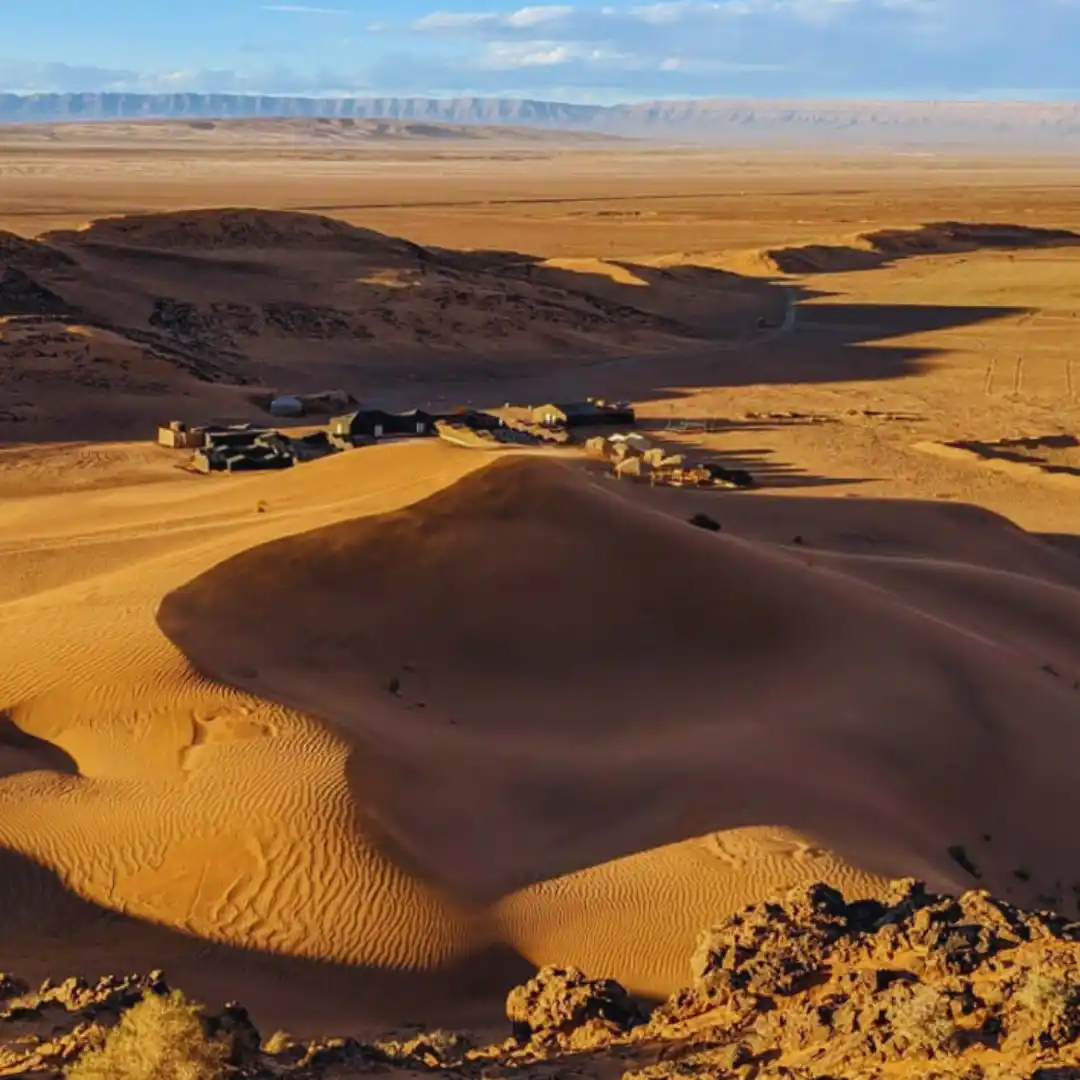
The Sahara is one of Morocco's biggest draws. Merzouga and the Erg Chebbi dunes offer a genuine desert environment, but getting there takes time. Do not add Merzouga to a five-day itinerary simply because you saw a photograph of the dunes and became emotionally attached to the concept of geography. Plan enough time for the route. A desert itinerary often works better as a central part of a multi-day journey than as an isolated add-on. If you have limited time, consider whether a closer desert-style experience such as Agafay near Marrakech fits your itinerary better.
Keep some flexibility in your itinerary
Your first Morocco trip should have structure. It should not have handcuffs. Leave room for: A longer lunch An unexpected market A photography stop A quiet afternoon A good restaurant recommendation A conversation with a local A change in weather A missed connection A place you unexpectedly enjoy The best travel planning gives you enough structure to avoid logistical problems without removing every opportunity for spontaneity.
The biggest first-time mistakes to avoid
Trying to visit too many cities.
Underestimating driving times. Booking accommodation without checking access. Assuming every place accepts cards. Ignoring the season. Forgetting that Ramadan changes daily routines. Planning desert travel as a short excursion. Overpacking. Scheduling every hour. Expecting every Moroccan city to feel the same. Accepting unsolicited services without agreeing on the price. Photographing people without asking. Treating medinas like tourist attractions rather than working neighbourhoods. Choosing an itinerary because it looks impressive rather than because it works.
A simple first-trip planning framework
Start with five decisions. First, choose your travel dates. Second, decide how many days you have. Third, choose the type of Morocco you want to experience. Fourth, select two or three destinations that fit those priorities. Fifth, work out how you will travel between them. Then book accommodation and activities around the route. Do not start with twelve attractions and attempt to connect them afterwards. Start with the geography.
What should your first Morocco trip look like?
There is no universal first-trip itinerary. A short trip could focus on Marrakech and the surrounding region.
A week gives you room for Marrakech plus another destination. Seven to ten days gives you more flexibility for two major cities and a contrasting experience. Ten to fourteen days allows a more ambitious route, including the Sahara if you prioritise it. Two weeks or more gives you considerably more freedom to combine regions without turning every day into a transfer day. The right itinerary is the one where you have enough time to experience each destination rather than simply collect hotel check-ins.
When local knowledge makes a difference
You do not need a guide for every moment of your holiday. A local guide becomes particularly useful for: Medina visits Historical sites Food experiences Cultural interpretation Desert travel Mountain excursions Private tours Complex multi-city routes A local operator also helps with the practical layer. Transport. Drivers. Hotels. Activity providers. Restaurant reservations. Airport transfers. Changes to the itinerary.
This is where local knowledge becomes more than someone pointing at a monument and saying its name. Planning your first trip to Morocco with VMT VMT works with travellers who want private, flexible Morocco itineraries rather than a standard group schedule. Depending on your route, a private programme might include: Airport transfers Private vehicles Licensed local guides Marrakech Casablanca Rabat Fès Tangier Agadir Essaouira Atlas Mountains Agafay Merzouga and the Sahara Cultural experiences Food experiences Desert activities Photography Multi-day private tours The itinerary should start with your available time and priorities. If you have five days, the programme should respect five days. If you want the Sahara, the route should allow enough time for the journey.
If you want culture, the itinerary should give you time to understand the places you visit. Morocco rewards good planning. It does not require obsessive planning. Know the entry rules. Choose your route carefully. Respect the local culture. Allow enough time between destinations. Keep some flexibility. Then leave room to experience the country rather than spending the entire holiday managing a spreadsheet. FAQ Do I need a visa to visit Morocco? Visa requirements depend on your nationality. Morocco's official Accès Maroc platform provides a nationality-based eligibility check for visas, eVisas and AEVM travel authorisations. How many days do I need for my first trip to Morocco? Seven to ten days provides a useful starting point for many first-time visitors. Five days suits a focused regional trip. Two weeks gives you more flexibility for several regions and longer routes. Is Morocco easy to travel around? Yes, provided you plan the route realistically. Major cities have rail, coach and taxi connections, while private transport works well for destinations outside the main rail network. Is Morocco safe for first-time visitors? Most visitors travel through Morocco without serious problems, but normal travel precautions still matter. Pay attention to your belongings in crowded areas, use reputable transport and guides, avoid isolated situations and follow current government travel advice for your nationality. What currency does Morocco use? Morocco uses the Moroccan dirham, abbreviated MAD or DH. Cards are accepted in many hotels, restaurants and larger businesses, but cash remains useful. Should I carry cash in Morocco? Yes. Carry a reasonable amount of Moroccan dirhams for smaller purchases, taxis, markets and businesses without card facilities. ATMs are widely available.
Is English spoken in Morocco?
English is widely understood in the tourism sector, especially in major destinations. French and Arabic have a much broader presence in everyday life, while Amazigh is also an official language. Should I stay in a riad or hotel? Choose a riad for traditional architecture and a smaller-scale medina experience. Choose a hotel for larger facilities, pools, spas, restaurants and easier vehicle access. Both work well for different travel styles. Can I travel around Morocco by train? Yes. ONCF operates conventional trains and Al Boraq high-speed services. Al Boraq currently connects Tangier, Kenitra, Rabat and Casablanca, while other ONCF routes connect cities including Marrakech and Fès. Do I need a guide in Morocco? No, not for every part of your trip. A guide is particularly useful for medinas, historical sites, cultural experiences, mountain excursions, desert routes and private itineraries. Is Morocco suitable for a first solo trip? Morocco suits experienced and first-time solo travellers, provided you plan sensibly, remain aware of your surroundings and choose accommodation and transport carefully. What should I wear in Morocco? Choose comfortable, respectful clothing. Covering shoulders and knees is a sensible approach for many cultural settings, particularly outside resorts. Adapt your clothing to the season and destination. Can I drink alcohol in Morocco? Alcohol is available in licensed hotels, restaurants, bars and other permitted establishments, but Morocco is a Muslim-majority country. Follow local rules and venue policies. What is the best month to visit Morocco? There is no single best month for the entire country. Spring and autumn often offer favourable conditions in many destinations, while summer and winter require more regional planning. The best period depends on whether you prioritise cities, mountains, coast or desert. Is Ramadan a good time to visit Morocco? Yes, but you should understand how Ramadan changes daily schedules, meal times and the rhythm of life. Check the dates for your travel year and plan accordingly. Should I visit the Sahara on my first trip?
If the Sahara is important to you, build the itinerary around it. Do not treat Merzouga as a quick side trip from Marrakech because the journey requires substantial travel time.
Official sources
- Morocco travel advice: entry requirements, safety and health (opens in a new tab)UK Foreign, Commonwealth & Development Office
- Medina of Marrakesh (opens in a new tab)UNESCO World Heritage Centre
- Medina of Fez (opens in a new tab)UNESCO World Heritage Centre