Seasons · For travellers
When to Visit Morocco: Best Time to Travel by Region & Experience Type
Stop relying on generic climate charts. Discover the real best time to visit Morocco by region, season, and experience with Visit Morocco Tours.
- Reading time
- 6 min read
- Published
- 24 August 2026
- Written by
- Our Morocco team
- Written for
- Travellers
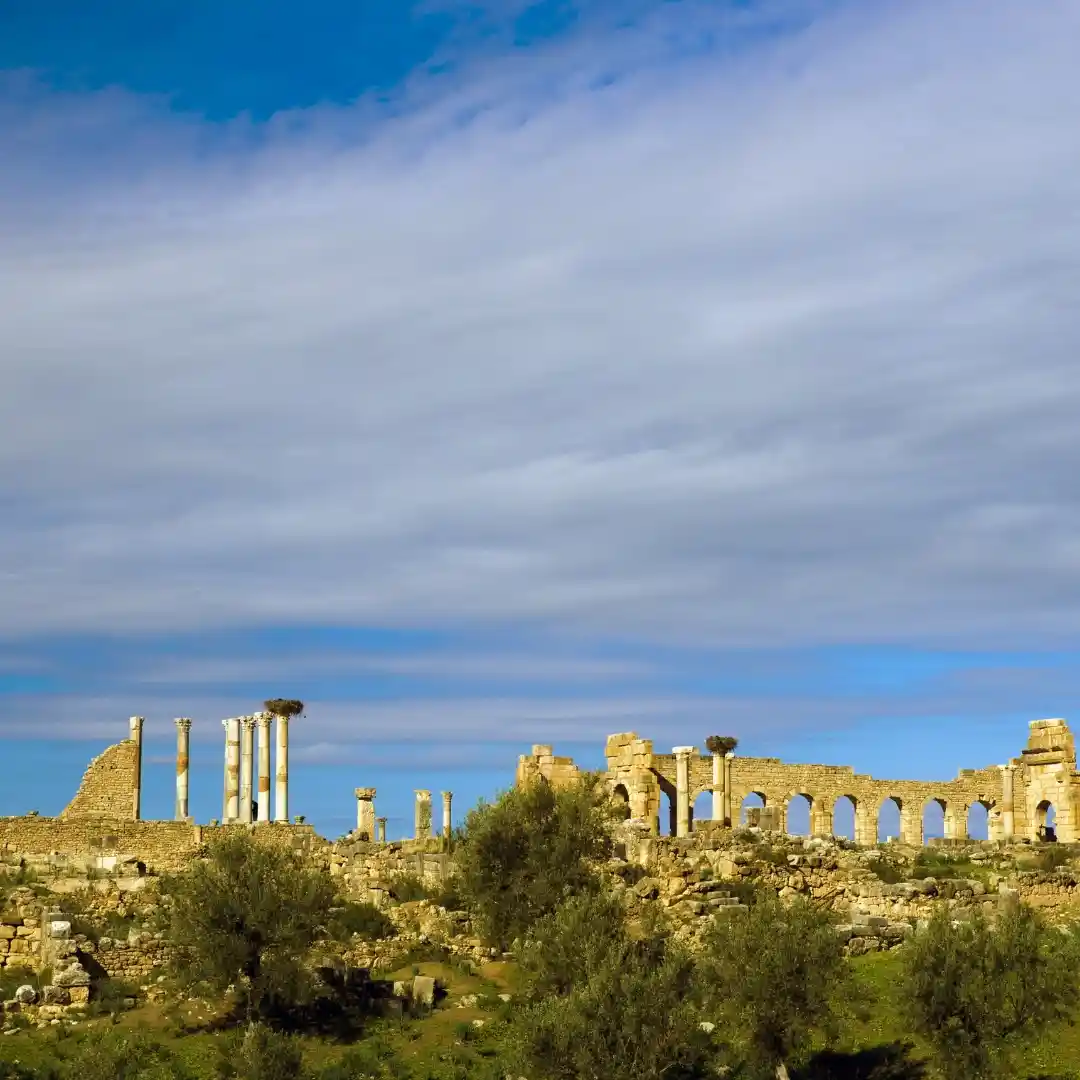
Morocco does not do one-size-fits-all weather. On a single afternoon in April, you could be shivering slightly under a blanket of pine needles in the High Atlas, sweating through your linen shirt in the midday heat of Marrakesh, and watching sea fog roll over the ramparts of Essaouira. If you ask Google for the "best time to visit Morocco," it will predictably tell you: Spring and Autumn. It is not wrong, but it is lazy. The truth depends entirely on what you want to feel under your feet—the burning dust of the Saharan dunes, the damp ocean air of the Atlantic, or the crisp silence of a mountain pass. At Visit Morocco Tours, we do not design trips around average monthly temperatures. We design them around the rhythm of the country. Here is how to time your trip to capture the real Morocco, away from the tour bus jams and into the authentic pulse of the Kingdom.
Spring (March to May): The Golden Window
- The Vibe: Wildflowers in the valleys, warm days, cool nights, and rivers running fast with snowmelt.
- The Reality: Spring is peak season for a reason. The countryside is surprisingly green—especially around the Rif Mountains and the Middle Atlas—and the light is a photographer's dream.
March can still bring unpredictable mountain rains, but by April, the country opens up completely. If you are planning a slow travel Morocco itinerary that links the northern Imperial Cities with the southern valleys, this is your sweetest spot. Be aware: everyone else knows this too. To experience the real Morocco in spring, you must step off the main circuits and let local access lead the way.
Autumn (September to November): The Smouldering Second Summer
- The Vibe: Rich golden light, harvest energy, warm seas, and the desert shaking off its summer furnace.
- The Reality: September stays hot in the interior—do not expect immediate cool air the moment the calendar flips. But by October, the air softens. Autumn is date harvest season in the southern oases, saffron picking season in Taliouine, and easily one of the most rewarding times for Berber gastronomy and cooking experiences. The Atlantic ocean remains warm enough for swimming well into late October.
Winter (December to February): Snow, Stars, and Solitude
- The Vibe: Crisp blue skies, snow-capped Atlas peaks, freezing desert nights, and medinas without the crowds.
- The Reality: Winter in Morocco is wildly underrated, provided you pack correctly. Coastal and interior daytime temperatures often sit at a comfortable 18°C under blinding blue skies. However, indoor heating is rare in traditional architecture—a thick wool djellaba exists for a reason. This is the ultimate season for luxury Saharan desert camps. The daytime heat in the dunes is mild and forgiving, while the winter night skies are clear, sharp, and unmatched for stargazing.
Summer (June to August): Coastal Refuge & Mountain Coolers
- The Vibe: Scorching interior plains, lively coastal nights, and high-altitude escapes.
- The Reality: Let's be honest: Marrakesh and Fez in July are punishingly hot, often climbing past 40°C. If you must travel in summer, do what the locals do—head for the coast or climb into the clouds. The Atlantic coastline (Essaouira, Taghazout, Oualidia) stays dramatically cooler thanks to the Alizé trade winds, while an Atlas Mountains wellness retreat offers immediate refuge from the lowland heat.
Timing Morocco by Region: Microclimates & Micro-Seasons
Morocco's geography is dramatically varied. Timing your trip means understanding where you want to spend your days.
- Coastal (Atlantic): year-round breeze, mild winters. Best: May to October.
- Interior (imperial cities): hot summer, cold winter. Best: spring and autumn.
- Saharan (south): optimal October to April. Extreme summer heat to avoid.
The Sahara Desert (Erg Chebbi & Erg Chigaga)
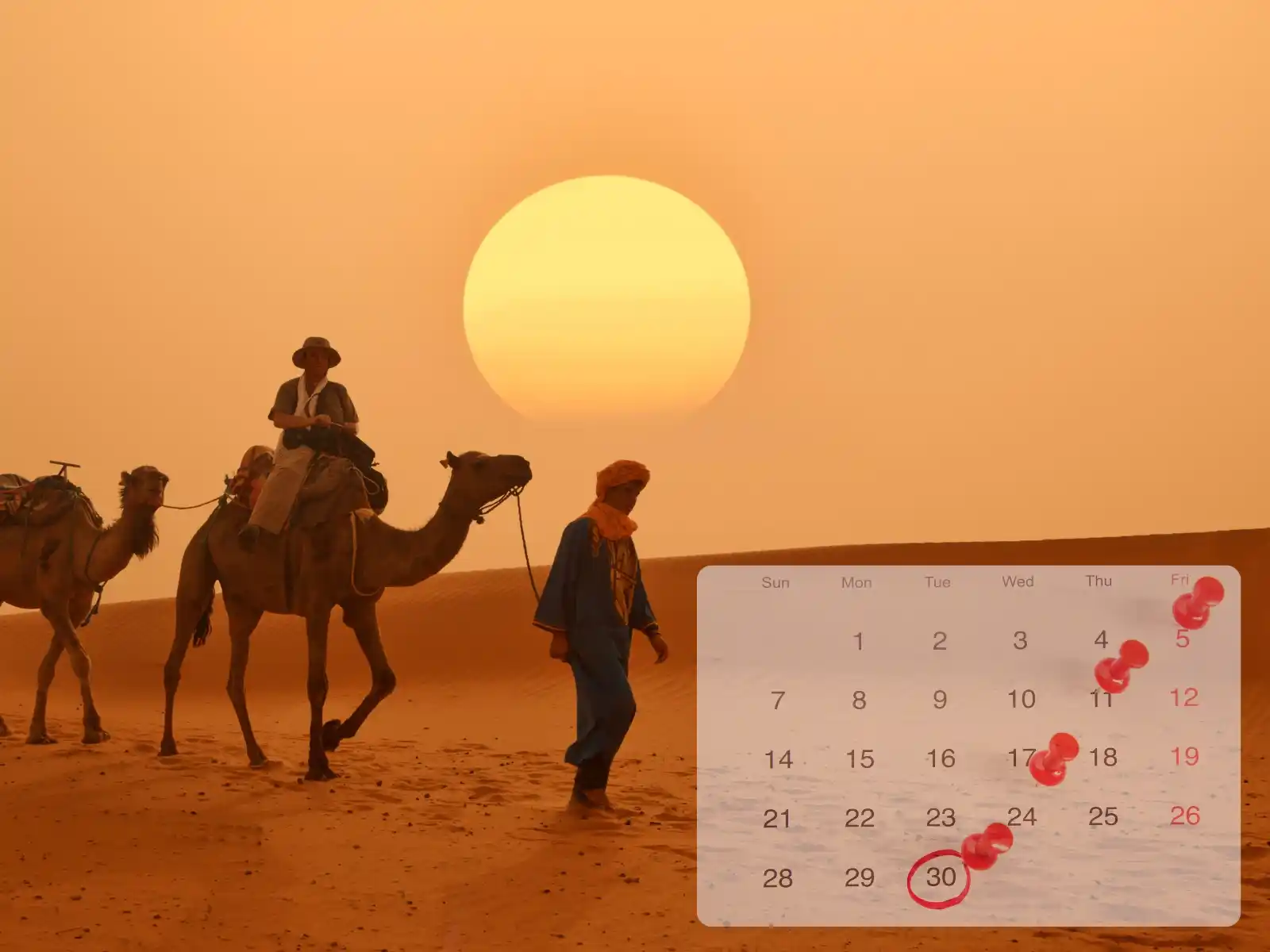
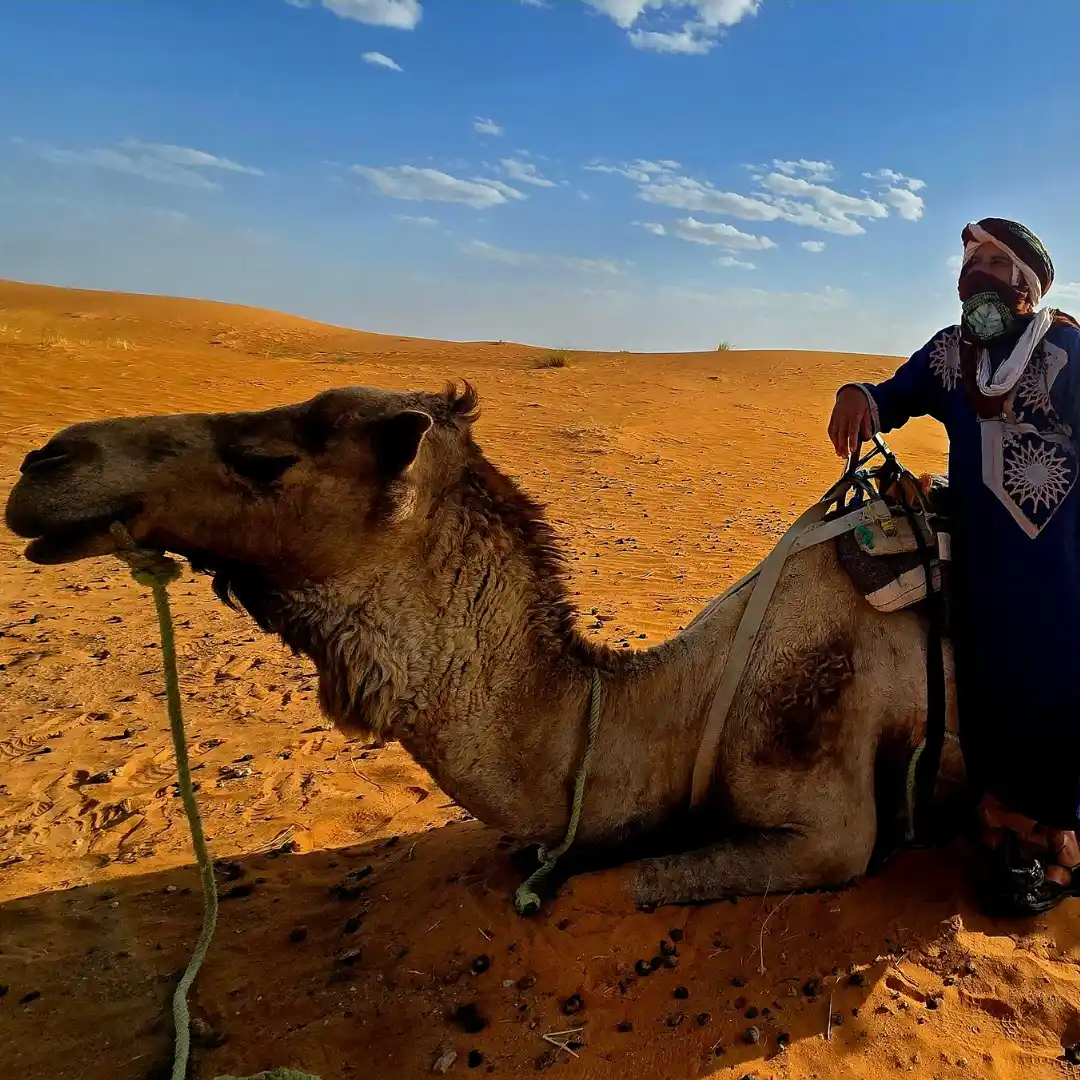
The desert does not do middle grounds. From November through March, daytime temperatures are near-perfect for camel trekking and walking through the dunes, but nighttime temperature drops are sharp (sometimes hovering near freezing). October and April offer the best balance of warm days and comfortable nights. VMT Tip: Avoid the Sahara between late June and late August unless you relish the feel of a blast furnace. If desert sands are non-negotiable for your summer dates, let us pivot your journey toward the stone desert landscapes of Agafay or coastal dunes instead.
The Imperial Cities (Marrakesh, Fez, Meknes, Rabat)
Fez sits in a valley that traps heat in summer and holds a damp chill in winter. Marrakesh is drier but equally extreme.
- Best months: March through May, and October through November.
- How to travel: In 2026, navigating between the northern hubs is smoother than ever. Utilizing high-speed rail travel in Morocco (the Al Boraq line) allows you to glide from the coastal energy of Tangier down to Casablanca and beyond without burning full days in transit.
The High Atlas & Anti-Atlas Mountains
If your soul craves fresh air, terraced villages, and mountain passes, timing depends on your activity level:
- For serious trekking: May to June and September to October offer dry trails and clear vistas.
- For quiet refuge: Winter brings snow to the peaks—creating a dramatic backdrop while you sit by a cedar-wood fire in a boutique mountain lodge sipping spiced mint tea.
Cultural Rhythms: Traveling with Respect & Awareness
Timing your trip isn't just about meteorology; it's about the cultural calendar. Traveling during key cultural moments offers an incredible layer of soulful travel, provided you know what to expect.
Traveling During Ramadan
Ramadan shifts by roughly 10 to 11 days each year on the lunar calendar. In 2026, Ramadan will take place during late winter/early spring.
- What it's really like: The cadence of the day changes. Mornings are slow and quiet; late afternoons carry a palpable sense of anticipation. At sunset (Iftar), the streets empty completely as families gather to break their fast, followed by an explosion of midnight energy, glowing lanterns, and night markets.
- Our perspective: Don't shy away from it. While some tourist shops adjust their hours, experiencing the warmth of Ramadan hospitality firsthand is one of the most human-centered cultural encounters you can have in the Kingdom. Private Morocco tours allow you the flexibility to adapt to this unique daily rhythm effortlessly.
Festival Season
If you want to weave your trip around authentic cultural roots, align your dates with local harvests and gatherings:
- Rose Festival (Kelaat M'Gouna): May. The entire valley smells of damask roses as millions of petals are harvested for oils and waters.
- Gnaoua World Music Festival (Essaouira): June. A soul-stirring celebration of mystical Afro-Moroccan music along the Atlantic sea walls.
- Imilchil Marriage Moussem: September. High in the Atlas Mountains, a traditional tribal gathering centered around union, trade, and Berber identity.
Local Insights: The Unspoken Protocols of Moroccan Travel
Wherever and whenever you travel in Morocco, navigating the space with awareness elevates your experience from mere sightseeing to true connection.
PRACTICAL CULTURAL PROTOCOLS
- The Art of the Mint Tea: When tea is offered—whether in a carpet guild, a rural home, or a riad courtyard—it is an invitation to pause. Accept it with your right hand, sip slowly, and let the conversation drift before talking business or directions.
- Medina Spatial Flow: Medinas are living neighborhoods, not open-air museums. Yield space to elderly residents, keep to the right side of narrow alleyways, and step aside promptly when you hear someone call "Balak!" (Make way!).
- Photography with Consent: Always ask before photographing craftsmen, shopkeepers, or children. A simple smile and "Wakha?" (Is it okay?) goes a long way. If they decline, respect it with a warm "Shukran" (Thank you).
Crafted Experiences: Your Morocco, Timed to Perfection
There is no singular "wrong" time to visit Morocco—there is only a poorly planned itinerary. A journey built around off-the-shelf templates will leave you sweating in Marrakesh in July or freezing in an unheated desert tent in January. At Visit Morocco Tours, we build sustainable Morocco itineraries shaped around your personal tolerances, interests, and timing. Whether you want to chase the date harvest through southern oases, retreat to a mountain sanctuary, or navigate ancient medinas under mild spring skies, we curate every detail with human warmth and local precision.
Frequently Asked Questions (FAQ)
Official sources
- Morocco travel advice: entry requirements, safety and health (opens in a new tab)UK Foreign, Commonwealth & Development Office
- Medina of Marrakesh (opens in a new tab)UNESCO World Heritage Centre
- Medina of Fez (opens in a new tab)UNESCO World Heritage Centre
.webp)