Travel trade · For travel agencies
What Does a Morocco DMC Actually Do? A Guide for Travel Agencies and Tour Operators
If you sell Morocco to your clients, you do not necessarily need to operate Morocco yourself. You need someone who knows how Morocco works on the ground.
- Reading time
- 16 min read
- Published
- 24 August 2026
- Written by
- Our Morocco team
- Written for
- Travel agencies
If you sell Morocco to your clients, you do not necessarily need to operate Morocco yourself. You need someone who knows how Morocco works on the ground. This is where a Destination Management Company, or DMC, comes in. A Morocco DMC works as the local operational partner for travel agencies, tour operators, wholesalers and other travel businesses. The DMC helps design, coordinate and deliver the Morocco programme while the international partner keeps the client relationship and manages the sale. For a travel agency, this distinction matters. Selling a Morocco holiday is one job. Making sure 30 clients arrive at the right airport, reach the right hotel, meet the right guides, follow a realistic itinerary, receive the right meals and have support when plans change is another job entirely. A DMC handles the second part. What does DMC mean? DMC stands for Destination Management Company. A DMC specialises in one destination or region and manages travel services locally. For Morocco, this means working with the hotels, riads, camps, transport providers, guides, restaurants, activity providers and other local suppliers required to deliver a programme. The DMC may also design the itinerary, negotiate supplier arrangements, coordinate arrivals and departures, manage groups, provide on-site assistance and handle changes during the programme. The exact service range differs between DMCs. Some focus heavily on MICE and corporate programmes. Others specialise in leisure groups and FIT. Some cover luxury travel.
morocco-dmc-for-travel-agencies What Does a Morocco DMC Actually Do? A Guide for Travel Agencies and Tour Operators
Some provide a combination of these services. For travel agencies and tour operators, the important point is operational responsibility inside the destination. What does a Morocco DMC actually do? A good DMC turns your brief into a programme that works in Morocco. You might send a brief such as: "12-day Morocco tour for 24 clients. Four-star accommodation. English-speaking guides. Marrakech, Sahara and Fès. Private transport. Two special dinners." The DMC then works through the operational details. Which route makes sense? How long should clients stay in each destination? Which hotels fit your positioning? Which vehicles suit the group? Which guides are available? Where should the group eat? Which activities suit the clients? How much travel time does each day require? Which services need advance reservations? What happens if a flight is delayed? Which suppliers meet the required standard? The DMC turns those questions into an operational programme. This local knowledge is one of the main reasons international travel businesses work with DMCs. Why use a Morocco DMC instead of booking suppliers yourself? You could contact hotels directly. You could book transport separately. You could find guides online. You could arrange activities with individual providers.
You could manage restaurants, transfers and excursions yourself. Humans have invented spreadsheets for precisely this purpose. The problem appears when something changes. A flight arrives late. The group size changes. A hotel cannot accommodate the revised rooming list. A restaurant needs to move dinner by an hour. A client needs a different meal. A guide becomes unavailable. A road condition affects the route. A supplier does not deliver as expected. When you coordinate every supplier separately, you also coordinate every problem separately. A DMC gives you a local operational partner who coordinates the moving parts. This is particularly important for group travel, complex itineraries, incentive programmes and programmes involving several regions. The main services a Morocco DMC provides DMC services vary, but travel agencies and tour operators commonly look for several core areas.
Itinerary design
A DMC helps turn your product concept into a realistic Morocco itinerary. This involves more than choosing attractive destinations. The route needs to work geographically. Travel times need to fit the group. Accommodation needs to match the route. Activities need to fit the available time. The programme needs to suit the clients. For example, a route combining Marrakech, Aït Ben Haddou, Dades, Todra Gorge, Merzouga and Fès needs careful planning.
Adding more destinations does not automatically improve the product. A DMC helps determine where to stay, how long to stay and when to travel.
Accommodation sourcing and coordination
A Morocco DMC may source and coordinate: Hotels Riads Kasbahs Desert camps Resorts Boutique properties Luxury properties Private villas The right property depends on your product and client profile. A budget group tour has different requirements from a luxury FIT programme. A corporate incentive has different requirements from a student group. The DMC needs to understand your positioning before recommending accommodation. Current Morocco DMC providers commonly include hotels, riads, camps and accommodation management within their B2B services.
Transportation
Transportation is one of the most important parts of Morocco ground operations. A DMC may coordinate: Private cars Luxury vehicles 4x4 vehicles Minibuses Coaches
Special transport requirements
Vehicle choice depends on group size, route, comfort level and programme requirements. A group of 10 executives travelling between Marrakech and the Sahara needs a different transport solution from a 45-person escorted tour. The DMC also coordinates timing. The vehicle needs to be where the group needs it, when the group needs it.
Professional guides
A DMC coordinates local guides according to: Language Destination Group size Client profile Programme type Special interests For example, a cultural group might require multilingual guides with strong historical knowledge. A luxury programme might require a private guide throughout the journey. A corporate group might need guides who understand strict timing and group management. Guide quality affects the client experience directly.
Airport transfers
Airport arrival is the first operational moment of the trip. The DMC coordinates the transfer from the airport to the hotel or first destination. For groups, this might involve: Flight monitoring
Meet-and-greet Airport assistance Luggage coordination Vehicle allocation Guest lists Hotel transfer Late-arrival management
A professional DMC should also have a process for flight delays and changes.
Excursions and activities
A DMC sources and coordinates activities according to the programme. Depending on the itinerary, this might include: Cooking experiences Food tours Cultural visits Camel experiences 4x4 desert excursions Sandboarding Hiking Atlas Mountain experiences Artisan workshops Photography Golf Wellness Water activities Private cultural experiences Activities should fit the group.
An activity suitable for a family group might not suit a senior executive group. A DMC helps match the experience to the client rather than treating every traveller the same.
Restaurants and dining arrangements
Food is part of the programme. A DMC might coordinate: Group lunches Welcome dinners Farewell dinners Private dining Gala dinners Traditional Moroccan experiences Special dietary requirements Restaurant reservations Meal timing For corporate groups, dining also becomes part of the event design. A gala dinner in Marrakech has different requirements from a casual lunch during a sightseeing day.
Group management
Group travel creates additional operational requirements. A DMC helps coordinate: Rooming lists Passenger lists Arrival schedules Transport allocation Guide allocation Meal arrangements
Activity schedules Luggage Group movements Supplier communication On-site support
The larger the group, the more important coordination becomes.
Corporate and MICE services
Many Morocco DMCs also work with MICE programmes. MICE means: Meetings Incentives Conferences Exhibitions and events Services might include: Venue sourcing Meeting rooms Audiovisual services Event production Team building Gala dinners Entertainment Transfers Accommodation Restaurant management On-site coordination Corporate excursions
Incentive programme design
Current Morocco DMC providers position MICE, incentives, conferences and events as major parts of destination management.
VIP and special requests
Some clients require more than a standard programme. A DMC might coordinate: VIP airport assistance Luxury vehicles Private guides Premium accommodation Private dining Special access Exclusive activities Security coordination where appropriate Personalised amenities Executive transfers These requests require local relationships and advance planning.
On-site assistance
This is one of the biggest differences between a DMC and a simple booking supplier. A hotel handles the hotel. A transport company handles transport. A guide handles guiding. A DMC coordinates the wider programme. During a live operation, the DMC may monitor the programme, communicate with suppliers, manage changes and assist when something does not go according to plan. For international agencies, having someone locally available provides an additional layer of operational support.
What does a DMC do for a travel agency?
The travel agency usually owns the client relationship. The DMC manages the destination operation. A simplified model looks like this: Travel agency Client relationship Sales Marketing Payment collection Client communication Travel documentation Overall product positioning Morocco DMC Local programme design Supplier coordination Hotels Transport Guides Activities Restaurants Ground operations On-site assistance This division lets each partner focus on its own strengths. The travel agency sells and manages the customer relationship. The DMC manages Morocco. Does a DMC replace a travel agency?
No. A DMC and travel agency perform different functions. A travel agency sells travel products and advises clients. A DMC manages destination services. The same company might perform both roles. The industry includes businesses operating as both travel agencies and DMCs. For a foreign travel agency, working with a separate Morocco DMC often provides access to local operational expertise without building a Moroccan supplier network from scratch. What is the difference between a DMC and a tour operator? The distinction matters because the roles overlap. A tour operator typically creates and sells travel products. A DMC focuses on managing services in the destination. For example, a UK tour operator might sell a 10-day Morocco tour. The Morocco DMC might handle: Hotels Transport Guides Excursions Restaurants Desert camp Local coordination The tour operator remains responsible for selling its product to its customers. The DMC provides the local operational infrastructure. In practice, some companies operate across both models, so you should examine the actual services and contractual relationship rather than relying only on the label "DMC". What is the difference between a DMC and a local supplier? A local supplier provides one type of service.
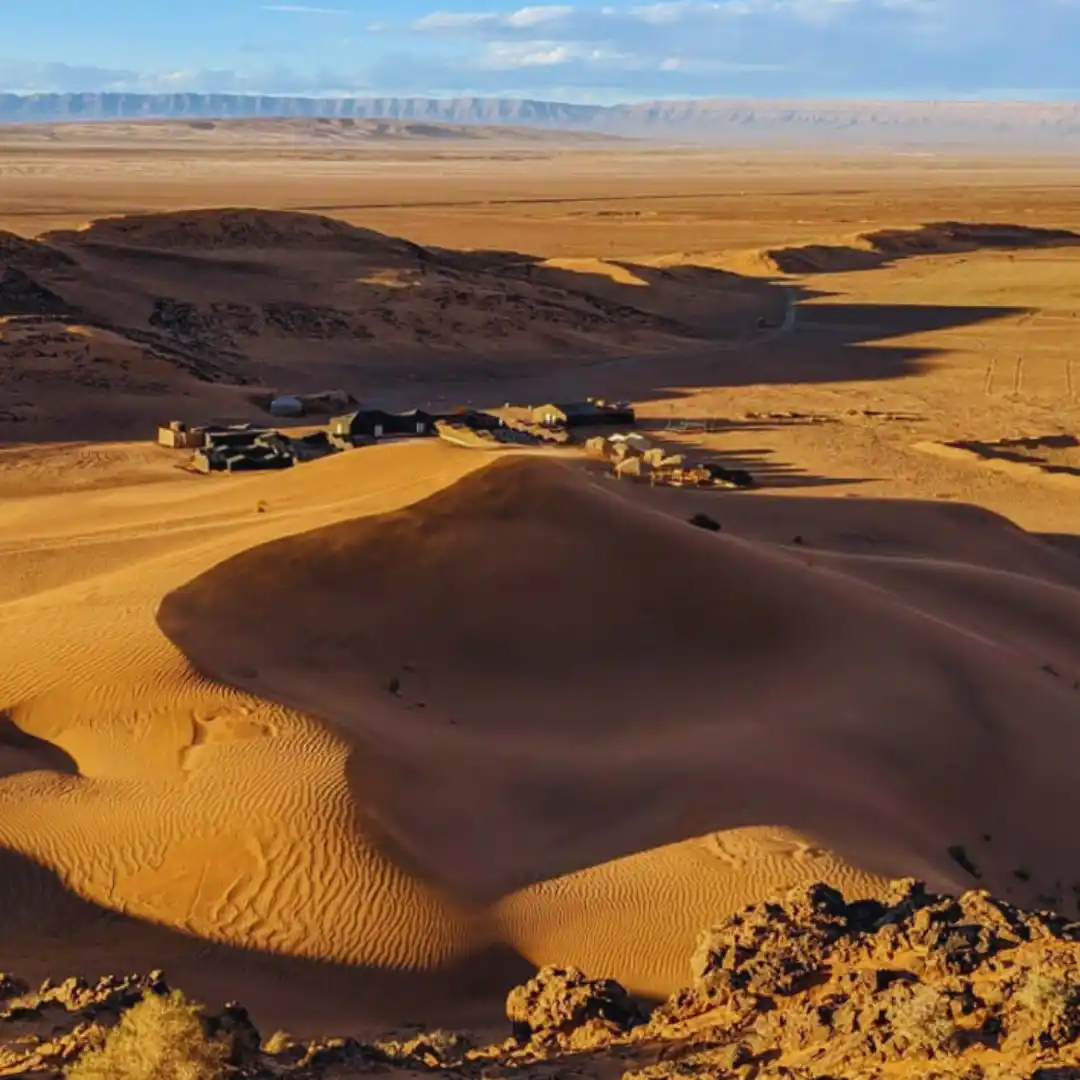
For example: A hotel provides accommodation. A transport company provides vehicles. A guide provides guiding. A restaurant provides meals. An activity provider provides an activity. A DMC coordinates several supplier categories into one programme. This creates a single operational structure for the agency. Why is local knowledge important in Morocco? Morocco has a wide range of travel environments. You have major cities, medinas, mountain regions, rural areas, Atlantic destinations and the Sahara. Travel times also matter. A route that looks simple on a map might involve a long transfer. A medina might restrict direct vehicle access. A desert camp might require a specific transfer arrangement. A mountain activity might depend on seasonal conditions. A DMC works with these practical realities every day. This is one reason current B2B Morocco DMC guides emphasise routing, supplier relationships, local logistics and on-ground coordination rather than simply selling excursions. How does a DMC help with wholesale travel? For travel agencies and tour operators, commercial terms matter. A DMC might provide: B2B rates Net rates Group rates Tailor-made quotations
Seasonal pricing
Contracted supplier rates Programme-based pricing The exact commercial model depends on the DMC and the agreement. Do not assume every DMC works with the same commission or markup structure. Agree on: Currency Net or commissionable rates Payment terms Deposit requirements Cancellation terms Amendment terms Minimum group sizes Single supplements Child policies Supplier cancellation policies Currency fluctuations Taxes and fees This should all appear clearly in your B2B agreement. What information should you give a Morocco DMC when requesting a quotation? The more precise your brief, the more useful your quotation. Include: Travel dates Number of travellers Number of rooms Room configuration
Desired programme pace
Commission or markup requirements Your target selling price, if relevant If you send only "Morocco, 10 people, 8 days, please quote", you are likely to receive a broad proposal. The DMC has too many variables to price accurately. A useful B2B brief saves time on both sides. How does a DMC build a Morocco programme? A professional process often looks like this:
Step 1: Understand the brief
The DMC identifies the client profile, dates, group size, budget and objectives. Step 2: Build the route The DMC checks the geography and travel times. Step 3: Select suppliers Accommodation, transport, guides, activities and restaurants are matched to the programme. Step 4: Price the programme The DMC calculates the local operating costs and agreed commercial structure. Step 5: Present the proposal The agency reviews the itinerary and pricing. Step 6: Amend The DMC adjusts the programme according to the agency's requirements. Step 7: Confirm The agreed services are booked and contracted. Step 8: Pre-arrival coordination Rooming lists, passenger information, transport schedules and other operational details are finalised. Step 9: Operate the programme The DMC coordinates the services in Morocco. Step 10: Post-trip follow-up The agency and DMC review the programme, resolve outstanding matters and discuss future bookings. What should you look for when choosing a Morocco DMC? Not every company calling itself a DMC offers the same level of service. Look for: A clear B2B focus Strong Morocco knowledge
Reliable supplier relationships
Clear commercial terms Transparent communication Multilingual support where required Group-handling experience Emergency procedures On-site support Appropriate licensing and legal compliance Travel insurance and liability arrangements appropriate to the services offered A clear contract Do not choose solely on price. A cheaper quote is not cheaper if poor coordination leads to missed services, dissatisfied clients or additional costs. Ask how the DMC handles problems. That answer tells you more than a page full of photographs. Questions to ask a potential Morocco DMC How long have you operated in Morocco? Which regions do you cover? Do you handle FIT, groups or both? Do you specialise in MICE? Which languages do your guides speak? How do you select suppliers? Do you provide B2B net rates? How do you handle amendments?
What are your payment terms?
What happens if a flight is delayed? Who supports the group during the programme? What happens during an operational emergency? Do you provide 24/7 support? Who owns the client relationship? Do you work on a white-label basis? What documentation do you provide? Which services are included in your quotation? Which costs are excluded? These questions help you compare DMCs based on operational capability rather than a glossy website. What is white-label DMC service? A white-label arrangement allows the travel agency to present the programme under its own brand. The DMC operates in the background. This is useful for travel agencies and tour operators that want to maintain a consistent client-facing identity. The exact arrangement should be agreed in writing. Clarify who communicates with the client, who issues travel documents, whose branding appears on documents and who handles client complaints. Who owns the client? This question should never remain vague. Before starting a B2B relationship, agree on: Client ownership Direct communication rules Lead ownership Repeat booking arrangements
Marketing permissions Non-solicitation provisions Data responsibilities Complaint handling
This protects both businesses and avoids awkward conversations later. What does a DMC do when something goes wrong? This is where the operational relationship becomes important. Suppose: A flight arrives late. The transfer needs to change. A restaurant cannot accommodate the original timing. A guide becomes unavailable. A guest becomes ill. A hotel room needs to change. A group wants to modify an activity. The DMC coordinates the local response within the limits of the supplier contracts, client requirements and applicable law. The agency should still receive clear information. A good B2B relationship does not hide operational problems. It manages them quickly and communicates accurately. Do travel agencies need a DMC for every Morocco booking? No. A simple FIT booking might require only direct hotel or activity arrangements. A DMC becomes more valuable as the programme becomes more complex. You should consider a DMC when you have: Multi-city programmes
A need for local support
A requirement for one operational contact A DMC is particularly useful when your agency sells Morocco regularly. Instead of rebuilding the supplier network for every booking, you establish a relationship with a local partner. How does a DMC benefit a tour operator? For tour operators, the value goes beyond individual bookings. A reliable DMC can support: Product development New itineraries Seasonal programmes Group series FIT products Luxury programmes Special interest tours
Operational quality control
The relationship becomes part of your destination infrastructure. Your Morocco product becomes easier to develop and update. What does a Morocco DMC do for group tours? Group travel requires additional coordination. For example, a 40-person itinerary might require: A suitable coach Luggage capacity Rooming list management Multiple guides Restaurant reservations Group menus Timed sightseeing Entrance arrangements Activity reservations Airport transfers Group check-ins On-site coordination A DMC coordinates these elements as one programme. The goal is not merely to book 40 places. The goal is to make 40 people move through the destination without the programme collapsing into a queue. What does a DMC do for FIT travel?
FIT means Fully Independent Traveller. For FIT clients, a DMC might arrange: Private transfers Hotels or riads Private guides Excursions Activities Restaurants Multi-city transport Special experiences VIP services The programme can remain personalised rather than becoming a group tour. This is especially useful for agencies selling tailor-made Morocco holidays. What does a DMC do for corporate travel? Corporate programmes require a different level of planning. A DMC might coordinate: Airport transfers Executive transport Hotels Meeting venues Team building Incentive activities Corporate dinners Gala events Entertainment Conference logistics
VIP arrangements On-site support
Corporate travel also requires strict timing. A late transfer is not simply inconvenient when 80 executives need to attend a meeting at 09:00. Current Morocco DMC offerings commonly combine MICE logistics, accommodation, transportation, activities, dining and on-site assistance. Why Morocco needs local DMC expertise Morocco is commercially attractive because one destination supports many product types. A travel company can sell: City breaks Private tours Escorted tours Luxury travel Adventure travel Desert programmes Cultural travel Family holidays Corporate incentives MICE Golf Wellness Special-interest programmes That variety also creates operational complexity. The route for a luxury couple is different from the route for a 50-person group. The transport requirements differ. The accommodation differs.
The activities differ. The dining arrangements differ. The budget structure differs. A DMC adapts the destination to the product. How a Morocco DMC supports your brand Your clients might never know the DMC exists. That is often the point. The client sees your brand. They receive your itinerary. They communicate with your agency. They experience Morocco. The DMC works behind the scenes to make the programme happen. Your reputation still depends on the result. So choosing the right local partner matters. A DMC is not simply another supplier. For a travel agency or tour operator, the DMC becomes part of the delivery chain behind your Morocco product. VMT as a Morocco DMC partner Visit Morocco Tours works with three distinct client groups: individual travellers, corporate clients and DMC/B2B partners. For travel agencies and tour operators, the DMC relationship is different from a direct leisure booking. The objective is to support your business. That means working from your brief, building the programme around your client profile, coordinating local services and providing operational support in Morocco. Depending on the programme, services may include: Tailor-made itineraries Private tours
Local supplier coordination On-site assistance
The exact services depend on your brief and agreed programme. For agencies selling Morocco, the value of a DMC is simple. You do not need to know every hotel, driver, guide, restaurant and activity provider in Morocco. You need a reliable local partner who does. FAQ What does DMC stand for? DMC stands for Destination Management Company. What does a DMC do? A DMC designs, coordinates and manages travel services inside a destination. In Morocco, this might include accommodation, transport, guides, activities, restaurants, events and on-site support. What does a Morocco DMC do for travel agencies? A Morocco DMC provides local operational support for travel agencies. The DMC helps design programmes, coordinate suppliers, manage logistics and support clients on the ground.
What is the difference between a DMC and a travel agency?
A travel agency focuses on selling travel services and managing the client relationship. A DMC focuses on destination operations. What is the difference between a DMC and a tour operator? A tour operator generally creates and sells travel products. A DMC manages the local services needed to deliver those products in the destination. Do DMCs work with tour operators? Yes. DMCs commonly work with travel agencies, tour operators, wholesalers, corporate travel planners and other B2B travel companies. Do DMCs work with individual travellers? Some do. Others focus exclusively on B2B clients. Always check the DMC's business model before approaching them. What services does a Morocco DMC provide? Services vary, but common services include itinerary design, hotels, riads, transport, guides, airport transfers, activities, restaurants, group management, corporate travel, MICE and on-site assistance. Does a Morocco DMC provide wholesale rates? Many DMCs offer B2B or net rates. Commercial terms vary by company and programme. Does a DMC handle emergencies? A DMC should have procedures for operational disruptions and local support. Your B2B agreement should define responsibilities clearly. Does a DMC provide 24/7 support? Some do. Confirm the actual support hours and emergency contact process before signing an agreement. Can a DMC work under my travel agency's brand? Some DMCs offer white-label arrangements. Agree on branding, communication and client ownership in writing. How do I choose a Morocco DMC? Compare local presence, experience, supplier network, services, commercial terms, communication, operational support, legal compliance and references.
Do I need a DMC for a small Morocco group?
A DMC becomes useful when the programme involves multiple suppliers, destinations or special requirements. A small group with a complex itinerary might need more DMC support than a larger group staying in one hotel. What information should I send when requesting a Morocco DMC quotation? Send dates, group size, destinations, accommodation category, transport requirements, guide language, activities, meal requirements, budget and special requests. How far in advance should a travel agency contact a Morocco DMC? The ideal lead time depends on group size, season, accommodation, events and programme complexity. MICE and larger group programmes usually require more advance planning than simple FIT arrangements.
Official sources
- Morocco travel advice: entry requirements, safety and health (opens in a new tab)UK Foreign, Commonwealth & Development Office
- Medina of Marrakesh (opens in a new tab)UNESCO World Heritage Centre
- Medina of Fez (opens in a new tab)UNESCO World Heritage Centre
.webp)