Landmark · Rabat
Mausoleum of Mohammed V
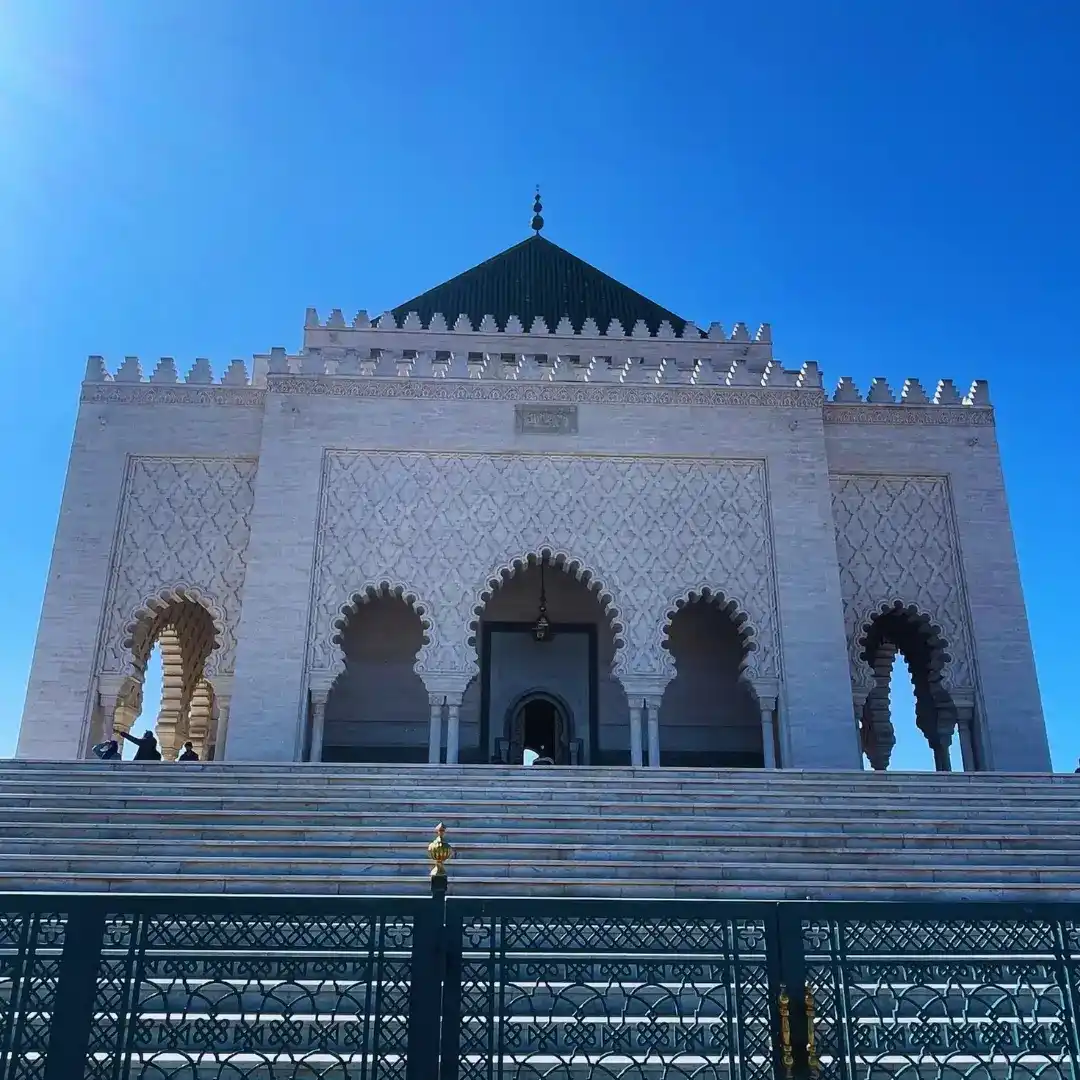
The white-marble mausoleum of King Mohammed V and his sons in Rabat, facing the Hassan Tower, with royal guards, a gilded cedar ceiling and fine Moroccan craftsmanship.
- Time to allow
- Approximately 30 minutes to 1 hour
- Location
- Rabat, Morocco
- How to visit
- On your own, or as part of a private tour
A visitor guide from our local team — and a favourite stop on our private tours.
The Mausoleum of Mohammed V is more than a sightseeing stop; it’s a journey into Morocco’s soul. Nestled on the banks of the Bouregreg River in Rabat, this dazzling white structure crowned with a green pyramid roof is one of the country’s most iconic landmarks. It honours King Mohammed V, the beloved monarch who guided Morocco to independence, and his sons King Hassan II and Prince Moulay Abdellah. Stepping inside, you’re greeted not just by marble and mosaics, but by silence, reverence, and a palpable sense of history. Take your time here, and the Mausoleum reveals stories that connect Morocco’s royal legacy with its living traditions today.
Good to know
- Opening hours
- 08:15-17:45
- Address
- 25FH+3C2, Rabat, Morocco
- Accessibility
- Wheelchair Accessibility: The mausoleum is accessible for visitors with disabilities, featuring ramps and lifts for easy access. Additional Information: Public restrooms are available for visitors.
Insider tips
Respectful Attire: Visitors should dress respectfully, covering shoulders and knees, when visiting the mausoleum. Avoid Midday Hours: The mausoleum closes between noon and 2 p.m. for midday prayers in the adjoining mosque; plan your visit accordingly. Witness the Changing of the Guard: The presence of ceremonial guards on horseback and standing guard by the doors adds to the ambience.
Is this experience for you?
Answer 3 quick questions and we'll tell you honestly whether this visit is your kind of day.
01How do you like a day like this to run?
02How much walking and effort are you up for?
03What are you hoping to get out of the visit?
0 of 3 answered — answer them all to see your result
Mausoleum of Mohammed V: Where Morocco’s Past and Future Rest Side by Side
The Mausoleum of Mohammed V is more than a sightseeing stop; it’s a journey into Morocco’s soul. Nestled on the banks of the Bouregreg River in Rabat, this dazzling white structure crowned with a green pyramid roof is one of the country’s most iconic landmarks. It honours King Mohammed V, the beloved monarch who guided Morocco to independence, and his sons King Hassan II and Prince Moulay Abdellah. Stepping inside, you’re greeted not just by marble and mosaics, but by silence, reverence, and a palpable sense of history. Take your time here, and the Mausoleum reveals stories that connect Morocco’s royal legacy with its living traditions today.
For more historical background on this royal landmark, see the detailed overview on Morocco.com’s feature about the Mausoleum of Mohammed V.
Why This Place Matters
The Mausoleum of Mohammed V is not just a royal tomb; it’s a national monument. Mohammed V holds a special place in the hearts of Moroccans as the “Father of Independence.” He stood against colonial powers, symbolising dignity and resilience. His resting place reflects the respect and devotion of a nation, becoming a site of pilgrimage for both citizens and visitors. For Morocco, this mausoleum is a reminder of unity, sacrifice, and progress — a place where history feels alive.
Knowing a little of its history brings these layers to light, linking the King’s courage with the symbolism built into every tile, arch and carving. Without context, you may see only marble; with guidance, you see meaning. As highlighted by Morocco.com, the Mausoleum of Mohammed V is more than a monument—it’s a national treasure.
What to Notice When You Arrive
From afar, the mausoleum shines bright against the Rabat skyline, a masterpiece of Alaouite architecture. The details begin at the gates: ornate bronze doors, cedar wood ceilings, and guards in red uniforms that add to the sense of ceremony. Inside, look down — the marble floor reflects the dazzling chandeliers, creating a soft glow. Look up — the dome’s carved plasterwork and zellige tiles shimmer like woven jewels.
The tomb itself is crafted from gleaming white onyx, surrounded by green marble, echoing both purity and Morocco’s spiritual colour. Look closely at the inscriptions from the Qur’an, each chosen to honour the King’s legacy of faith and leadership. Even the silence of the room is meaningful: it invites reflection, not just observation.
Pair This With Nearby Gems
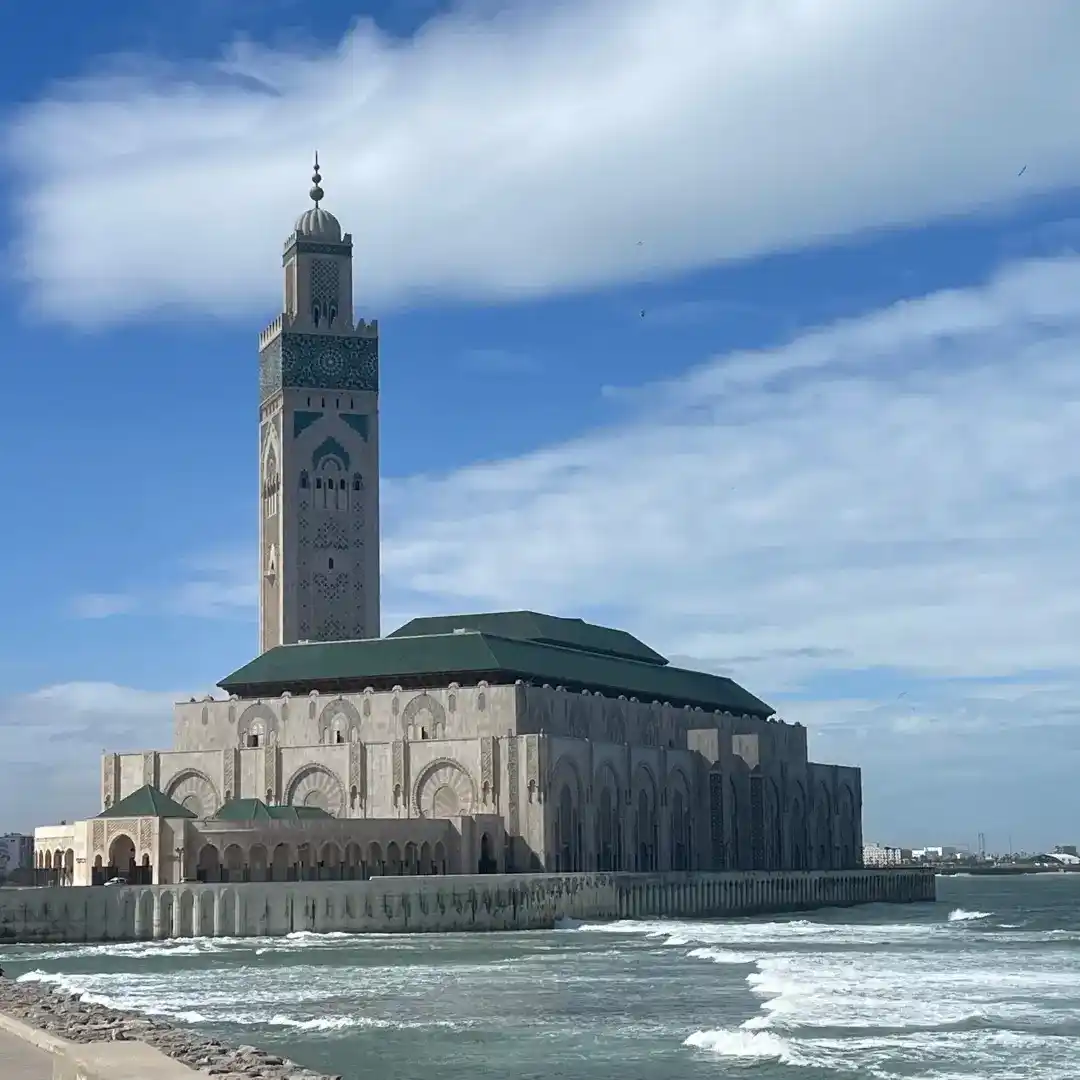
A visit to the Mausoleum of Mohammed V naturally pairs with the Hassan Tower, the unfinished 12th-century minaret that stands just opposite. Together, they create a dialogue between Morocco’s medieval ambition and its modern heritage. After exploring both, stroll along the Bouregreg River promenade, where Rabat’s contemporary life flows easily alongside its past.
After immersing yourself in the solemn beauty of the Mausoleum, you might continue with the Mohammed VI Museum of Modern and Contemporary Art, where Morocco’s present-day creativity takes centre stage. Bold paintings, sculptures, and installations provide a striking contrast to the timeless marble halls you’ve just left behind, reminding you that Morocco is not only a land of heritage but also of innovation.
From there, step further back in time with a walk through the Chellah Necropolis. Crumbling Roman ruins lie scattered among medieval walls, storks nest atop ancient stone, and wild gardens quietly reclaim the site. The atmosphere is hauntingly beautiful, offering a contemplative pause that balances both history and nature.
To close the day, the Kasbah des Oudayas invites you into its narrow blue-and-white alleyways overlooking the Bouregreg River and the Atlantic. With Andalusian gardens blooming behind fortress walls and panoramic views opening toward the sea, it offers a lighter, more playful counterpoint to the Mausoleum’s grandeur.
What Locals Know, and Visitors Learn
To Moroccans, the mausoleum is not simply a landmark; it is a place of respect. Locals may come here quietly to honor their King’s memory, especially on national holidays. While visitors often admire the beauty of the architecture, locals feel its heartbeat: Mohammed V is remembered as a leader who stood with his people, not above them.
Look out for subtle details many visitors miss — such as the significance of the guards’ attire, the symbolism of the green tiles, or why the Hassan Tower next door remains incomplete. These insights transform the visit from sightseeing into connection.
Tips Before You Go
-
Dress respectfully: While not a mosque, this is a sacred site. Modest clothing (covering shoulders and knees) is appreciated.
-
Timing matters: Visit earlier in the morning or late afternoon to avoid crowds and capture the best light for photos.
-
Take your time: Don’t rush through. Pause in silence — the atmosphere is part of the experience.
-
Photography: Allowed, but always with respect. Avoid flash inside the main chamber.
Official information
- Rabat, Modern Capital and Historic City (opens in a new tab)UNESCO World Heritage Centre
- Visiting Rabat (opens in a new tab)Moroccan National Tourist Office
Frequently asked
More to see in Rabat
- Bank al-Maghrib Museum
- Mohammed VI Museum of Modern and Contemporary Art
- National Museum of Photography
- Chellah Necropolis
- Museum of History and Civilisations
- Free Things To Do in Rabat
- Kasbah of the Udayas
- Chellah Ruins
Tagged
Private tours in Rabat
Tailor-made days and journeys — every one can include this visit