
Curious? Ask...
Inspire Me...
See Our World
We serve mint tea and hot updates. Subscribe and sip both!
We serve mint tea and hot updates. Subscribe and sip both!
Top 10 Places to Visit in Morocco: from the golden dunes of the Sahara to the wild waves of the Atlantic, Morocco is a country of contrasts, and every corner tells a story. Whether you’re wandering through ancient medinas, hiking in the Atlas Mountains, or sipping mint tea in a blue-washed alley, Morocco leaves a mark on your soul. This guide reveals the top 10 must-visit places in Morocco, combining natural wonders, cultural treasures, and timeless cities. Perfect for anyone planning their first visit or returning to explore deeper — these destinations offer something unforgettable for every traveler.
Looking for authentic Moroccan experiences, group tours, or cultural city walks? Let this list inspire your next journey through the magic of Morocco.

Welcome to Marrakech — a city that doesn’t whisper its history, it sings it from the rooftops, dances through the souks, and radiates from every crimson wall of its ancient medina. Known as the “Red City” for its distinct terracotta hue, Marrakech is more than a destination — it’s an experience that lingers long after you’ve returned home. From its chaotic beauty to its timeless traditions, Marrakech is the cultural soul of Morocco, where centuries of history blend seamlessly with the pulse of modern life.
At the heart of Marrakech beats Jemaa el-Fnaa, the legendary square that has mesmerised travellers, traders, and storytellers since the 11th century. As the sun begins to set, the square transforms into an open-air theatre of sensory wonders. Snake charmers, acrobats, henna artists, Berber musicians, and sizzling food stalls bring the space to life in a rhythm that’s both timeless and electric.
To walk through Jemaa el-Fnaa is to travel through time. It’s where oral storytelling, a UNESCO-recognised tradition, still lives. Sip mint tea on a rooftop café and watch the drama unfold below — this is authentic Marrakech travel at its most vivid.
Adjacent to the square is a maze of narrow alleyways that form the souks — a dazzling tangle of stalls overflowing with handwoven carpets, brass lanterns, spices, leather goods, and silver jewellery. Every corner reveals a new artisan at work, continuing centuries-old techniques passed through generations.
Whether you’re searching for handcrafted treasures or just soaking in the vibrant chaos, the souks offer an unfiltered look into Moroccan daily life. A cultural tour in Morocco wouldn’t be complete without getting a little lost here.
Rising above the medina is the majestic Koutoubia Mosque, an architectural jewel and spiritual centre of Marrakech. Built in the 12th century, this stunning example of Almohad design stands 77 meters tall, its minaret visible from miles away — a true icon of Islamic architecture.
Although non-Muslims may not enter, the surrounding gardens and the view at sunset offer a tranquil retreat from the city’s bustle. The call to prayer here is not just sound — it’s soul-stirring music that defines the Moroccan experience.
Escape the energy of the medina and step into the serene beauty of the Bahia Palace and El Badi Palace. These historic residences are more than structures — they are testaments to Moroccan art, Islamic design, and imperial power. Stroll through intricate courtyards, zellige-tiled walls, and lush riad gardens where history speaks in silence.
Not far away, the Majorelle Garden offers a different kind of peace. Once the home of French painter Jacques Majorelle and later restored by Yves Saint Laurent, it is a fusion of Botanical beauty and artistic legacy, where electric blues contrast with towering palms and exotic flora.
To truly understand Marrakech, you must wander through its medina — a UNESCO World Heritage site. Behind its ancient walls lies a world of riads (traditional Moroccan homes), artisan workshops, hammams, and hidden gems waiting to be discovered. Every twist and turn reveals the living heartbeat of Moroccan culture.
The medina isn’t just a tourist attraction — it’s a community that has thrived for centuries, resilient, proud, and alive with spirit.
Marrakech isn’t just a city you visit. It’s a place you feel deeply and completely. It challenges your senses, captivates your heart, and connects you with Morocco’s past and present in every moment. From sunrise calls to prayer to midnight rooftop dinners, every hour in Marrakech tells a new story.
If you’re planning a Morocco cultural tour, Marrakech is your gateway to history, to hospitality, and to unforgettable adventure. Whether you’re a solo traveller, a couple seeking romance, or part of a group travel experience, Marrakech welcomes you with open arms and ancient magic — and easily earns its place among the Top 10 Places to Visit in Morocco for its timeless energy and cultural richness.
Welcome to Merzouga, a small desert village with a big reputation. Nestled on the edge of the spectacular Erg Chebbi dunes, Merzouga is more than just a stop on your map — it’s where your dream of the Sahara comes to life. Whether it’s riding a camel across golden waves of sand, sleeping under the stars in a traditional Berber camp, or watching the sun rise in silence over the dunes, Merzouga is where magic, memory, and Moroccan spirit meet.
Located near the Algerian border, Merzouga is the ultimate gateway to the Sahara Desert. But this isn’t just geography — it’s soul-stirring space. Imagine nothing but sand and sky for miles, silence that sings to your spirit, and moments that feel eternal.
Merzouga offers some of the best Sahara tours in Morocco, bringing travelers into intimate contact with one of the world’s most legendary landscapes.
When you climb onto a camel and sway gently into the dunes, you’re not just doing a tourist activity — you’re retracing the footsteps of caravans, nomads, and traders who’ve crossed these sands for centuries.
Camel treks in Merzouga usually begin in the late afternoon. As you journey deeper into the Erg Chebbi dunes, the world transforms. The sun shifts into hues of fire and gold, the air cools, and the sky begins to whisper the promise of stars. It’s more than a ride — it’s a rite of passage.
These camel rides are often the first taste travellers get of the vast, surreal beauty that defines Sahara tours in Morocco.
Ask anyone who’s been: the sunset over Erg Chebbi isn’t just beautiful — it’s unforgettable. The shifting sands reflect the changing sky like a golden mirror, and the entire landscape feels suspended between heaven and earth. You won’t need a filter here — nature does it better than any lens.
For photographers, poets, and silent wanderers alike, this is a moment of pure awe.
As night falls, you arrive at a traditional Berber desert camp, where hospitality, music, and warmth await. These aren’t just campsites — they’re experiences that connect you to Morocco’s ancient nomadic heritage.
Sit around a fire, savor a traditional tajine or couscous, and listen to Berber drumming under the Saharan night sky filled with stars so bright they seem close enough to touch. Luxury or basic — every camp tells a story. And here in the dunes, you are part of that story.
Whether you’re looking for comfort or a more rustic adventure, desert camp experiences in Morocco offer authenticity, silence, and wonder in equal measure.
Merzouga isn’t only dunes. The village itself is home to hospitable locals, charming guesthouses, and real community life. Nearby, visit Khamlia, known for its Gnawa musicians — descendants of former Sub-Saharan slaves whose hypnotic music tells tales of suffering, survival, and spirit.
You can also explore the seasonal salt lake of Dayet Srji, where flamingos sometimes gather, or drive through nearby fossil-rich plateaus. For 4×4 adventurers, the terrain around Merzouga offers exciting off-road routes that reveal the desert’s hidden face.
Whether you’re travelling solo, as a couple, or as part of a group tour, Merzouga is a highlight not just of Southern Morocco but of the entire country. No Morocco cultural tour is complete without touching the desert with your own feet, hearing the crunch of dry sand, and sleeping in the peace of the Sahara.
This is not a place you visit. This is a place you feel.
Step into the soul of Morocco in Fez — a city where every alley whispers stories from centuries past, and every tile reflects the enduring legacy of knowledge, faith, and craftsmanship. Fez is not just a destination; it’s a living museum, a spiritual heartland, and the intellectual cradle of the Islamic West. This is where Moroccan history breathes most vividly, and where every traveler becomes part of its living narrative.
Lose yourself in the intricate maze of Fez el-Bali, the world’s best-preserved medieval city and a proud UNESCO World Heritage Site. With over 9,000 narrow alleyways, no cars, and a cityscape unchanged for over a thousand years, the medina is an awe-inspiring blend of chaos and beauty. As you pass through its centuries-old gates, you’ll be transported into a time when craftsmanship ruled and community thrived.
This is not just sightseeing. This is immersion.
At the heart of Fez lies the University and Mosque of Al-Qarawiyyin, founded in 859 by Fatima al-Fihri — a visionary woman and trailblazer in Islamic education. Recognised by UNESCO and Guinness World Records as the oldest continuously operating university in the world, Al-Qarawiyyin is more than an architectural gem; it is a symbol of Fez’s unparalleled legacy in scholarship, theology, and science.
Even from the outside, its green-tiled roof and tranquil courtyards radiate spiritual depth and cultural pride.
No visit to Fez is complete without witnessing the age-old craft of leather tanning at the Chouara Tannery, one of the oldest in the world. From the panoramic terraces, watch as local artisans—using natural dyes like saffron, indigo, and poppy—work in stone vats with techniques unchanged since the 11th century. The view is mesmerising, the scent unforgettable, and the cultural experience entirely authentic.
As you wander through the labyrinth of souks, you’ll pass by shops filled with finely embroidered textiles, handwoven carpets, brass lanterns, ceramics, and traditional Moroccan slippers (babouches). The sounds of craftsmen hammering copper, the smell of freshly baked bread, and the call to prayer create a multisensory journey into the heart of Moroccan life.
Haggling here is not just welcomed — it’s expected. It’s all part of the experience.
Fez has long been Morocco’s centre for theology, philosophy, and Sufism. The medina’s zawiyas (spiritual lodges), madrasas (Islamic schools), and mosques serve as testaments to the city’s religious and intellectual significance. Sites like the Bou Inania Madrasa and Al-Attarine Madrasa, with their intricate zellige tiles and carved cedarwood, are architectural masterpieces that showcase the city’s devotion to both faith and knowledge.
Behind heavy wooden doors lie peaceful riads, traditional homes with serene interior gardens, fountains, and hand-painted tilework. Whether you’re staying the night or just visiting for tea, these havens offer calm and quiet from the buzz of the medina. It’s here that you’ll experience the warmth of Moroccan hospitality at its finest.
Fez is for the culturally curious, the seekers of the authentic, and those who long to connect with Morocco’s soul. It’s a city that hasn’t been reinvented for tourism—it has simply endured, proudly. With its rich heritage and timeless atmosphere, Fez rightfully deserves its place among the Top 10 Places to Visit in Morocco, offering an unforgettable journey through history and tradition.
From the echoing call to prayer at dawn to the candlelit courtyards at dusk, Fes wraps you in its spirit and leaves you deeply moved.
Tucked away in the foothills of the Rif Mountains, Chefchaouen is more than just Morocco’s most photogenic town — it’s a soothing escape for the soul. Painted in endless shades of blue, this small mountain city casts a spell on every traveller who walks its winding streets. Whether you’re here for the peace, the pictures, or the panoramic mountain air, Chefchaouen welcomes you with an unforgettable calm.
Every corner of Chefchaouen’s medina looks like it was designed to make you pause, smile, and breathe deeper. The iconic blue-washed walls — ranging from baby blue to deep indigo — are believed to symbolise the sky, heaven, and spiritual serenity. Others say it keeps mosquitoes away. Whatever the reason, the result is pure magic.
Wander through these dreamlike alleyways, and you’ll feel like you’ve stepped into a painting. Every staircase, potted plant, and hand-painted door tells its own story. There’s no rush here — just you, the colours, and the gentle rhythm of mountain life.
Chefchaouen is a gateway to breathtaking natural beauty. Whether you hike the nearby Talassemtane National Park, climb to the Spanish Mosque for a sunset panoramic, or simply enjoy a quiet terrace view over the rolling Rif Mountains, the landscape is as soul-stirring as the town itself.
The air here is crisp. The silence? Therapeutic. And the vistas? Unforgettable.
Unlike Morocco’s larger cities, Chefchaouen invites you to slow down. The pace is relaxed, the locals are kind, and time seems to move differently here. Artisans sell handwoven blankets, natural dyes, olive oil soap, and goat cheese — all locally made with centuries of tradition behind them.
This is the kind of place where you sit down for a mint tea and stay longer than you planned — and that’s the point.
Known across the world as “Morocco’s blue city,” Chefchaouen is one of the most photographed destinations in North Africa — and for good reason. Every street is Instagram gold, every corner worthy of a postcard. But behind the stunning visuals lies a peaceful, deeply spiritual mountain town that doesn’t need filters to shine.
You’re not just snapping photos — you’re capturing emotions.
Chefchaouen was originally founded in the 15th century by Moorish and Jewish exiles from Spain. Its heritage is deeply spiritual, reflected in the many quiet mosques, shrines, and peaceful corners that dot the medina. It’s a place that invites reflection, whether you’re standing barefoot on cool stone tiles or watching the light dance on a blue-washed wall at dawn.
This isn’t just a quick photo stop — Chefchaouen is a destination for those who crave beauty with depth. It’s romantic without being flashy, remote without feeling isolated, and spiritual without preaching. From the visual poetry of its medina to the fresh mountain air that fills your lungs, Chefchaouen is a soft but powerful experience.
Whether you’re on a cultural tour, group trip, or slow solo journey, the Blue Pearl will find its way into your heart.
With its salty sea breeze, ancient ramparts, and artistic soul, Essaouira feels like a hidden melody playing on the edge of Morocco’s Atlantic coast. Often called “The Windy City,” this breezy, bohemian haven has long attracted travellers seeking authenticity, freedom, and a slower rhythm of life. Whether you’re here for the waves, the art, or the UNESCO-listed medina, Essaouira invites you to breathe deeply, feel the ocean, and truly unwind.
Essaouira’s old town is not just charming — it’s globally recognised. The medina is a UNESCO World Heritage Site, celebrated for its harmonious blend of North African, European, and Arab influences. Stroll through its whitewashed alleyways trimmed in blue, and you’ll encounter artisan woodworkers, spice sellers, and galleries full of coastal soul.
The medina is easy to navigate, welcoming, and relaxed — a breath of fresh air after the bustling maze of Marrakech or Fes. It’s a place to get lost without ever feeling overwhelmed.
Essaouira’s winds are famous, and surfers, windsurfers, and kitesurfers love them. The constant Atlantic breeze makes this town a world-renowned destination for water sports. Plage d’Essaouira is dotted with boards and sails, and surf schools welcome both beginners and seasoned riders.
But even if you’re not a surfer, the rhythm of the waves and the sound of the wind create a calming soundtrack that follows you throughout your stay.
Essaouira’s heart beats strongest near the historic fishing port, where blue boats sway gently and fishermen bring in their catch at dawn. This is where you’ll find some of the freshest seafood in Morocco — grilled right in front of you.
Whether it’s sardines, calamari, or lobster, the flavours are as authentic as the atmosphere. You eat with your hands, surrounded by seagulls and sea spray — and you’ll remember it forever.
Long before it became a UNESCO site, Essaouira was a muse. Painters, poets, musicians, and filmmakers have all been drawn to its creative energy. The city hosted Jimi Hendrix and Orson Welles, and today, it continues to inspire. Small galleries and boutiques line the medina, showcasing local artwork, thuya wood carvings, handmade jewellery, and more.
In summer, the Gnaoua World Music Festival brings the town to life with African rhythms, Sufi trance, jazz, and soul — a celebration of Essaouira’s multicultural roots.
Essaouira’s Skala de la Ville — the impressive sea bastion lined with cannons — offers sweeping views of the Atlantic and the crashing waves below. Built in the 18th century to protect the port, these ramparts also provide one of the most iconic photo spots in Morocco.
You can walk the walls, breathe in the salty air, and feel centuries of history under your feet.
Essaouira isn’t just a beach town — it’s a state of mind. A place where tradition and modern creativity live side by side. It’s where the call of seagulls meets the beat of Gnaoua drums. Where every stone has a story, and every breeze carries peace.
Whether you’re looking for a laid-back coastal escape, an artistic hideaway, or a surfing adventure with soul, Essaouira delivers effortlessly.
Rugged, majestic, and deeply rooted in Morocco’s soul, the Atlas Mountains are more than just a backdrop — they are a world of their own. Stretching across the country like a protective spine, these highlands are home to ancient Berber villages, panoramic trails, and the lofty peaks of Toubkal National Park. Whether you’re chasing adrenaline or silence, nature or culture, the Atlas Mountains offer a Morocco you can touch, breathe, and feel in your bones.
Towering just a short drive from Marrakech, the High Atlas Mountains are the most famous range in Morocco, home to the country’s highest peak — Mount Toubkal, standing at 4,167 meters. This snow-capped giant attracts trekkers from all over the world, and climbing to the summit is a true bucket-list adventure for those seeking both challenge and soul-stirring views.
But you don’t need to be a mountaineer to fall in love with this region — there are trails for every level, from gentle walks through river valleys to multi-day treks between hidden villages.
As you hike through the Atlas foothills, you’ll pass by centuries-old Berber communities tucked into the mountain slopes. These are some of Morocco’s oldest inhabitants, and their hospitality is legendary. Mud-brick houses, terraced gardens, and traditional lifestyles coexist with dramatic natural beauty.
Villages like Imlil, Aroumd, and Tachedirt serve as key stops for hikers, offering cosy guesthouses, mint tea served with a view, and a chance to experience mountain life with local families.
Established in 1942, Toubkal National Park protects one of Morocco’s most stunning natural environments. Its landscape is a patchwork of deep gorges, rocky cliffs, alpine meadows, and winding trails. Alongside Mount Toubkal, the park is home to rare wildlife, high-altitude flora, and incredible geological formations.
Whether you’re on a guided trek or a solo hike, the clean air, the quiet, and the open sky will leave a lasting impression. You’ll feel small in the best possible way.
Each season paints the Atlas Mountains in a different light. In spring, valleys burst into colour with almond blossoms and wildflowers. In summer, the cool mountain air offers a refreshing escape from the heat of the cities. Autumn glows golden and warm, perfect for photography and long hikes. In winter, snow transforms the peaks into a white wonderland — and yes, you can even ski in Oukaïmeden, one of Africa’s highest ski resorts.
This natural diversity means the Atlas is never the same twice — it’s a year-round invitation to explore.
You don’t have to be an experienced hiker to enjoy the Atlas. Many visitors opt for guided day trips from Marrakech, stopping in local villages, enjoying traditional tajines, or visiting waterfalls like Ouzoud. Others come for multi-day treks, staying in eco-lodges and mountain riads.
There’s also adventure beyond trekking: mountain biking, rock climbing, horseback riding, and even paragliding are available for thrill-seekers looking for new ways to explore the terrain.
The Atlas Mountains are not a detour — they are a destination. They represent the raw, natural soul of Morocco. Here, you’ll find more than scenic views — you’ll find silence, strength, and stories etched into the stone.
From the summit of Toubkal to the kindness of a Berber host, the Atlas Mountains invite you to slow down, breathe in, and discover Morocco off the beaten path.
Often overshadowed by its more famous siblings like Marrakech and Fes, Rabat quietly reigns with a sophisticated blend of heritage, modernity, and coastal charm. As Morocco’s capital city, Rabat is a place where historical elegance meets contemporary energy — a destination that offers travelers both calm and culture in equal measure.
Strolling through Rabat means walking the line between centuries-old kasbah walls and tree-lined boulevards, between Atlantic breezes and monumental landmarks. It’s Morocco’s political and administrative heart — but also one of its most underrated gems.
At the mouth of the Bou Regreg River, overlooking the Atlantic, stands one of Rabat’s most iconic sites — the Kasbah of the Udayas. This 12th-century fortress is not only a UNESCO World Heritage Site, but also a dreamy maze of narrow blue-and-white alleys, flower-filled courtyards, and sweeping sea views. Its Andalusian Gardens offer a quiet retreat that feels far from the city, while its ramparts tell tales of dynasties past.
This is where you’ll feel Morocco’s layered history — every stone has a story, every arch a secret.
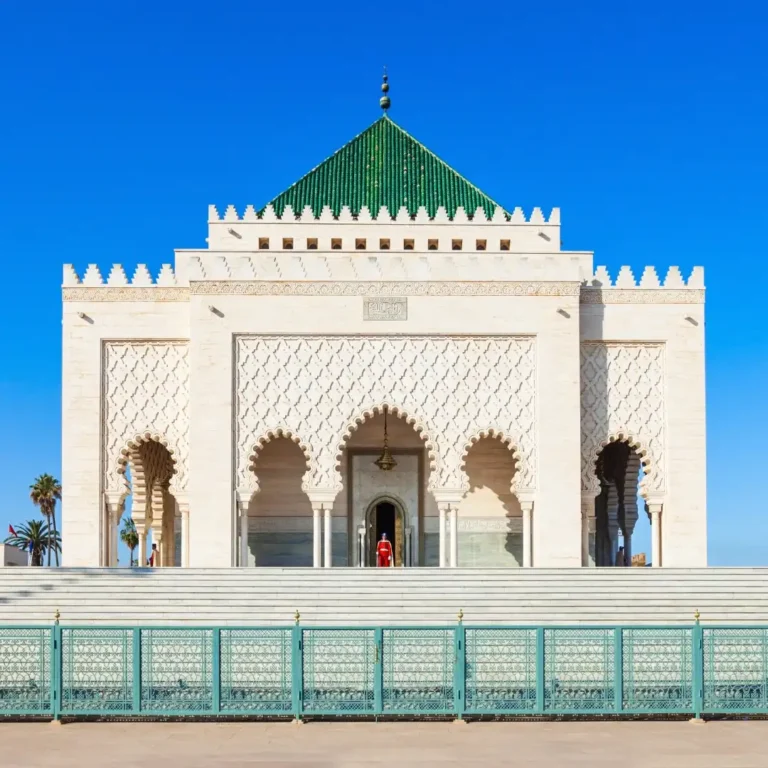
No visit to Rabat is complete without standing in the Plaza of the Mausoleum of Mohammed V, a space that captures both the grandeur and dignity of Moroccan architecture. The unfinished Hassan Tower, begun in the 12th century by Sultan Yacoub al-Mansour, was once meant to be the tallest minaret in the world. Today, it remains a poetic relic of what could have been, surrounded by dozens of stone columns under the open sky.
Next door, the dazzling Mausoleum of Mohammed V, housing the tombs of the king and his sons Hassan II and Prince Abdallah, is a masterpiece of Moroccan craftsmanship, with hand-carved cedar ceilings, zellige tilework, and white marble.
Rabat isn’t just about the past — it’s also a modern, livable capital. With wide boulevards, French-colonial architecture, and a strong sense of order and cleanliness, the city exudes a calm confidence. The Ville Nouvelle (New City) is filled with embassies, chic cafés, art galleries, and modern shopping spots, while the Royal Palace grounds hint at the nation’s majesty and structure.
One of the highlights of Rabat’s cultural scene is the Mohammed VI Museum of Modern and Contemporary Art, the first large-scale museum of its kind in the kingdom. It’s a must-visit for those interested in Morocco’s evolving identity through art.
Rabat is lucky — it hugs the Atlantic. That means long promenades, golden beaches, and fresh sea air. From the bustling Corniche to more laid-back beaches like Plage des Nations, there’s always a place to soak in the ocean view or enjoy a mint tea with the sound of waves in the background.
For a different perspective, you can also hop across the river to Salé, Rabat’s quieter twin city. A short boat ride will take you from the capital’s polished avenues to winding medieval streets that feel like a journey back in time.
Rabat is for the traveller who seeks balance between history and modern life, between the energy of a city and the calm of the sea. It’s not as hectic as Marrakech or as maze-like as Fes, which makes it ideal for a gentle immersion into Moroccan culture.
Whether you’re exploring ancient ruins, admiring royal architecture, or sipping espresso in a stylish café, Rabat reveals itself not in dramatic outbursts but in quiet moments of beauty — and for this unique blend of heritage and elegance, it rightfully claims its spot among the Top 10 Places to Visit in Morocco.
Casablanca isn’t your typical Moroccan city draped in ancient mystery — it’s bold, modern, and always on the move. Known as Morocco’s economic powerhouse and cultural hub, Casablanca (or Casa, as locals affectionately call it) offers a cosmopolitan energy that pulses through its Art Deco boulevards, beachfront promenades, and buzzing nightlife.
This is where tradition meets urban edge. It’s a place of contrasts — minarets towering over skyscrapers, call to prayer echoing through busy streets, and centuries-old spirituality housed in one of the world’s most magnificent mosques.
Perched on a rocky Atlantic outcrop, the Hassan II Mosque is Casablanca’s most iconic landmark — and one of the most awe-inspiring spiritual sites in the Islamic world. It’s the second-largest mosque in Africa and features the tallest minaret on the planet, reaching 210 meters into the sky.
But it’s not just about size. The craftsmanship is extraordinary — hand-carved marble, intricate mosaics, and a retractable roof that opens to the heavens. Inside, up to 25,000 worshippers gather beneath its soaring ceilings, while another 80,000 can pray in the vast courtyard.
Unlike many mosques in Morocco, this one welcomes non-Muslim visitors on guided tours, making it a must-see for anyone visiting Casablanca.
Just down the coast from the mosque, the Corniche of Ain Diab offers Casablanca’s sunniest side. Here, the Atlantic crashes against sleek beach clubs, luxury hotels, surf spots, and seafood restaurants.
By day, stroll along the palm-lined promenade or take a dip in the ocean. By night, the Corniche becomes Casablanca’s nightlife epicentre, with chic lounges, rooftop bars, and live music venues where the city’s youthful energy comes alive.
This is where locals unwind and travellers indulge — a true slice of coastal Casablanca living.
Although Casablanca is a modern metropolis, it still carries traces of its colonial past. The city centre is full of elegant Art Deco buildings, wide boulevards, and classic French cafés that recall its 20th-century development under French rule. Don’t miss Place Mohammed V, surrounded by grand government buildings, fountains, and civic institutions.
Dive into Quartier Habous, the city’s “New Medina,” built in the 1930s as a blend of traditional Moroccan souks and modern urban planning. Here, you’ll find bookshops, spice sellers, and artisans, without the overwhelming maze-like feel of Fes or Marrakech.
Casablanca is not just a destination — it’s a mood, a tempo, a city that refuses to sit still. Unlike Morocco’s more traditional tourist cities, Casa shows you what’s next. It’s a place where entrepreneurs launch startups, where youth culture thrives, and where fashion, art, and music push boundaries.
It may not be the Morocco of postcards, but it’s the Morocco of today and tomorrow — gritty, glamorous, and unforgettable.
Many travellers skip Casablanca or treat it as a transit stop — a huge mistake. While it may not have the same historical mystique as Fes or Marrakech, it has something they don’t: modern momentum.
From sipping espresso in a beachside café to marvelling at the divine scale of Hassan II Mosque, Casablanca invites you to see Morocco from a different angle — fast-paced, stylish, and unapologetically real.
Hidden along the ancient caravan route between Marrakech and the Sahara lies Aït Benhaddou, a majestic ksar (fortified village) that appears to have leapt straight out of a storybook — or a film set. And in many ways, it has. Declared a UNESCO World Heritage Site, this earthen marvel is one of Morocco’s most photographed and filmed destinations, a living testament to the architectural genius of Southern Morocco’s Berber heritage.
If you’ve ever watched Gladiator, Game of Thrones, Lawrence of Arabia, or The Mummy, you’ve already glimpsed the ochre towers of Aït Benhaddou shimmering under the desert sun.
Built in the 17th century (and possibly earlier), Aït Benhaddou was once a thriving stop on the trans-Saharan trade route, where merchants traveling from Sudan to Marrakech would rest and barter goods like salt, gold, and spices. Its mudbrick architecture, designed for both defense and shelter, remains nearly untouched, making it one of the best-preserved ksour (plural of ksar) in North Africa.
Crossing the shallow river and entering through the narrow gateway, you’ll wander through labyrinthine alleys, granaries, and centuries-old homes, many of which are still partially inhabited. The panoramic view from the top of the hill is spectacular, with sweeping vistas of the Ounila Valley and the snow-capped High Atlas Mountains in the distance.
What makes Aït Benhaddou truly exceptional is its double identity: it’s both a historical site and a global filming hotspot. The entire ksar has served as a backdrop for some of the biggest Hollywood and international productions, turning its traditional earthen walls into the ancient cities of Persia, Jerusalem, or fantasy kingdoms.
Film buffs can relive scenes from:
Gladiator (2000) – Maximus is sold into slavery here.
Game of Thrones – It became Yunkai, one of the slave cities in Essos.
Prince of Persia, Alexander, Kingdom of Heaven, and many more.
This Moroccan desert fortress blends cinematic fame with a sense of timeless wonder.
Aït Benhaddou is also the last major stop before the road descends into the Sahara Desert. Most travellers pass through here on their way to Ouarzazate, Zagora, or Merzouga, making it a perfect place to soak in history before venturing into Morocco’s golden dunes.
Whether you’re travelling independently or on a Morocco desert tour, Aït Benhaddou adds a layer of cultural depth and visual grandeur that no desert journey should be without.
There’s a silence in Aït Benhaddou — a quiet awe that fills the dry air as you explore its earth-toned streets. The architecture here isn’t just beautiful; it’s functional, sustainable, and born from the land itself. No steel, no glass — just mud, straw, and spirit. It’s a place where Moroccan traditions live on, untouched by modernity, and echoing with the stories of generations.
And despite its fame, Aït Benhaddou remains unspoiled by mass tourism, offering travellers a chance to step into Morocco’s past while standing in the spotlight of its global allure.
If you’re drawn to places where history, architecture, and cinema collide, there’s no better destination than Aït Benhaddou. It’s perfect for photographers, culture lovers, and anyone seeking Morocco’s raw beauty beyond the cities.
Whether you come for the epic photo opportunities, the Game of Thrones nostalgia, or to simply witness one of Morocco’s most iconic landscapes, this ancient ksar will leave you breathless.
Hidden among the gentle hills of northern Morocco lies Volubilis, a striking open-air museum of Roman grandeur and one of the most important archaeological sites in North Africa. Recognized as a UNESCO World Heritage Site, this ancient city once marked the farthest reaches of the Roman Empire on the African continent. Today, it offers a breathtaking blend of archaeological wonder, historical depth, and natural beauty — a must-see for every traveller tracing Morocco’s timeless past.
Volubilis was established in the 3rd century BCE and rose to prominence under Roman rule in the 1st century CE. At its height, it was a thriving city of over 20,000 residents — a rich centre of olive oil production and trade, surrounded by fertile lands. Despite centuries of decay and the 1755 Lisbon earthquake, its well-preserved ruins speak volumes about life in a Roman provincial city.
As you walk along the ancient stone roads, you’ll discover:
Magnificent mosaics still in place inside former villas, depicting mythological scenes such as Hercules’ Labors and the Triumph of Bacchus.
The Capitoline Temple, honoring Jupiter, Juno, and Minerva.
The impressive Basilica and Triumphal Arch of Caracalla, both symbols of Roman civic pride and imperial presence.
Olive presses, baths, aqueducts, and remnants of urban planning that show the high level of Roman engineering.
It’s a place where history literally rises from the earth — each stone telling a story, every mosaic an echo of empire.
Unlike many crowded ruins across the Mediterranean, Volubilis offers a quiet, immersive experience. There are no ropes, no barricades. You’re free to explore, photograph, and feel the whisper of centuries beneath your feet. The ruins lie scattered across a vast hillside, offering sweeping views of the Zerhoun Mountains and green fields, especially vivid in springtime.
It’s this setting — where history meets hills and silence meets stories — that gives Volubilis its magic. You’re not just observing ancient history; you’re walking through it.
Volubilis is conveniently located just 30 minutes from Meknes and around 1.5 hours from Fes, making it an ideal half-day or full-day excursion. Many travellers combine it with visits to:
The holy town of Moulay Idriss Zerhoun, resting on two hills nearby, sacred in Moroccan Islam.
The imperial city of Meknes with its massive gates and royal legacy.
Guided tours and group trips to Volubilis are widely available, and the site is easy to navigate for both solo explorers and families.
While the Roman presence defines Volubilis today, its story didn’t end with the empire’s fall. It continued to be inhabited by Christian Berbers and later became part of the early Islamic world. The ruins thus represent not only Roman imperial power, but also centuries of multicultural evolution, connecting Morocco to the Mediterranean world and beyond.
Volubilis is a hidden gem for history lovers, archaeology fans, and cultural travellers. It’s a place where you can stand among columns and mosaics while looking out over olive groves and valleys unchanged for centuries.
This is not just a stop on a map — it’s a gateway to understanding Morocco’s layered history, where African, Roman, Berber, and Islamic worlds overlap.
For anyone curious about Morocco’s deeper past, Volubilis is a breathtaking chapter in the country’s epic story.
From the golden dunes of Merzouga to the blue alleyways of Chefchaouen, from the ancient Roman ruins of Volubilis to the vibrant energy of Marrakech, Morocco is a land of astonishing contrasts and timeless wonders. Every corner of this country tells a story — in the echoing chants of a medina, the quiet of a mountain village, the spice-laden breeze of a coastal town, or the silence of the Sahara under the stars.
Whether you’re drawn to cultural tours in Morocco, group desert adventures, or historical city walks, these unforgettable destinations offer something for every kind of traveler. This is more than a trip — it’s a journey through living history, diverse landscapes, and deep-rooted traditions.
Let your Moroccan dream come to life with Visit Morocco Tours — your trusted companion for authentic experiences, expertly guided routes, and personalised group and private journeys.
Explore Morocco’s top attractions, hidden gems, and cultural treasures — book your Morocco adventure today!
Visit Morocco Tours
Escape Alchemist
VMT
Tell us your travel drama, we’ve got solutions!